

Murray Wood: 'Jurisdiction' a very important word to keep in mind during pipeline debate
Murray Wood says jurisdiction is an important consideration in debates around a proposed pipeline, but as much as oppone...
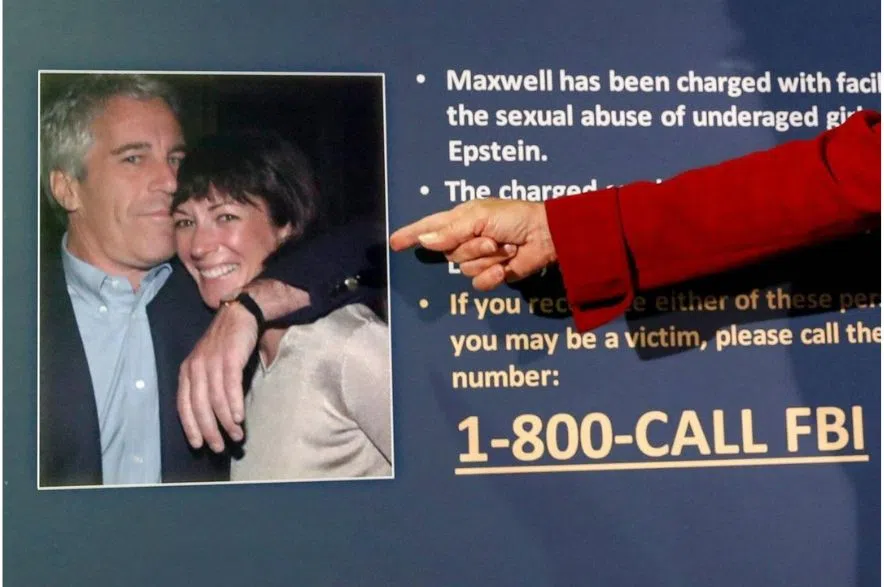
NEW YORK (AP) — A federal judge on Tuesday granted the Justice Department’s request to publicly release grand jury transcripts and other material from Ghislaine Maxwell‘s sex trafficking case, citing a new law that requires the government to open its files on Jeffrey Epstein and his longtime confidant, but he cautioned that people shouldn’t expect to learn much new information from them.
Judge Paul A. Engelmayer, who along with other judges had previously rejected Justice Department unsealing requests before the transparency law was passed, said the materials “do not identify any person other than Epstein and Maxwell as having had sexual contact with a minor.”
Read more:
“They do not discuss or identify any client of Epstein’s or Maxwell’s,” Engelmayer wrote. “They do not reveal any heretofore unknown means or methods of Epstein’s or Maxwell’s crimes.”
Engelmayer, in Manhattan, ruled Tuesday after the Justice Department had asked judges in the wake of the law’s passage last month to lift secrecy orders in Maxwell’s and Epstein’s cases that had kept some records under wraps. A request to unseal records from Epstein’s 2019 sex trafficking case is pending.
Engelmayer is the second judge to act after the Epstein Files Transparency Act created a narrow exception to rules that normally keep grand jury proceedings secret. Last week, a Florida federal judge ordered the release of transcripts from an abandoned Epstein federal grand jury investigation in the 2000s.
The law, signed by President Donald Trump after months of public and political pressure, requires the Justice Department to provide the public with Epstein-related records by Dec. 19.
The fate of the government’s Epstein files has dominated the first year of Trump’s second term in office. The Republican campaigned for reelection last year on a promise to release the files, and his administration did disclose some records earlier this year — almost all of them already public — but suddenly stopped in July after promising a “truckload” more.
Forced to act by the new transparency law, the Justice Department says it plans to release 18 categories of investigative materials gathered in the massive sex trafficking probe, including search warrants, financial records, notes from interviews with victims, and data from electronic devices.
Epstein, a millionaire financier, was arrested in July 2019 on sex trafficking charges and killed himself in jail a month later. Maxwell, a British socialite, was convicted of sex trafficking in December 2021. She is serving a 20-year prison sentence. After giving an interview to the Justice Department’s second-in-command in July, she was moved from a federal prison in Florida to a prison camp in Texas.
The Justice Department said it was conferring with victims and their lawyers and planned to redact or black out portions of records to protect victims’ identities and prevent dissemination of sexualized images. Engelmayer said Manhattan U.S. Attorney Jay Clayton must personally certify that records have been “rigorously reviewed” to avoid an unwarranted invasion of personal privacy.