
Sarah Mills: Canadians travelling to the U.S. are down dramatically
Sarah Mills says Mexico and Europe became a destination for Canadians in January, showing the elbows-up approach is havi...
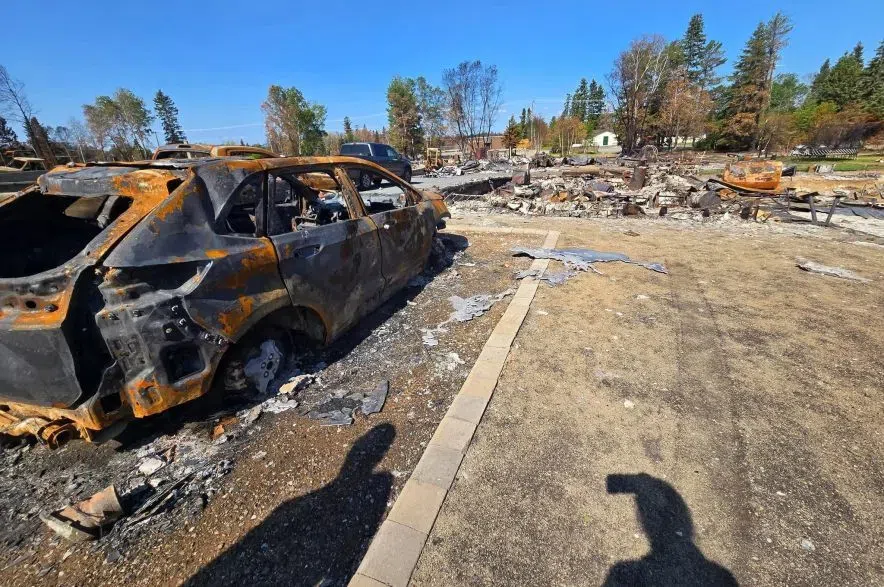
Denare Beach could be called the hardest hit area from Saskatchewan’s wildfire season this summer, but some locals believe their expertise could have helped.
“I lost a lot of things, hard work that I put over the years, tried to leave stuff for my kids, but I have nothing (to leave for them). So now I’ve got to start from scratch, go back to work,” said Trevor Sewap.
He lives in Denare Beach and lost his home in the fire.
“It’s like one big bomb that took our homes, took our families, took the pets, everything that people worked hard for all their lives. Denare Beach, we know each other so close, we’re like one big family. So, yes, it’s hard to see,” he said.
Sewap has also been fighting fires since 1989, including as a Type 1 wildland firefighter. This past summer he was a fire base supervisor at Pelican Narrows, northeast of Denare Beach, but said he quit in frustration when the fire approached Denare Beach.
According to Sewap, the people higher up than him in the Saskatchewan Public Safety Agency (SPSA) wouldn’t listen to the suggestions and experience he shared with them.
“They’re sitting in the office in a higher seat than me so they just don’t want to listen,” said Sewap.
He believes that if the SPSA had followed what he told its officers, then Denare Beach would have been saved.
“Our whole lake, it doesn’t even look like home anymore, it’s bad, it’s real, real bad. I haven’t even been on the lake yet because I’m too afraid to look at the devastation that happened,” he said.
Kari Lentowicz said it wasn’t just Sewap the SPSA didn’t listen to. She has experience in disaster and emergency preparedness and also lost her home at Denare Beach.
The fire tore through the community in the first days of June. Lentowicz said she was on the lake on May 27.
“You could see the smoke from the Club Fire which everybody seemed so concerned about, but you could see the flames and the glow from the Wolf Fire. Myself, along with many other community residents, on the 28th and the 29th and the 30th went to the local fire base and told them what was going on — nobody seemed concerned,” she explained.
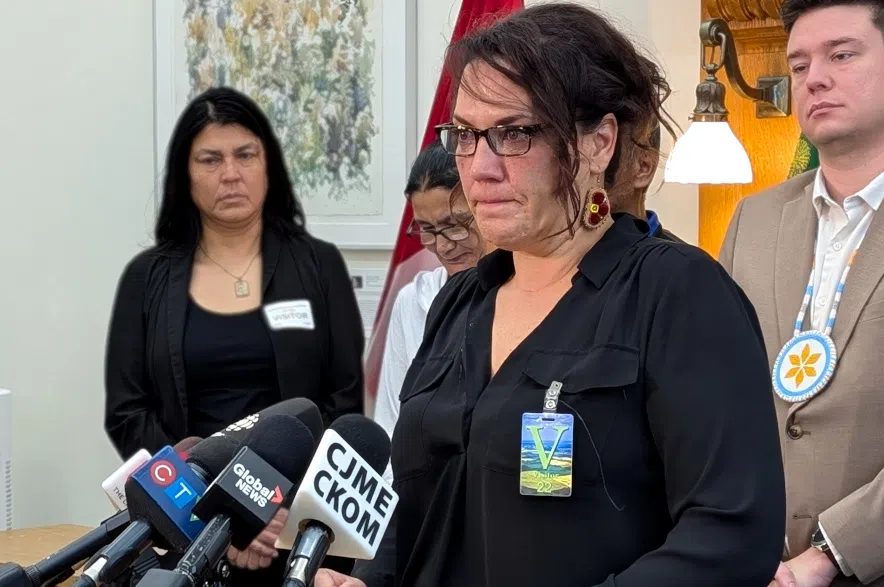
Kari Lentowicz lost her home to the wildfire that tore through Denare Beach. Dec. 2, 2025 (Lisa Schick/980 CJME)
Lentowicz said she and others went to SPSA to offer their expertise, but they were ignored – pointing to retired SPSA members and Sewap, who she said knew exactly what to do.
“We worked hard our whole lives, we are the keepers of the land, we knew what to do, nobody listened,” she said, getting emotional in her frustration.
“It is critical that people look to the local knowledge, the use of experience that’s there, listen to the people that have the knowledge, not the people who are just dipping their toes in, not the people who are too proud to admit that they need help.”
The Sask. NDP appears to have taken these frustrations and put them into a new bill, introduced Tuesday afternoon, which would set up The Saskatchewan Wildfire Strategy Act.
The bill would require a provincial strategy for wildfire management to be established, and for the Ministry of Corrections, Policing, and Public safety to:
The bill also requires the government consult with First Nations, Métis, and municipal governments in northern Saskatchewan, as well as the Government of Canada, and experts in wildfire firefighting and management.
“This truly allows for the local authorities to be able to have their say in what is going to happen in their territories, their land, their treaty entitlement areas,” said Jordan McPhail, the NDP’s northern affairs and public safety critic, as well as the MLA for the Denare Beach area.
He said the government’s word isn’t good enough anymore, so there’s needs to be a law on the books to mandate wildfire preparedness.
“After what happened this summer, the least the government can do is commit to supporting this bill,” said McPhail.
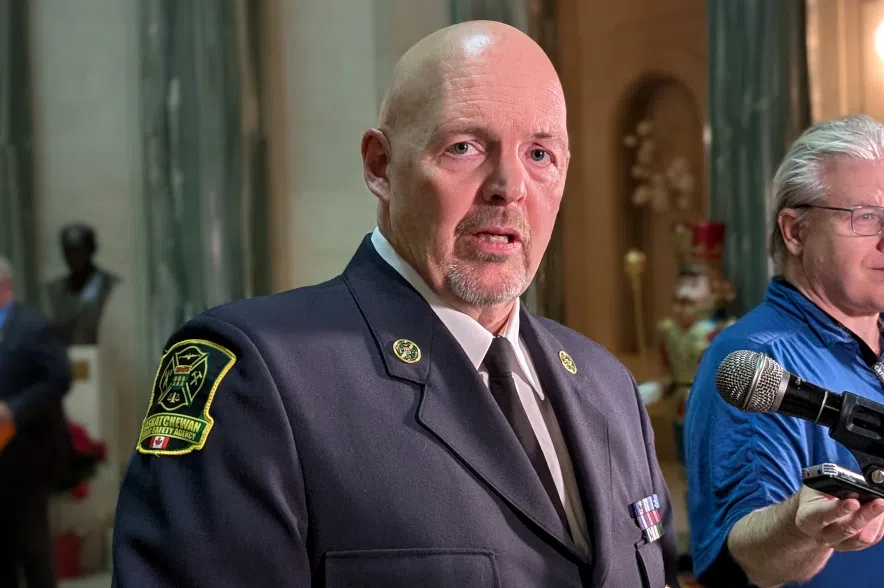
President of the Saskatchewan Public Safety Agency Marlo Pritchard pictured on Dec. 2, 2025. (Lisa Schick/980 CJME)
Public Safety Minister Tim McLeod didn’t say whether he would support the NDP’s bill, but during question period in the Assembly did say the SPSA has a wildfire strategy and consults with experts in its planning.
SPSA President Marlo Pritchard was brought out to answer questions from media about the response.
He echoed the minister’s sentiments and expanded, saying the agency brings in experts like retired firefighters from SPSA as well as international experts and specialists, and works closely with community leaders.
“And some of those experts that we’re talking about were local experts. I’m talking about some of those retirees that talked to the SPSA, they were local, they lived in those communities, they came up through those communities so they would understand those communities as well,” explained Pritchard.
He said locals who offered their assistance or expertise would have been contacted, but if their suggestions weren’t taken, they might have fallen through the cracks, or decisions were made with other priorities taken into consideration.
“Priorities change and they can change by the minute, they can change by the hour, they can change by the day. So, it was a continuous response to an unrelentless and often changing situation,” he said.
The SPSA’s current wildfire strategy prioritizes action based on saving life, community, critical infrastructure, and environment, in that order, according to Pritchard.
Pritchard said on Tuesday that he’d be happy to speak with Sewap and Lentowicz about their concerns.
There are four reviews currently under way into the wildfire response — two from the provincial auditor, one into the purchase of water bombers, and another into the overall response, one by the provincial ombudsman, and another by a third-party engaged by the provincial government.
Pritchard said, as there is every year, there’s also an after-action review done by SPSA. He said these reviews will give people in the community a chance to speak to any concerns they may have, and will let the agency know if anything needs to be improved.