

Sarah Mills: There is still some skepticism about ice skating judging
Canada's ice dancing bronze medal should be celebrated, but Sarah Mills says the stink of Salt Lake City and the judge v...
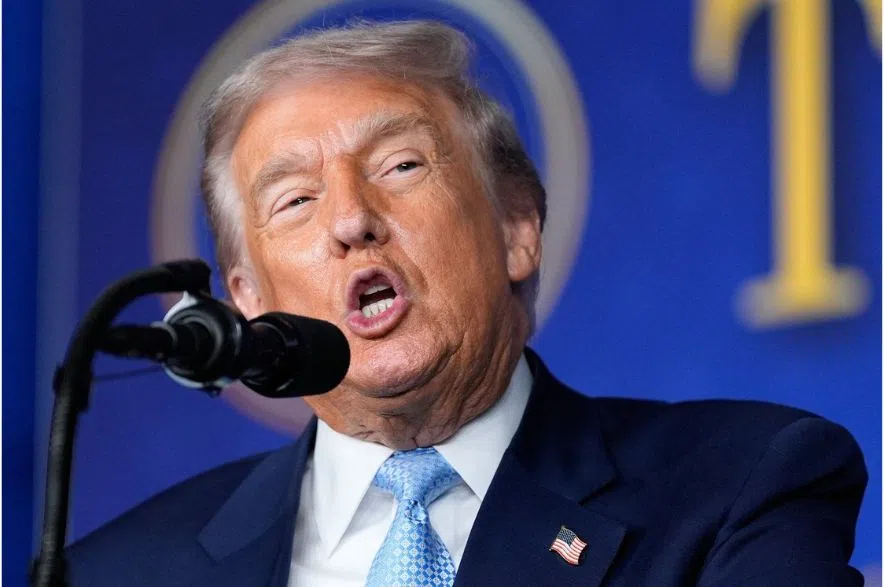
U.S. President Donald Trump told reporters on Monday that he may impose “very severe tariffs” on fertilizer from Canada in an effort to bolster America’s domestic production.
The announcement of the potential tariffs, which would have a major impact on Saskatchewan’s potash industry, came after the U.S. announced a multi-billion-dollar funding package for its farmers.
Read more:
Trump was asked about profitability when it comes to fertilizer.
“A lot of it does come in from Canada. So we’ll end up putting very severe tariffs on that, if we have to, because that’s the way you want to bolster here,” Trump said.
“(If) you put very severe tariffs from coming into other countries, you’ll be making your own fertilizer.”
Carla Back, leader of the Saskatchewan NDP, issued a statement after Trump’s remarks.
Donald Trump’s threat of very severe tariffs on Saskatchewan’s potash is going to add further economic stress, pain and suffering at a time when we can least afford it.
— Carla Beck (@CarlaBeckSK) December 9, 2025
It’s clear that Scott Moe’s buddy-buddy meetings with senior Trump advisers as recently as two weeks ago has… pic.twitter.com/wZFSnRR3tU
“It’s clear that Scott Moe’s buddy-buddy meetings with senior Trump advisers as recently as two weeks ago has had little to no effect. He continues to play nice while Saskatchewan workers get screwed by multiple tariffs targeting several critical economic sectors,” Beck wrote in a post on social media.
Beck said it’s time for the province to act.
Fertilizer makes up more than a fifth of the total U.S. production costs for crops like corn, according to the U.S. Department of Agriculture.
Potash, which is largely mined outside of the U.S., is a key product for American farmers. Canada’s 11 active potash mines are all found in Saskatchewan. In 2023, the Government of Canada said those mines produced an estimated 21.9 million tonnes of potash.
According to Fertilizer Canada, Canada exported USD $5.61 billion in fertilizer in 2019, which equates to about 18.3 million metric tonnes.
“Canada is the world’s lead supplier of potash, and 95% of Canadian potash is exported,” the organization noted on its website.
When Trump announced sweeping tariffs back in March, the idea of potash being used as a trade weapon was an idea on the table.
Ontario Premier Doug Ford told reporters that Saskatchewan should consider no longer selling potash, uranium and oil to the U.S. and to find different markets.
Premier Scott Moe pushed back on the idea.
At the time, Saskatchewan’s Finance Minister Jim Reiter didn’t seem interested in putting any export taxes or fees on potash, saying it would be damaging to the province’s economy and to its workers.
“No tariffs on this make any sense so, I guess, ten (per cent) is obviously less damaging than 25 (per cent), but it’s still a mistake and it still shouldn’t be happening,” Reiter said.
—with files from 650 CKOM