


Murray Wood: Who's hot... and who's not
Every Friday, Murray Wood takes a look back at the week's news and decides who's hot... and who's not. This week's list ...
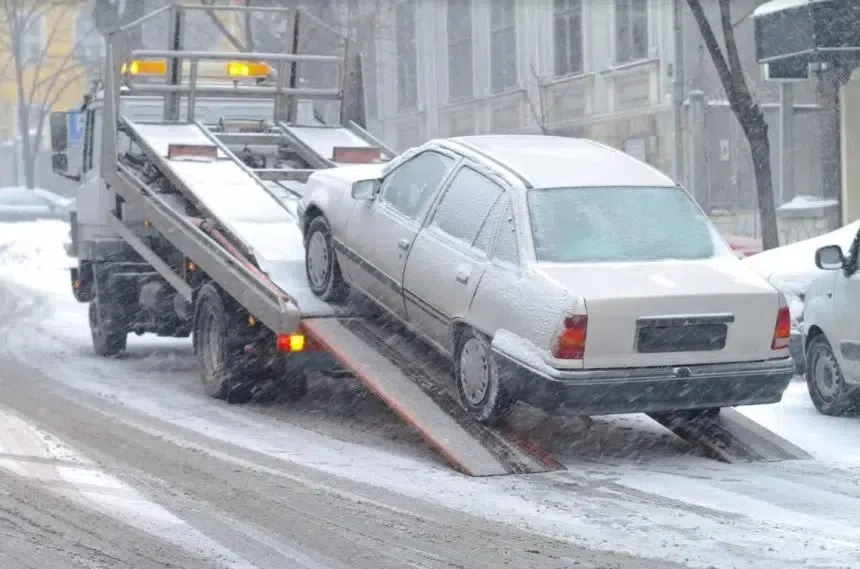
After two days of snow in Saskatoon followed by a quick two-day cold spell has left many tow truck companies across the city busy.
Auto Rescue Towing in Saskatoon said they’ve been averaging 100 calls for service a day for “stuck jobs, and the boosts,” according to office manager Heather Smith..
She said that since the snow first started to fly on Wednesday they’ve also been busy with pulling cars out of ditches across the city.
“At least 35 to 50 (vehicles),” she said.
Read more:
Smith said it has been a manageable but busy work load for them.
“I wouldn’t say it’s necessarily been too crazy for us on our end,” Smith said.
“We are running pretty steady but we’re also managing to keep (estimated time arrivals) pretty low.”
At one point on Friday, wait times were around an hour to 90 minutes for a tow.
The phone hasn’t been ringing completely off the hook, but the call volume has been a lot, according to Smith.
“At peak times, it’s a little trickier to answer all the calls coming in,” she said.
Early on Friday morning, tow trucks were “crazy busy”, after temperatures fell to around -30 C.
“We’re running steady now,” said Smith later in the day.
The majority of calls on Friday morning were for cold cars, and drivers needing extra help getting their vehicles started. Smith noted a lot of people were also having problems with their steering.
“Just because it’s so cold most of the vehicles aren’t equipped to deal with the cold.”
The weather forecast changes how Auto Rescue Towing prepares for the day, and they will either call in or schedule additional staff on days where snow or extreme cold is forecast.
“We definitely pay attention to the weather and how it’s constantly changing,” she said.
“We do know when it hits -20 C or -30 C, it’s going to be pretty busy for boosts and tows.”
Smith reminded people to be careful around tow trucks and operators on the roadsides.
“Definitely slow down and move over,” she said. “We’re in 2025 and people still don’t understand to slow down and move over when there’s a tow truck on the side of the road.”
RCMP said motorists should check road conditions before travelling and check the weather forecast, adding that if poor weather or road conditions exist or are forecast, they should consider delaying travel if possible.
If travel is necessary, police said drivers should stay on roads that have recently received road maintenance.
Travellers can access information on road conditions and see which roads have been plowed, salted, and/or sanded within the last two hours on the Highway Hotline map.
RCMP also asked that people avoid calling 911 or local RCMP detachments for updates on road conditions, adding that the 911 number should only be used for emergencies and crimes in progress. Using it in non-emergency situations could prevent someone with a life-threatening emergency from getting help, they said.
Travelling safely during winter driving conditions requires additional attention and skill, RCMP said. When driving on slippery and/or snow-covered surfaces or with reduced visibility, motorists should:
Slow down: Travel at a speed that allows you to keep control of your vehicle, even if this is slower than the speed limit.
Make smooth manoeuvres: Make soft, fluid movements when steering, accelerating, and braking.
Refrain from using cruise control: If you go into a skid while using cruise control, your vehicle will continue to accelerate and the tires will spin, preventing you from stopping your vehicle.
Maintain a safe following distance: Leave additional space between your vehicle and the vehicle in front of you, allowing for sudden stops.
Stay on main roads: Main highways are first to be cleared and travelling on them increases your visibility if you get stranded.
Use your headlights: If it is snowing or raining, drive with your headlights on at all times.
Saskatchewan RCMP’s website suggests people take the following precautions to help keep drivers, passengers and other road users safe:
Stock your vehicle
All winter travellers should pack an emergency kit to be prepared for serious weather conditions or a roadside emergency, which should include:
Before you drive
Prepare your vehicle appropriately for weather conditions by:
If you find yourself in an emergency situation where you are stranded roadside:
Always stay with your vehicle: This is your best chance for survival and helps police locate you.
Stay warm: Periodically turn your vehicle on, but be mindful to conserve your fuel and battery. Put on your emergency winter clothing before you get cold, and use candles to keep warm if necessary.
Make sure your tailpipe remains clear: Ice and snow can block it, meaning carbon monoxide could potentially seep into your vehicle.
Get some fresh air: Periodically lower your window slightly on the side of your vehicle that is downwind, allowing for fresh air to enter the vehicle.
Be careful: When shovelling or trying to push your vehicle, do not over do it.
— with files from CKOM News
Read more: