

Sarah Mills: There is still some skepticism about ice skating judging
Canada's ice dancing bronze medal should be celebrated, but Sarah Mills says the stink of Salt Lake City and the judge v...
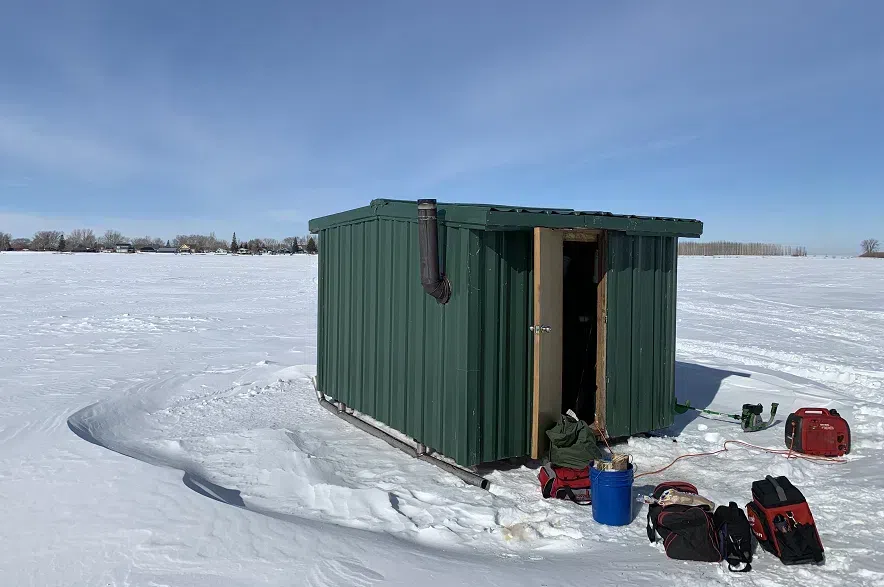
The Saskatchewan Water Security Agency is urging the public to use lots of caution and ensure the ice is safe before venturing out on a frozen lake, pond or river.
The agency said ice thickness varies around the province, largely due to the mild weather the province has seen in recent months.
Read more:
“After a milder than normal fall, ice conditions may not be stable on many lakes, rivers, ponds and dugouts for several more weeks depending on weather,” the agency said in a statement.
“When planning any activity on frozen water, it is important to observe recent weather conditions and make sure the ice is safe.”
While ice may seem solid at first glance, the agency said it could be thin, weak or inconsistent beneath the surface.
“As a guideline, you need at least 10 cm (four inches) of ice to walk on, 20 cm (eight inches) to drive a snowmobile or ATV on, 30 cm (12 inches) to drive a car or light truck on, and more than 30 cm (12 inches) to support a heavy truck,” the agency noted.
The Water Security Agency said everyone should avoid ice that appears slushy, is close to moving water, is layered due to sudden temperature changes, or has pressure ridges or other structures visible. Ice that has melted and refrozen should also be avoided.
“Ice thickness can be unpredictable and difficult to assess at times. To be sure, individuals can follow the guidelines provided and should always check conditions first,” the agency added.
Anyone with questions about ice thickness was advised to contact the agency directly.