
Wood file: Sometimes the better team doesn't win
Canada was snakebit in the gold medal hockey game, and sometimes, even when you dominate the other team, you come up sho...
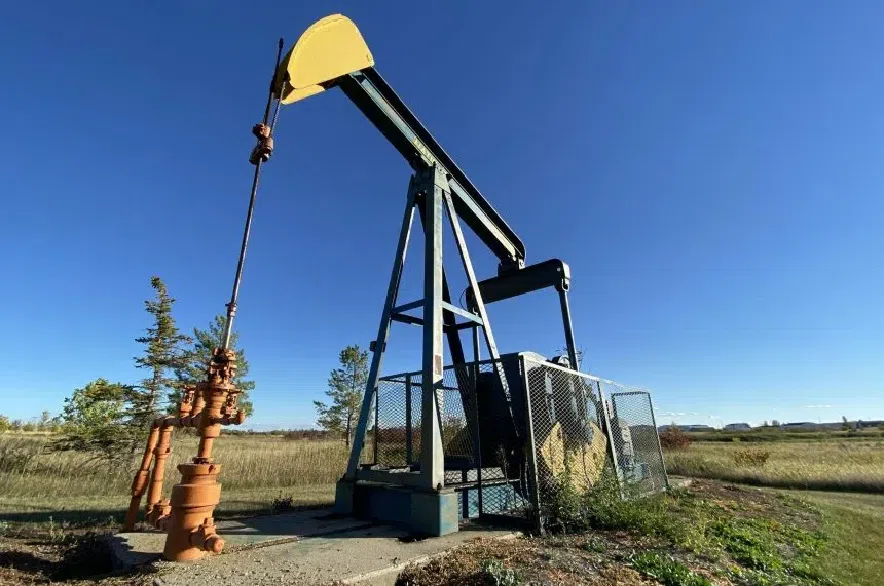
Many questions are being raised about how the arrest of Venezuelan President Nicolás Maduro by U.S. forces will impact Canada.
Paul Martin, Rawlco Radio’s business analyst said Canada could be significantly affected if the U.S. taps into Venezuela’s oil reserves, which are the largest in the world, but he noted that it could take years to get answers to a lot of the unanswered questions.
Read more:
U.S. President Donald Trump made comments about taking over Venezuela’s oil reserves after the military operation in Caracas that took Maduro into U.S. custody over the weekend.
During an appearance on the Greg Morgan Morning Show on 980 CJME, Martin said Ottawa will need to shift its focus to find alternate markets for its oil, and he anticipates the conversation will shift to pipelines.
The following transcript has been edited for length and clarity.
GREG MORGAN: I know it’s early, but for our oil industry and our economy, what might this mean?
PAUL MARTIN: There’s a big oil reserve that America can tap into. Does that threaten the Canadian connection? I suppose, theoretically, it does. But there’s a fixed amount of production in the world every day right now, and there’s a fixed amount of consumption. Those two are kind of close. It’s probably a bit more production than consumption. The oil that’s been coming out of Venezuela has found its way into the markets. A lot of it’s sanctioned, but it goes through what would be the Russian and Chinese pipelines. If that gets diverted somewhere else, then those guys have to replace it and they’ll go somewhere else. If we get displaced, it just ends up flowing in different directions.
But if you’re going to redevelop the Venezuelan fields, that’s going to take a long time, so we’ve got lots of time to figure this out. Maybe that’s the good news. Then this becomes less of a business story, more of a political one, because it puts pressure on Ottawa now to say, “Well, if Canada is going to lose some of its market in the States, and then we have to find alternate markets, which means we need to get pipelines going.” So this is one more weight on the scale towards pipeline approvals in this country. We’ve talked about that before and I suspect that’s where we’re going to go with this. The conversation is going to be “How does Canada get its product to market?” Its biggest market is being threatened, now – potentially threatened, at least – and we still import oil in this country on the east side. So should we be looking at that Energy East pipeline again? Do we need to make sure we get the west-coast pipeline going, or do we go north? Or do we do all of the above? So I think it’s as much a political conversation right as it’s going to be a business one.
How do you think this might affect our leverage on the CUSMA deal in the coming months?
MARTIN: It’s going to be a part of the conversation. We’ve heard Trump say before that we don’t need anything from Canada, and so this will just add to his belief in that situation. But most of our oil is contracted to refiners in the middle of the U.S., in the Midwest and stuff like that. Are they going to be redirecting? They probably would need to do a whole lot of pipeline construction down there, too. It’s a specific type of crude that comes out of Venezuela that can’t be readily used in every refinery that’s out there, so maybe it’s as disruptive to the existing supply chain as anything.
But on paper, you look at it, and you say “Well, the U.S., perhaps, is now tapping into the world’s largest reserves, and do they need any other suppliers?” Think it’s a legitimate question, but we’re a long way – years, probably – from getting an answer. The pivotal one for me is will industry actually sign up for this? And do they want to go back in there until they know just what is going to settle out politically in Caracas? And will whatever administration gets put in place there, whether it be an American or Venezuelan, bring stability? If I’m going to pour billions of my shareholders’ money into that, do I have a chance of not only getting it back but making a return? These are big questions that have to be resolved.