
Sarah Mills: Justin Timberlake's arrest video should be made public
Justin Timberlake is fighting in court to keep his impaired driving arrest video hidden. Sarah Mills says the multi-mill...
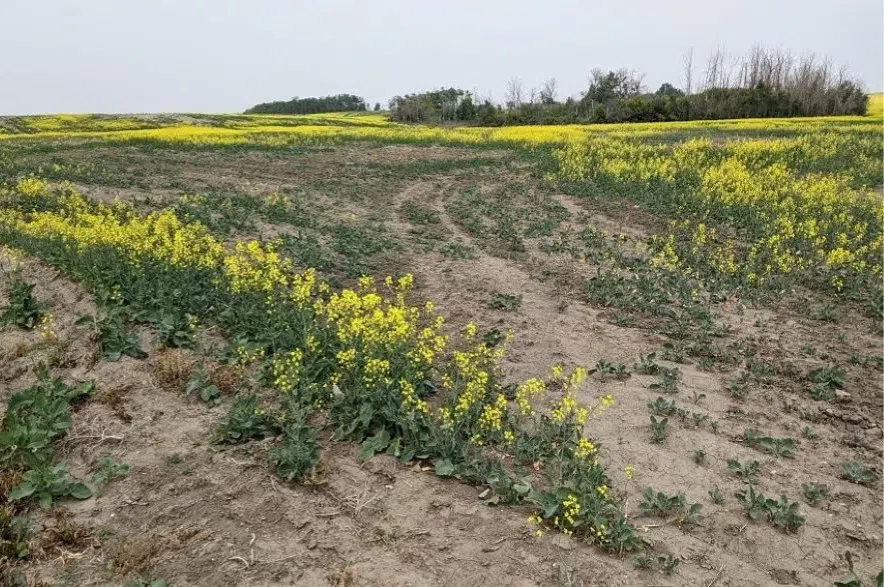
Experts are quickly weighing in on the deal struck between Canada and China, announced Friday by Prime Minister Mark Carney, that will see Canada allow up to 49,000 Chinese-made electric vehicles into the Canadian market each year.
A 6.1 per cent tariff will be applied to the importing of those vehicles. China is expected to lower tariffs on canola seed in March to 15 per cent in exchange, and cut tariffs on canola meal, lobsters, crabs and peas through to the end of the year.
Read more:
Rawlco business commentator, Paul Martin, joined The Evan Bray Show this morning to examine the details of this trade deal more closely.
The following transcript has been edited for length and clarity.
EVAN BRAY: We’re all digesting the news, but for those of us that have been yelling for these tariffs to be removed, it looks like we’re moving in the right direction. Your thoughts?
MARTIN: I think that characterizes it very well. You see already, Doug Ford is kind of poo pooing this deal, and the Premier of Saskatchewan, Scott Moe, is praising it. This has been the tight rope that Mark Carney was trying to walk. He had to blend both domestic political issues and considerations with the international ones. But at the end of the day, it just seems like pragmatism, in the business sense, prevailed. In my conversations with the canola industry, the Chinese crushers have been saying, “Hey, we need your product.” There’s a demand for it on the Chinese side, and we had to find a way to actually open the door to let the stuff flow. And the irritant was all about these electric vehicles. Interestingly, that started in Washington and ended up in Ottawa. How Saskatchewan got caught in the crossfire is pretty interesting, other than we’ve got products the Chinese want and the Canadian consumer has been speaking fairly loudly. On this one, they not particularly interested in electric vehicles. So China is looking to, I guess, still get its beachhead here and hope they can make something happen. But finally, a little bit of common sense prevailed in the sense that canola has got nothing to do with autos, so let’s separate them. It would appear we’ve got that done.
You have said many times that investment is often scared by uncertainty. Does this bring back some stability to things like canola crush and the value-add to our commodities, where we might start to see that expansion move forward again?
MARTIN: It’s definitely a step in the right direction. From what I gather, this agreement is until the end of this year. That’s probably not enough to have somebody pull the trigger on a new canola crush plan. But the more near-term decision that needs to be made is for the Saskatchewan producer: Do I put canola in the ground this year? This helps clear that decision making process a little bit. We may have bought one growing season. But I don’t know that we’ve bought enough clarity with this particular deal for someone to invest in a canola crush plant, which isn’t seasonal. You plant a crop for one year, you plant a canola crush plant for decades. So I think this one is really about the near term rather than the long term, at this point.
Can you speak, Paul, to risks that you might see, or maybe advantages, in that Canada, through a memorandum of understanding (MOU), is now allowing Chinese involvement in our energy sector? There’s a bit of a two way agreement. MOUs have been struck with both conventional and green energy production. This opens the door to Chinese investment in Canada. Many people are worried about that. What are your thoughts?
MARTIN: I am less worried about that. If it’s buying into infrastructure, if they want to finance a pipeline, for example, why would we get frustrated with that? We’re trying to figure out how to get one built, and if they’re prepared to fund it … if you look back, there’s something called the One Belt One Road project, which has been around by China for a long time, and they’ve invested in infrastructure around the world, whether that’s port facilities or even rail lines. They’ve not done anything on the North American front, and maybe this would fit into that category of what they were talking about. It’s not foreign for us to have international investors. Americans have invested in the energy industry in Canada forever. Can I remind you of a guy named Pierre Trudeau who tried to cut that back in 1982, with the energy program. So this has been around for a long time, so I don’t get so excited about that. I did hear the premier say we won’t sell them land, but if they wanted to buy power lines or maybe something with the on the lumber side as well, those would probably be entertained.
Some people are suggesting, are we living in a world where the China Communist Party is a more reliable trade partner than the United States? What do you think this does, if anything, to the ongoing efforts to get a trade deal with the States?
MARTIN: It’s a very good question, and who knows? Because it’s hard to figure out the posture that they take in the U.S. because the president tends to play a little bit of good-guy, bad-guy himself. But in a way, he pushed this by saying the U.S. doesn’t need Canada for anything. He’s kind of set the table for us to go somewhere else. So it’d be self-critical if he complained too much about it, but no doubt he’ll find a reason to use it in his playbook to say here’s another card or chip I have at the table when I’m bargaining with Canada and Mexico.