

Sarah Mills: There is still some skepticism about ice skating judging
Canada's ice dancing bronze medal should be celebrated, but Sarah Mills says the stink of Salt Lake City and the judge v...
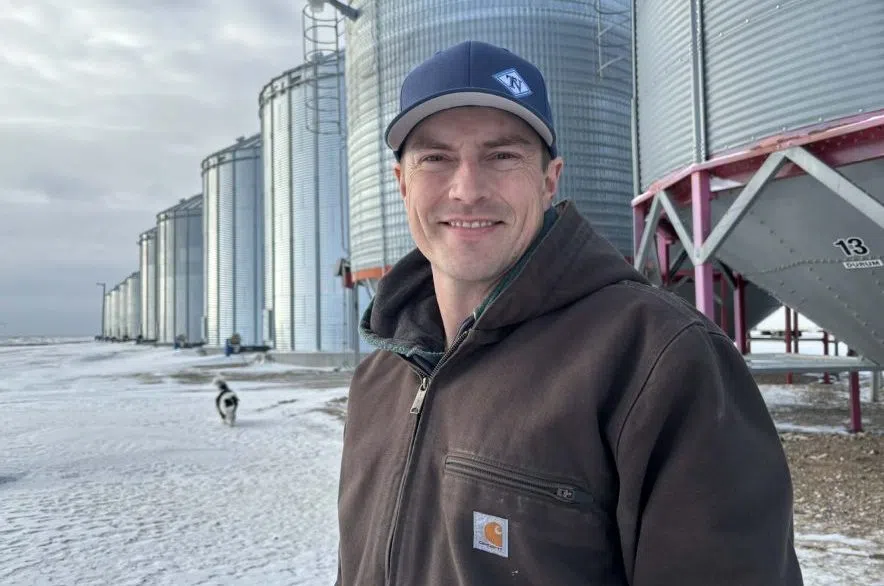
For the first time in months, Jake Leguee has hope the canola in his bins will turn a better profit.
The trade deal between Canada and China that will drop tariffs on canola meal and lower the levy on canola seed to 15 per cent by March, has given him a bit of relief.
Read more:
“I was quite surprised,” said the farmer west of Fillmore, Sask.
“A lot of these meetings happen, and you think there’ll be some thawing of the relationship … but it was a very pleasant surprise to see the news that the tariffs are going to be reduced quite significantly.
“(It) gives me a little bit more optimism for the upcoming growing season.”
Leguee said he has taken canola sales a little slower this year, but now has hope that the market for the crop will improve.
“It cost our farm money in 2025, no doubt about it,” he said. “But at least with what we have left to sell, there’s some optimism that bids should be a little bit stronger.”
Leguee continued to sell canola through the winter months, knowing he could make more without the tariffs on.
“There hasn’t been a reason to go to make a lot of sales,” he said. “But we continue to have to meet our cash flow obligations and keep trucks on the road.”
Leguee won’t plant more canola, despite the tariffs being lowered. He said his crop rotation is already set, his herbicides and fertilizer plans are in place.
“We’re living in very volatile times, who knows what’s going to happen tomorrow?” Leguee said.
“It’s great to see progress with such an important trading partner like China, but at the same time, there’s a lot of risk that the United States is angered by this or upset by it.”
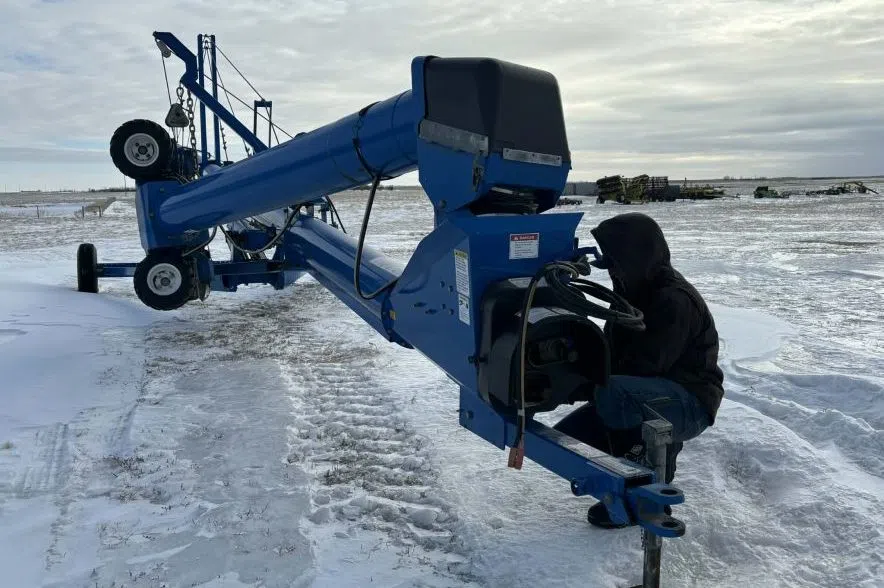
Leguee fixes something on an auger. (Gillian Massie/ 980 CJME)
Before Leguee starts to rejoice the trade deal, he said he wants to see some large sales of canola to China.
“The reality that we’re facing in crop farming these days is that we are dealing with an incredibly unpredictable geopolitical environment,” he said.
“While it’s wonderful to see these tariffs be reduced, there is no doubt that cautious optimism is the best path forward as far as I’m concerned.”
Leguee feels more confident heading into seeding this spring.
“The canola that I have planned for 2026 looks a lot better than it did a couple of months ago,” he said.
Read more: