

Sarah Mills: There is still some skepticism about ice skating judging
Canada's ice dancing bronze medal should be celebrated, but Sarah Mills says the stink of Salt Lake City and the judge v...
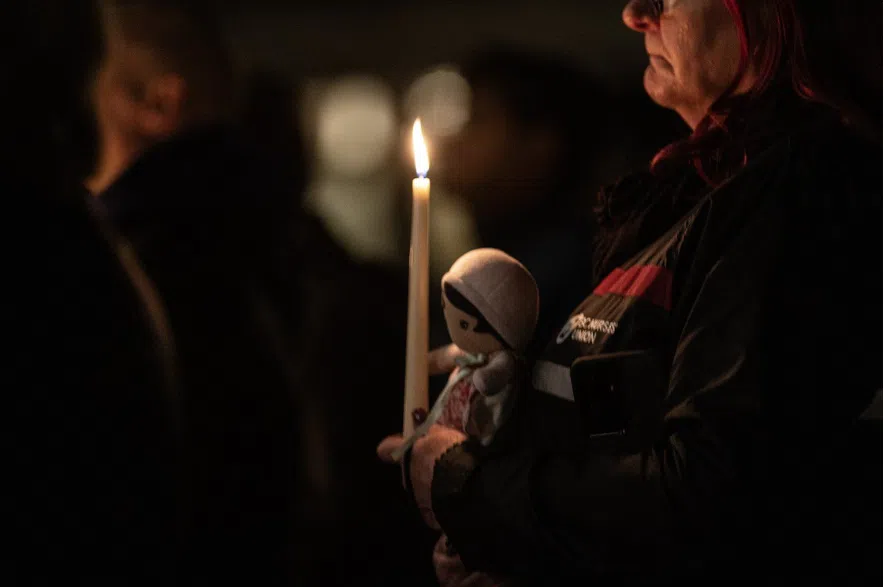
A former student at Tumbler Ridge Secondary School says he’s “in complete shock” after Tuesday’s shooting in the northern B.C. community.
Jesse Van Rootselaar killed eight people at the school and a home in the community, injuring roughly 25 others before committing suicide.
Read more:
Nigel Maxwell, a senior reporter at paNOW, attended Tumbler Ridge Secondary School 30 years ago. He joined The Evan Bray Show on Thursday to provide more insight into the school, the community and the impact of the tragic mass killing.
The following transcript has been edited for length and clarity.
EVAN BRAY: I can’t imagine what you were feeling when you heard about this, because I can’t imagine Tumbler Ridge is a place that you would have ever expected you would have seen a tragic incident like this unfold.
NIGEL MAXWELL: It’s been 30 years since I’ve walked the hallways at Tumbler Ridge Secondary School, played basketball and volleyball for the Kodiaks, took part in the school dances and plays, and hearing the news this week, it was like a punch in the gut, and somebody just twisted.
And at first you feel denial. I mean, that’s one of the first feelings that you have when something this traumatic hits you. There’s no way that something like this could have happened in a small town of 2,500 people, where parents send their kids walking down the street to the downtown area without a fear or worry. Nothing bad happens in a community like that. Kids stay out late at night. They’re playing street hockey and basketball in the court and you don’t worry about anything like that happening. And just hearing about this has just been complete shock. I’ve been on the phone and group chats with friends I haven’t spoken to in decades, and we’re all just feeling this hard lump in our chest and wondering why. I mean, what could have happened?
Any time we see events like this unfolding in Canada, it’s tough to see the images on TV, even police tape around a school playground, for example. But for you, that building has lots of memories. Can you talk about the building, the layout of the school?
MAXWELL: It’s a two-level building that you’re entering for the secondary high school. Since I’ve gone there, it’s now a Grade 7 to 12 school. They’ve also added on a post-secondary Northern Lights campus on the edge of it as well. As you enter the school, there is a large, wide staircase and I know there’s a staircase mentioned in the police reports yesterday. That’s the first thing you see when you come in through those large doors. Just past that is the large gym area, and directly to your left would be the administrative and principal’s offices. As you climb that wide staircase – it’s used all day, as kids are going back and forth to classes and teachers – you get up to the top of the second flight of stairs and to your left was a guidance counsellor’s office and a set of classrooms reserved for the Grade 8s and 9s. To your right is more of the senior grades, the chemistry, the biology labs and the dreaded math classroom as well. And then just ahead of you is the large library where students are often hanging out on their free periods, talking about their days. Clubs are meeting there, talking about fundraising. I often had drama meetings in there, and I recall meetings with our local MADD group, students against drinking and driving, planning for our next fundraiser.
That library, I think, played a role in this. It was where a lot of the students were barricaded in when police went in and ultimately pulled the students out of the school. Would that have just been a normal spot for them to go to?
MAXWELL: Absolutely. It would be a main gathering place in that school, besides the gym area. As I mentioned, there’s a large foyer area when you come in those main doors, where you know there’s constant traffic with students. But in terms of gathering places, it would be the library or the gym area.
You mentioned you’ve been in contact with many former classmates, people you probably haven’t talked to for a while. Can you just describe what types of conversations you’re having and what people are feeling? And are you still in touch with anyone who’s still in the community?
MAXWELL: Unfortunately, a lot of the teachers and the people that I knew have all moved on to other ventures and other careers, but we still have connections there. And speaking to some of my friends that I haven’t spoken to in decades, it’s just shock. I mean, something like this did not ever happen in our community. My mother was actually a teacher at the school as well, and I was talking to her this week about it, and she’s feeling the same way that I am. She made a comment, “The only thing that kids ever worried about in that community was the grizzly bears.” We biked out to the river to go fishing or go hiking in in the nearby forested area. Every day before I go to work, I drop off my young daughter at her school, and I can’t stop thinking about all those families and parents who would have said goodbye to their kids that day and never had a chance to see them again later on. There were kids sitting in that library, in their classrooms, planning activities to go to the nearby community centre, probably after school – which is like 100 feet away from the school – talking about the practices, and it’s all been cut short.