
Sarah Mills: More money for Canada Post is not the way to go
Sarah Mills says another $1 billion for the public mail carrier is repeating madness and not conducive to the long-term ...
Canadian political leaders are expected to arrive in Tumbler Ridge on Friday ahead of a vigil for the victims of a mass shooting in the remote B.C. community.
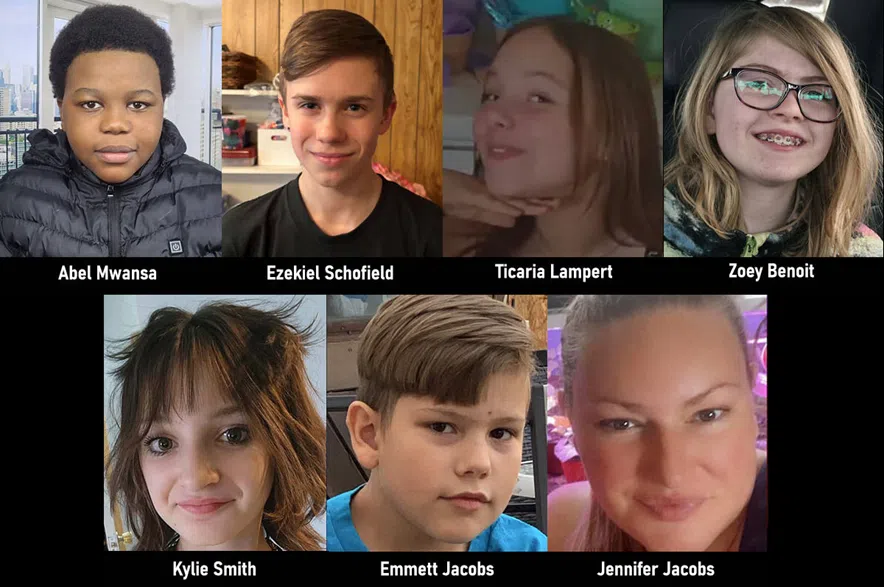
According to the RCMP, 18-year-old Jesse Van Rootselaar shot her mom and her 11-year-old stepbrother on Tuesday at their home before going to Tumbler Ridge Secondary School and killing five students, all aged 12 or 13, along with an education assistant.
Read more:
Jana Pruden is a crime reporter, feature writer and podcaster with The Globe and Mail who has covered a number of tragic mass killings across Canada, including the 2022 stabbings on the James Smith Cree Nation in Saskatchewan. Pruden joined The Evan Bray Show from Tumbler Ridge to share the latest details, the questions that remain unanswered and how the small community is grieving in the aftermath of Tuesday’s shootings.
The following transcript has been edited for length and clarity.
EVAN BRAY: Can you just tell us what you have seen and experienced, generally, in the time you’ve been there?
JANA PRUDEN: Yeah, I got here on early Wednesday afternoon. It’s a very remote community. It’s pretty hard to get here. I flew from Edmonton and then drove about two and a half hours into the community. It’s very remote, very beautiful. It’s a very peaceful community. And a lot of times when a tragedy like this happens, people wonder “How could this happen here?” But that’s so especially true in Tumbler Ridge. Tumbler Ridge feels very isolated from the problems of the outside world, I think, and of big cities. And so I arrived to find a community really just in shock. And when you look at the magnitude of this act of violence in a town of about 2,400, truly everybody is affected and affected in multiple ways, and that’s so evident when you talk to people. They either have lost someone themselves, or they are one step removed, and it’s a small step, and in many cases people are feeling losses from all directions. It’s hard, it’s hard to describe, really, the magnitude of the grief and of the impact of this horrific act of violence in this community.
We got the full list of victims’ names yesterday, and photos were released, which, for many across Canada and the world, I think, just continued to drive home the horrific impact of this. What was that like, being in the community? Did you get a sense of how the community was reacting to that?
PRUDEN: When something like this happens – and sadly I’ve covered a number of acts of mass violence like this – at first the RCMP aren’t releasing any names, including of the shooter and of the victims, and it feels like an eternity from the outside, and as a member of the media. It feels like so long before they’re releasing anything. But, of course, it actually is a very short time frame, and I do give the RCMP credit. Of course they want to make sure that they’re right. You can imagine it would be catastrophic to misidentify someone, whether it’s a victim or the shooter. And of course it’s a very, very complicated scene to process, and a lot of people involved. So what we saw is that names start to trickle out. People make posts on social media. Some families very quickly might identify someone publicly. The GoFundMes start to pop up, so the names start to come out, and we in the media start to reach out to families, and the reason is because I do think it is so important to know who these victims are, to see that they are real people. They are real children, and that’s what we see. So when it becomes official and then all of the photos are out, and they can be used by all media outlets. It is so, so powerful and so so heartbreaking to see these little faces. You can think of a 12-year-old when you see these little children. It’s really gut wrenching. And I think it’s so important, though, because it allows everyone to connect with these real children and start to understand the magnitude of what is lost with an act of violence like this. It’s truly unfathomable.
One conversation that we got into on the show yesterday was about the timeline of the police response. And I’m wondering, Jana, if you are able to help us understand. It sounds as if the RCMP were able to get to that school in a very short time after the report of shots fired happened. Was their response into the school also swift once they were on the scene? Do you know that?
PRUDEN: Yes, absolutely. We know that they were there within two minutes. There were four police officers who arrived at the school. Within two minutes, they immediately entered the school. The RCMP have described that there was active gunfire, including in the direction of the police as they entered the school. It’s a very, very quick response. In some cases there appears to be confusion for an interesting reason, which is, of course, Alberta is an hour ahead in time zones from B.C., but this community of Tumbler Ridge doesn’t do daylight saving time, so I saw some people sharing the idea that it had taken a very long time to respond. But I actually think people who didn’t know weren’t properly translating the time zone. So what we do know, what is factual, is that it is there were four officers running into the school in less than two minutes. Very, very quick response. And this is an isolated community, but officers from the nearest communities were here very, very quickly as well, from Chetwynd and Dawson Creek and Fort St. John, so very rapid RCMP response.
That’s important, and I appreciate you clearing that up, because you’re right. We had people yesterday saying “Well, I’m hearing it was an hour. I’m hearing it was two hours.” The reality is, they were on scene in two minutes. Now, the murders that happened in the home – the shooter’s mother and stepbrother – obviously would have happened before, but were there no reports to police when that happened?
PRUDEN: It’s interesting, because I spoke with the neighbour, one of the neighbours right next door. The houses are very close together, little houses, and he was home the entire day, and he did not hear a thing. He did not hear any gunshots, and he was there and he would have heard it, so no, nobody knew that that had happened at the home, and that scene was only discovered after the shooting at the school. The neighbour had some thoughts about a gun that wouldn’t make noise that he would have heard, but they’re very close together, and if he hadn’t heard it, there was no other house closer.
What are the unanswered questions, Jana, that you and the rest of us are still needing to find answers to?
PRUDEN: There’s so many around the shooter’s mental health. We know that the shooter had severe mental health problems, and was being treated in psychiatric hospitals, that there had been crisis response treatment, that the RCMP had been called to the home multiple times and related to the shooter’s mental health. At one point, the shooter had set a bed on fire inside the home, so a lot of questions there, and whether the person was able to access services and appropriate services for mental health. Did the system fail a very troubled young woman?
Also the guns. We know that the shooter had an expired firearms license, and there had been guns in the home that were seized two years ago, and someone, the lawful owner of the guns who is not the shooter, had petitioned to get the guns back, and did so successfully. They were returned to the home about a month ago, and they petitioned the court for that. Owning guns is not unusual in many rural communities. A lot of people here engage in a lot of outdoor activity, so that, in itself, is not unusual that there were guns. But of course guns being returned to the home where we know there’s someone with serious, serious mental health issues that they’re struggling with that is a big question, and something that we’re going to be really looking into in the days to come.
There’s been a question about whether any of the shooting was targeted. It doesn’t appear to be so in any way. The shooter had attended the school, but hadn’t been there for four years. Doesn’t seem like any indication that she was targeting specific children by any means. And I think the question on everyone’s minds, really, is why? Why would she have done this? And could anything have been done to stop it? And that’s something that I do hear from people, and that we see in so many tragic events, is that people in their own mourning and grief are also thinking about “How could this be prevented? How could this be how can we make sure another community, another school, other children, other families, don’t go through this?” And it’s a hard question to answer, but probably the most important.
Do we know, was the mom the owner of those guns?
PRUDEN: I would say that’s our best bet right now. The RCMP has not confirmed that, but we know that the mother had guns. She posted about them in the past, so that’s sort of an easy inference. Of course we don’t work on inferences in the media, so we’re being careful about that, and we won’t say that for certain until we can prove it for certain, but I think that’s probably the likely case.
We know that Canadian leaders will be there today, including Prime Minister Carney. What do you expect to see today?
PRUDEN: Of course the premier was here. Was that yesterday or the day before? The days are blurring together a little bit. Local leadership has been here. Federal leadership was here also on on Wednesday night at a late press conference. I think we see that incidents like this are are beyond politics. And you can see that in the political leaders as they as they speak, that many of them are very, very moved, holding back tears, sometimes crying.
We saw that in Prime Minister Carney yesterday, speaking that it’s very, very emotional for people, and I think that’s a really good thing at a time when there’s so much political division. It’s important that we see that we all care when children die. We care so much. And there are a lot of questions about whether it could be prevented and how it could be prevented. And do we have proper structures in place to protect people in Canada and to protect something like this from happening? But I think it’s going to be another really long, emotional day in a town that is only now starting to comprehend what has happened and the impact that it is going to have on them for forever.
You’ve been doing crime reporting for a long time. Before we say goodbye, can you just talk about how you’re feeling and how this compares to other work you’ve done?
PRUDEN: Unfortunately I’ve covered Canada’s largest mass shooting in Portapique, Canada’s largest mass stabbing, one of Canada’s largest mass murders, in James Smith Cree Nation. And now I am here covering Canada’s largest school shooting. And, yeah, it’s horrible. I would rather not be in this community, this beautiful, beautiful community with all of these very kind people for this reason. And I guess the the one blessing is that these events are very rare. In Canada, we have actually very low gun violence compared with other countries, compared with our neighbours to the south, but it’s absolutely horrible and the magnitude of the grief that people express, everybody, the victim’s families, the shooter’s family, and everybody in this community… you walk somewhere, you you walk by the drugstore or something, and in the parking lot there’s someone hugging and openly weeping. At the vigil, there’s people just keening with grief, and it’s very heavy, and it’s very tragic, and I think it’s a great responsibility of mine to tell these stories, and one I take very, very seriously.
–with files from The Canadian Press