
Sarah Mills: One royal who deserves praise is Princess Anne
She didn't give her kids royal titles, never sold out her family secrets for money and has no ties to Jeffrey Epstein. S...
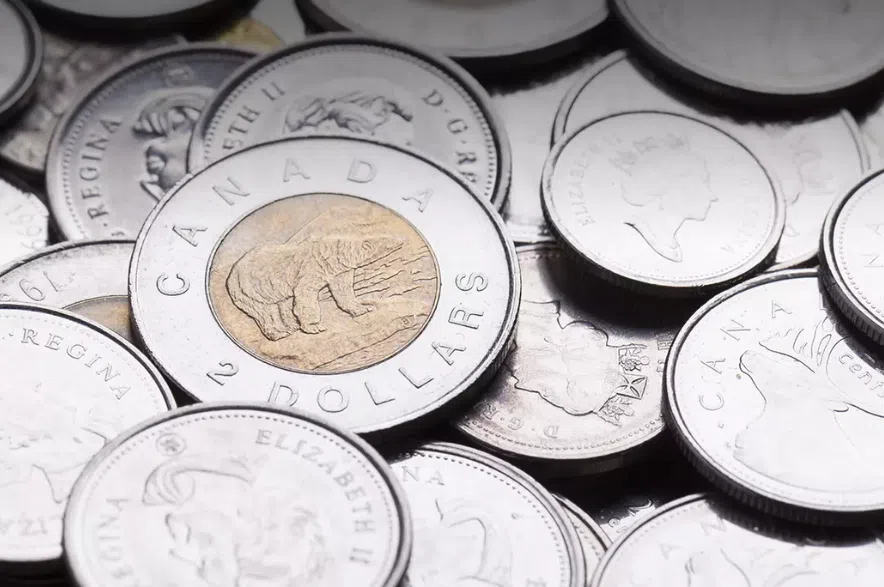
When the toonie was released in 1996, not everybody was happy to have another coin to carry around, and some complained that the centre part of the coins was popping out.
But in the 30 years since its release, many have grown to love the $2 coin, with its two-tone design featuring a polar bear standing on an ice floe. The artist behind that polar bear is wildlife and landscape artist Brent Townsend, who joined guest host Tamara Cherry on The Evan Bray Show on Thursday to discuss his experience designing the coin.
Read more:
This transcript has been edited for length and clarity.
TAMARA CHERRY: How does it feel to have your artwork jingling around in people’s pockets across the country for three decades?
BRENT TOWNSEND: It makes me feel old. No, it’s been great. Been an adventure, I guess, to know that it’s in the pockets of everybody around. It’s a good symbol for Canada, too, with it being the polar bear.
Way back in the beginning, before you submitted this design, you were, I believe, among five Canadian artists who were invited to present sketches that could potentially appear on a new $2 coin. Can you bring us back to that moment that you were first approached for this opportunity?
TOWNSEND: When I was first approached by the mint, I was kind of apprehensive about even participating. I actually said to the consultant for the mint “Well, it really has to be an animal that I’m interested in.” And she did tell me it was a polar bear. I identify with with bears in general, so I was all in on it.
Tell me about your connection to bears and why this was exciting for you.
TOWNSEND: I’m a bit of a bear about things, and I always like the polar bear in particular, so it was a neat project to be part of, because new coins don’t come around often. The existing coins prior to that were done back in the 1930s, and this was a unique opportunity. I thought “I’ll do my drawings and submit them and see what they say.” I knew that everything had to remain hush hush until the new the design was chosen, and then I had to keep it quiet for about six months.
How hard was that?
TOWNSEND: I just had a little grin and I didn’t say anything to anybody. I remember showing the drawings to one of the consultants from the mint in a restaurant on Highway 7 in a little town. At that time, I was doing drawings for the outer ring.
What was going to be in the outer ring?
TOWNSEND: One of the ideas that I suggested was that the outer ring would be frosted. I took the drawing out in the restaurant and someone threw their hand over it, and I said “No one’s going to know what we’re talking about. Just relax.” It ended up that they chose it, and I was very happy. I thought it’s a neat legacy to have, because with coins, their art lives on so long after you’re gone, your art is still around. So this is one piece of art that’ll be around for a long time yet.
The middle part itself, where the polar bear exists, we’re talking about a design that is going to be appearing on a space that is essentially the size of a dime and doesn’t have any colour. What sort of considerations had to go into making a design like that?
TOWNSEND: I was shown a test blank size of the area that I had to work with. I knew I had to relate as many characteristics of the polar bear as possible so that people didn’t think it was a black bear or grizzly. There’s that classic long neck and the bridge nose of a polar bear, the long fur coming off of the front legs. I pretty much determined that I had to do it in profile to translate those characteristics. You didn’t have the element of colour, which was white.
How much freedom were you given by the mint in terms of your own artistic interpretation of the polar bear?
TOWNSEND: They did say they wanted an adult male polar bear moving. That was the criteria, and if I could relay some of the Arctic landscape. Obviously I couldn’t go into too much detail, but I decided to do the bear like it was wet, as if it had just come out of the water.
Did you ever expect that kind of emotional attachment from Canadians to your design?
TOWNSEND: I think so. It’s an iconic symbol for Canada and it’s an iconic symbol for the north, and it’s tactile. People can handle the coin. It’s not the sort of feeling you get from handling a debit card. You have a symbol of Canada, which I think is kind of cool, and it’s probably Canadian patriotism, which has been woken up a little bit with what’s going on down south. People are really conscious, especially with what’s going on, so it’s a good reminder to bring it home to people.
The bear got a name “Churchill” through a public contest. Do you think that it fits, or did you have a different name in mind?
TOWNSEND: I think it’s perfect for them. And the other thing we need right now is we need the Churchill of the day – especially seeing as most of the circulating coins are struck in in in Winnipeg or Manitoba. I don’t know where the facility is, but I know all the vast majority of the circulating coins are manufactured in at the Manitoba plant there, and from what I understand, the precious metal versions are all done in Ottawa. I think there’s like 370 some million out there now in circulation. And we’ve had the commemorative toonie for the late Queen Elizabeth II, which had the black outer ring, which I call it the goth, but even with the black ring it still look great.
Have you heard any memorable stories from Canadians about what the toonie and the design means to them?
TOWNSEND: No. It obviously was embraced very well by the Canadian public. In the initial coin launch, they ended up having to stamp more because the first batch went out with 60 million coins into circulation, and a lot of people were just like putting them in the sock drawer to save one or two of the new ones when they first came out. They ended up having to stamp a lot more.
The controversy about the centres falling out actually ended up being a good story, because what it did was it caused greater interest in the coin, and curiosity in the coin. Any coin that the center fell out of is a collector’s item. It is worth more than the $2.
TOWNSEND: If the centers were falling out, there might have been people trying to make them pop out.