

Sarah Mills: My World Cup ticket hopes are dashed once again
Sarah Mills just received another email telling her she hasn't been successful seeking World Cup tickets. The dream is d...
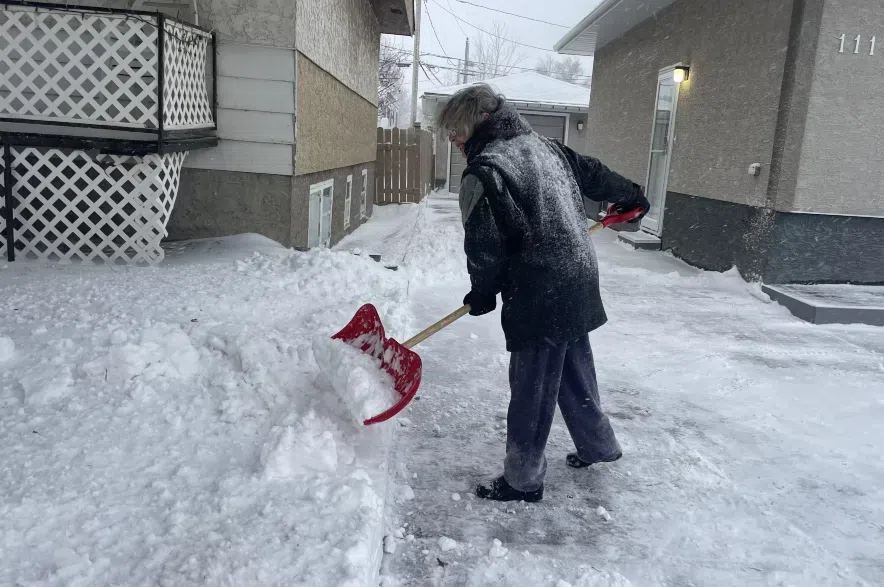
After a heavy snowfall this week, many Saskatchewan homeowners will find themselves out in the cold with a shovel in hand.
But shovelling can sometimes lead to serious injuries, according to Adrianne Vangool, a Saskatoon-based physical therapist and yoga therapist with Vangool Wellness. During an appearance on The Evan Bray Show with guest host Tamara Cherry on Wednesday, Vangool said she sees a wide range of injuries related to shovelling snow, including damaged wrists, shoulders and backs.
Read more:
“Because it is a full-body activity and because we’re Canadians and from Saskatchewan, we’re used to doing it, so we don’t think about the load or the intensity of the activity,” Vangool said.
“We often don’t think about the risks that it poses to our body.”
Vangool said moving large amounts of snow is a real workout, making it important for people to stretch beforehand.
“Unless you’re doing a lot of that in the gym already and you’re warming up and preparing your body to move that kind of a load, to all of a sudden go from the couch to shovelling that amount in one go is quite strenuous on the body, so you can see why there is that opportunity for injury,” Vangool said.
She said that a simple “sit-to-stand” squatting exercise is a really good way to get the body warmed up before shovelling. Vangool also suggested holding the shovel sideways and doing gentle twists and rotations of the upper body.
“With the shovel sideways in both hands pressing up overhead, you’re preparing your shoulders and upper body for that type of moment,” she said.
“It doesn’t take a long time, but a little bit of warm up can really set the stage for injury prevention.”
Vangool said the use of improper form is another common cause of shovelling injuries.
“You often hear ‘lift with your legs,’ but actually with shovelling it’s better to push and really avoid the lifting as much as possible – certainly above the hip or chest height,” she said.
“The more that you can push it into a pile rather than lifting at all is really important.”
Slipping on snow or ice is another common cause of injuries in the wintertime. Vangool advised everyone to get quality footwear or grips to attach to the bottom of boots.
Vangool also said shovelling in a wide stance with bent knees puts people in a better position to prevent falling if they slip.
“You might slip, but you can catch yourself. If you’re standing upright and your knees are straight, imagine if somebody gently pushed you or you slipped your foot. You’re not in a good, active stance to correct or catch yourself,” she said.
Vangool said it’s important to help out members of the community or household who might not be able to do the work themselves
“Lean on your neighbours,” she said.
“If there are people around who have a snowblower or younger kids around, it is a great form of exercise.”
She said helping a few neighbours with their shovelling means you can probably skip a trip to the gym.