

Murray Wood: Who's hot... and who's not
Every Friday, Murray Wood takes a look back at the week's news and decides who's hot... and who's not. This week's list ...
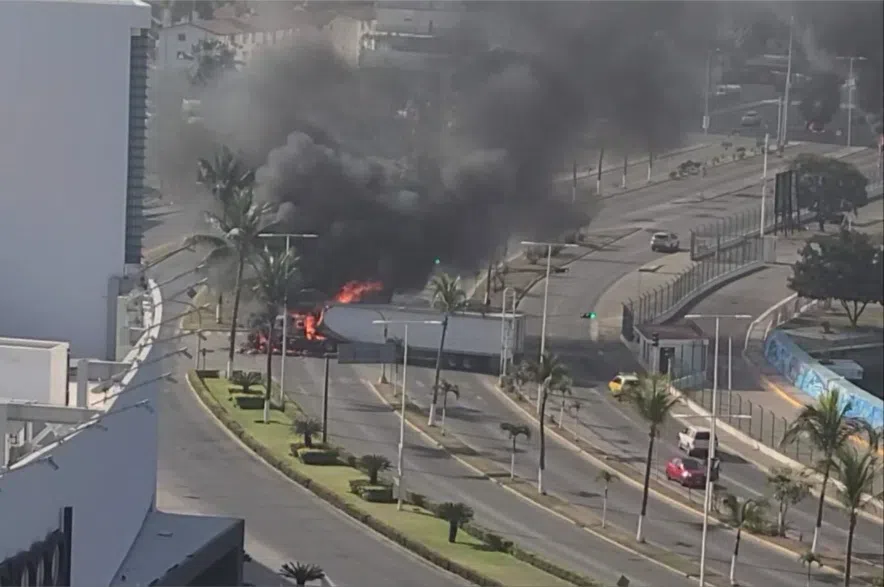
Tourists in areas of Mexico that were under a “shelter in place” order due to cartel violence in places like Puerto Vallarta are now reporting that the the region is returning to normal.
Guest host of The Evan Bray Show, David Kirton, spoke with David Mora, Senior Mexico analyst at International Crisis Group, to better understand the history of cartel violence in Mexico.
Read more:
The following transcript has been edited for length and clarity.
David Kirton: Luckily enough, David, you’re actually in Guadalajara right now, real close to the action.
David Mora: I don’t know if luckily enough or what. I was already in the city when things went down. On Sunday, the city completely emptied out. It reminded me of COVID times during the lockdowns, during the strict lockdowns.
Because I’m not from here, I was at an Airbnb that had no water or food. At some point during the day after media requests and filing my own take on what was going on and talking to sources, I ventured out to find water and food. It was quite an enterprise. I had to walk for almost one hour to find probably the only taco joint that was open in the entire city and the line was pretty long. I ended up queuing for over four hours to get some tacos, which is, we’re in Mexico, and it should be the easiest thing, but here we are.
And I got to talk to a lot of the people in the line who were sharing with me. The stories of them being stranded in the city trying to go, because the city had actually hosted the half marathon that Sunday morning. So over 10,000 people from out of state came to run, and once they tried to return, the highways were blocked. A lot of people were just left, stuck here in Guadalajara. Businesses had shut down. There was no public transportation, ride sharing, apps like Uber; they also stopped working. The airport didn’t close, but most airlines suspended operations into and out of cities like Guadalajara and Puerto Vallarta.
It was quite baffling, being in this city and thinking that in just a few months time, this is a place that will host and welcome millions of tourists that come to see the World Cup matches. That was the immediate aftermath. Ever since, the city has been slowly moving back to normalcy. There were more people on the streets, more businesses operating, a little bit of traffic. And I think by now, the city will be full back on. The same with other parts we know where violence was really brutal on Sunday. I think most of the country’s already back to normal.
So FIFA is coming up very closely. This happened close to tourists. Do we connect those two? Was there a message here?
Mora: Not really. I mean, of course there’s a connection, because we’re talking about the same city. In terms of geography, it was really hard … if something happens again during the World Cup days, it’s really hard to see how the city is going to react. But, in all honesty, nothing of what happened had a direct connection to the World Cup. And I really think that the World Cup, and the influx of tourists into Mexico are actually sort of like a bounty – the business is going to be really good for organized crime, because the sort of services and goods that they provide are the ones that are solicited and are the ones (where) a lot of the demand comes from tourists. I’m talking about drugs, sex as well. I know these rackets are the ones that are most lucrative for organizations like Jalisco (New Generation) Cartel and other crime groups in Mexico, so the World Cup is actually going to bring more business to them.
These groups are not terrorists in the sense of pushing a religious or political or ideological agenda through these massive acts of violence. They’re called terrorists because of the scope and the scale of their actions … So events like the World Cup, which it could be a really good platform to put a message (of) political, religious or ideology out into the world. This is not really, doesn’t really fit with what these groups do. They want to sort of keep the turf quiet so they can run the rackets (that) are most lucrative during the time that there’s going to be a lot of demand for things again, like drugs and sex.
For our tourists who are thinking about holding onto their plane tickets or getting rid of them, it’s considered safe again, would you say?
Mora: I think it is. I’ve heard from Canadian tourists in Puerto Vallarta who are telling similar stories of how the city kind of came to a complete standstill and then how things are going back to normal.
There’s a huge, important section of Canadians that come during winter time to Mexico. They don’t just come here to spend a few days. A lot of them already have properties and it’s something that they do every single year. And I’m talking about places like Puerto Vallarta, but also Mazatlan. So there’s a slice of this population that have been coming to Mexico for many years and will probably still come to Mexico next winter. So this is to say that what we saw was kind of like an outlier experience. This is not here to stay. That is not the new normal.
Yes, it was worrisome to see that a criminal group can put on such a strong show of force, such a violence show of force across the country, but the government was, in all honesty and credit where credit is due, they were already prepared. And they doubled down on the military presence in specific parks. They reinforced the troops in places like Puerto Vallarta and other places within Jalisco and things are already back to normal. So yes, what we saw the exception. It’s not something that is here to stay. And what I’ve heard again, from different tourists – Canadian and American tourists in Puerto Vallarta – they are telling stories of, you know, things already back to normal.
Tell me about “El Mencho.” Who is this guy? From things that I’m reading, he is extremely violent. One of the weirdest things that I read, though, was that after spending three years in a jail in the United States, he goes back to Mexico and becomes a police officer. Can you explain how that would happen?
Mora: Unfortunately, that is not uncommon. He was a police officer for a very local, small force in Michoacan and then a town in Jalisco, as well as Motown. Unfortunately, the recruitment process, and vetting processes within the local forces are really weak, so they don’t really catch former gang members and people who have been in jail before, and because he has spent two times in jail in the U.S., previously, he had no records in Mexico.
Unfortunately, the smaller the force is, the more vulnerable it is to be infiltrated by gang members. So that’s true, he was a police officer. Then he began working for a faction of the Millennium Cartel, which is now an extinct organization. And from there, he was very smart to go higher up in the ranks.
He married the daughter of a very important family, Los Valencia, who were running this cartel, so that’s a way that he used to go up the ladder. Then he created his own paramilitary force, funded by the Millennium Cartel and also the Sinaloa Cartel, to fight the Zetas, which were a really powerful and very brutal organization operating mostly along the Gulf of Mexico. The idea here was like, we need a force that is as brutal, as violent, as Los Zetas to push them out, to eradicate them.
So El Mencho began this paramilitary organization called Los Matazetas, or the Los Zetas killers. And he was very successful. The Zetas eventually were exterminated. The organization was dismantled both by the government – because it was the most brutal, violent organization, so the government put a lot of focus on them – but you also had this other group fighting against them. And then, from there, El Mencho built his own cartel, the Jalisco Cartel, and he was quite successful in expanding it and enlarging the footprint across different criminal markets.
Very early on, Jalisco Cartel took a role in not only drug production and trafficking, – including the production of fentanyl, which is very lucrative – but he also expanded the operations to include extortion brackets, oil smuggling, oil theft – which is also really lucrative, here’s quite high returns in that market. He began co-opting a substantial amount of local officers, local elected officials, and those who didn’t bend to the cartel. He was very brutal. The Jalisco Cartel is also an organization that, in the crowded criminal landscape of Mexico, stood out for their readiness, their willingness, their proclivity to be very violent against elected officials. That’s how he built this very violent and powerful empire.
There will obviously have to be a successor and the story will continue. Something that I read in other reports … When police killed El Mencho, they took his body to Mexico City. Had they left his body, would things have possibly turned out differently?
Mora: I think they could have. Just leaving the body within the area of operation of the cartel would have created incentives for the gang members to reclaim, to try to get the body, and that would have increased violence. We would be talking about a different story now.