

Murray Wood: The Pitt is actually rather elevating
Murray Wood doesn't talk about TV that much, but he has become a fan of medical drama The Pitt. Wood says he enjoys the ...
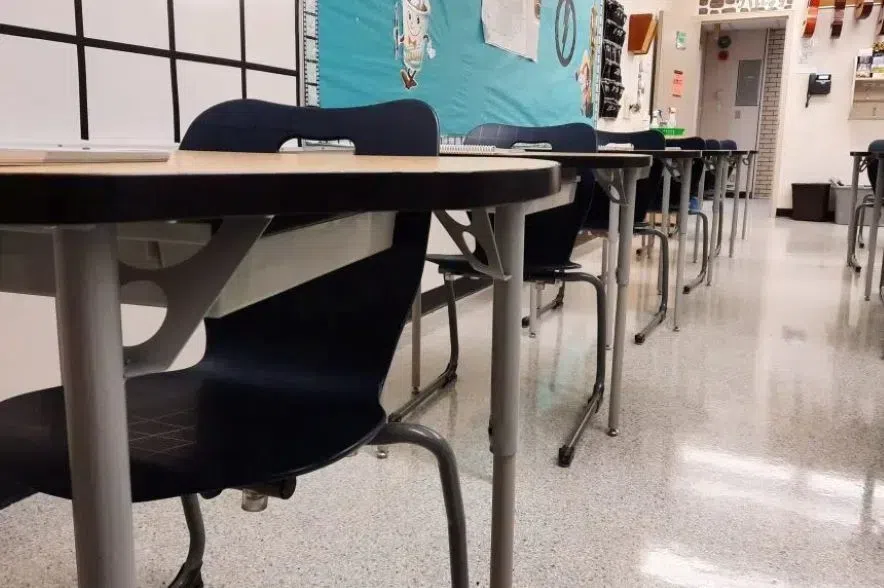
The union for Saskatchewan teachers is flagging a shortage of substitute teachers in school divisions across the province.
Samantha Becotte, president of the Saskatchewan Teachers Federation (STF), said the shortage is part of a broader national trend across Canada.
She said the STF has experienced it more within rural and remote areas.
“We’re seeing it more and more in all areas of the province, specifically with substitute teachers but also with some of those specialized positions,” Becotte said.
“Whether it be a language position like French, or Cree or Dene or Michif – or within our practical and applied parts programs – our divisions often struggle to find people with those specific skill sets who are wanting to teach in our schools.”
Becotte said universities have started to implement creative solutions, like offering rural and remote programs to students to train as teachers in or close to their local communities.
“What we’re hearing kind of anecdotally, whether it’s from university students who are within the education program or from new teachers, is that the workload that they’re experiencing and the challenges that they’re experiencing associated with classroom complexity, specifically, and their ability to feel successful within this career has really diminished,” Becotte said.
“We’ve been talking about the challenges related to classroom complexity for quite some time and over the last couple of years, we’ve been starting to see some shifts in terms of the government’s approach to supporting public education. I think those are good first steps in relation to supporting students and teachers within their school, and I think that will have a positive impact on retaining teachers within the profession.”
Becotte said keeping teachers in the profession means ensuring that they’re well-supported and have access to the resources they need.
“No one wants to go to work day in and day out and feel like they’re not making a difference or they’re not able to do their job because of the challenges that are in front of them,” she said.
“Many individuals get into teaching because they care about students and they want to make a difference in the lives of children in their community,” Becotte continued. “If they’re not able to do that, and are always feeling like there’s one student or a group of students who they’re not able to reach, it gets really discouraging.”
Mark Haarmann, director of Regina Public Schools, said Regina has some shortages in terms of substitutes, but has a strong number of contract positions.
“We are doing well in terms of contract teachers. Our positions are all filled,” he said.
“It is my understanding that other divisions are facing some issues filling their contract positions.”
Haarmann said there are days when the division is short on teachers and some classrooms are not covered.
“But really, that is the extent of the impact on us,” he said. “Our contract positions are all full and we’re fairly healthy in terms of being able to recruit the teachers we need for those positions.
“The story, I believe, is different in other divisions across the province.”