

Murray Wood: The Pitt is actually rather elevating
Murray Wood doesn't talk about TV that much, but he has become a fan of medical drama The Pitt. Wood says he enjoys the ...
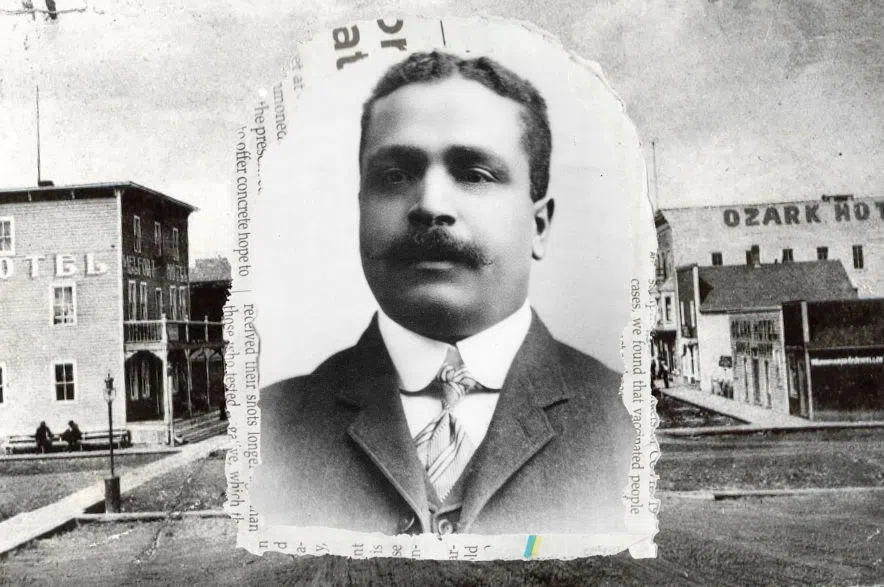
Every region has its folk heroes. Characters whose deeds grow larger with every telling, until they belong fully to legend.
Paul Bunyan was so big they said his footsteps shaped the land. Johnny Appleseed walked ahead of the frontier, planting orchards for people he would never meet. John Henry swung a hammer so hard it echoed through history. Whether they were real hardly matters. What matters is what they carried with them: strength, generosity, grit and a belief that one person could make a place livable simply by showing up and refusing to quit.
In northeastern Saskatchewan, there is a real life folk hero the wider world has yet to discover. They called him Doc Shadd.
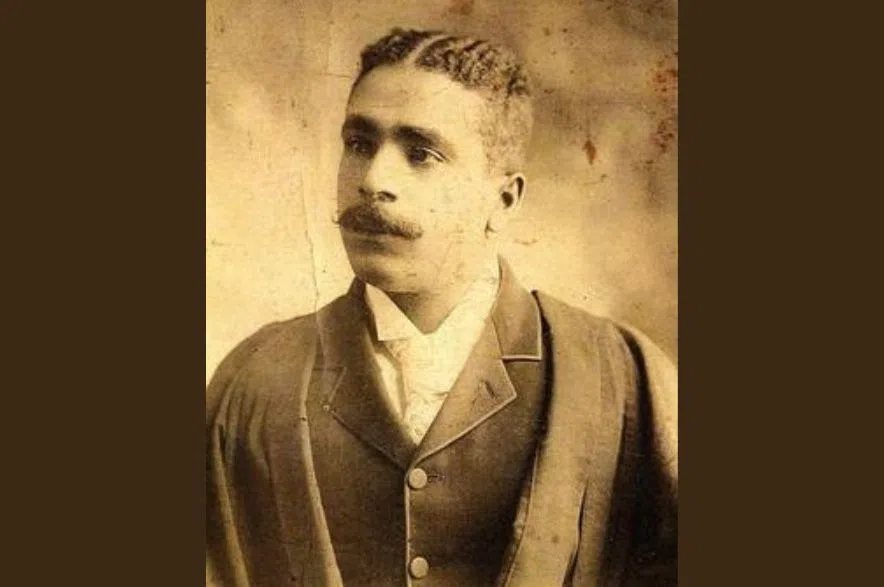
Dr. Shadd underwent medical training in Ontario and Scotland before settling down in Melfort. (Melfort & District Museum/Submitted)
Dr. Alfred Schmitz Shadd arrived in the Carrot River Settlement in 1896, nearly a decade before Saskatchewan even became a province.
The prairies were still raw then. Towns were little more than hopeful clusters of buildings stitched together by mud roads and ambition. Into that uncertainty stepped a formally trained physician from Ontario, the very first documented Black settler in the region.
Some locals stared. Some doubted. But Doc? He didn’t flinch.
He established his practice in what was then the Carrot River Settlement — today’s Kinistino.
In 1904, he moved to the growing town of Melfort.
Shadd was a healer, a teacher, a farmer, a politician and a civic leader. Wherever there was a problem, there he was, facing it head-on, often laughing as he solved it and pulling everyone along with him.
Garry Forsyth has spent more than 20 years uncovering the truth behind Doc Shadd’s story.
“He had his finger in just about everything that went on in a developing rural community, and he made it work,” Forsyth said, marveling at the man whose energy, vision and generosity seemed endless.
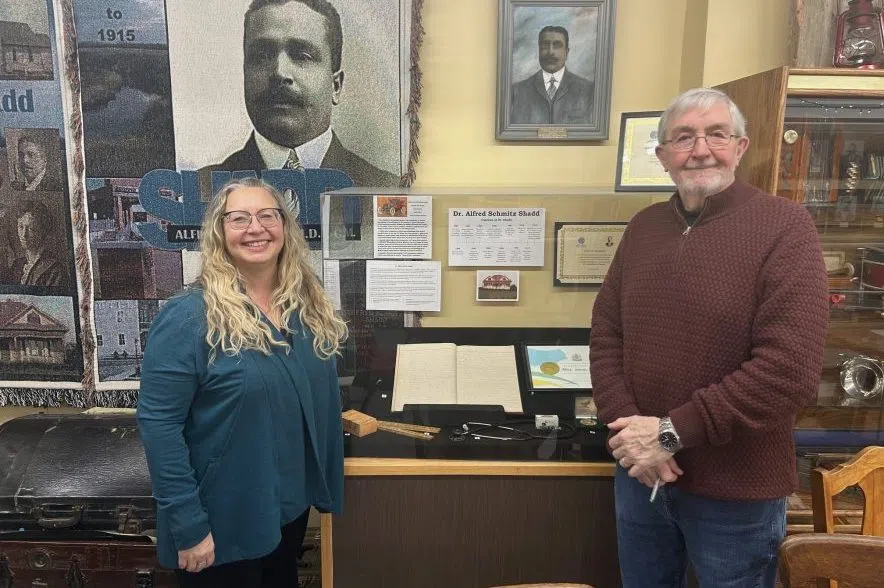
Brenda Mellon is the curator and cultural coordinator of the Melfort & District Museum. She is proud to share the research conducted by Garry Forsyth, who has spent 20 years uncovering the true story of Dr. Alfred Shadd. (Brittany Caffet/650 CKOM)
Forsyth conducted more than 100 interviews, pored over newspapers and tracked every anecdote, every memory with one goal in mind: “Find the story and then verify, where did this happen? When did it happen? Did it happen?”
Thanks to Forsyth and the Melfort & District Museum, the truth has emerged.
Doc Shadd did not believe in waiting.
He did not wait for roads to be graded or bridges to be built. He did not wait for better weather. He did not wait for someone else to go first. If someone was hurt, he moved.
Lumbermen worked deep in the forests of northeastern Saskatchewan, miles from town and miles from help in an emergency. Axes slipped. Trees kicked back. Hands split open. Blood soaked into sawdust.
Most men would have sent word and hoped for the best. But Doc Shadd was not most men.
“They talked about him swimming across the Saskatchewan River to save a woodcutter who had cut himself,” Forsyth said. “Well, a fable can grow. That kind of thing would be a good story, but that’s the true account! There are witnesses that watched him do it and wrote about it in the paper.”
That’s the thing about Doc. People didn’t just trust him; they depended on him.
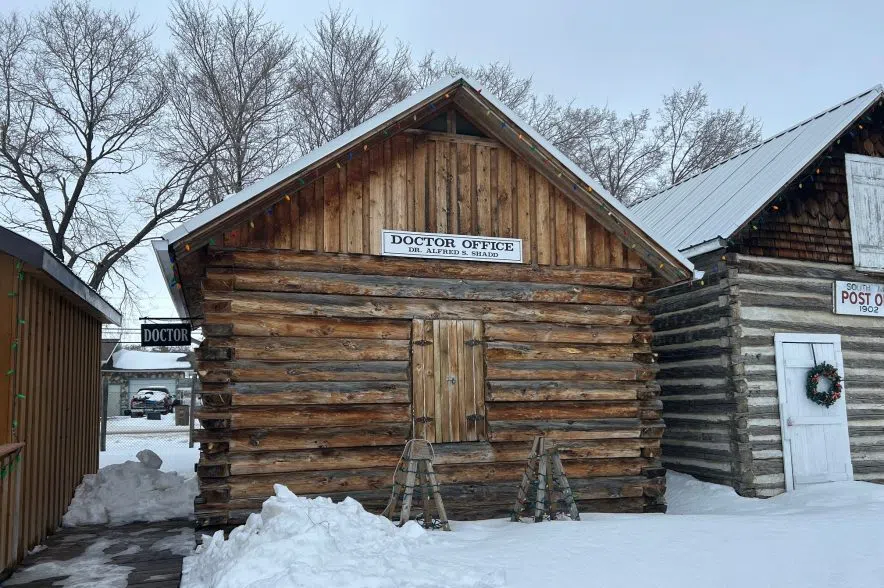
The doctor office building at the Melfort & District Museum bears the name of Dr. Shadd. While it’s not a replica of his office, Mellon said the naming is a tribute to Shadd’s many contributions to the community. (Brittany Caffet/650 CKOM)
And when winter sealed the river in ice, or mud swallowed the trails, he found another way. He was one of the first — if not the first — in the area to own an automobile.
“I’m sure he had a vehicle at least three to four years before anybody else in this area,” Forsyth said.
And he drove it like a man on a mission.
“For speed, he’d go cross country. And if there happened to be a fence there, the farmer had to do some fixing after he was gone!” Forsyth laughed.
“Somebody went and complained. Dr. Shadd’s response: ‘Look, this automobile has saved more people’s lives than I’ve hurt. So it’s going to stay.’”
Fences could be mended. Lost lives could not.
Shadd delivered babies by lamplight. He stitched wounds in logging camps. He made house calls that stretched late into the night. When he moved from Kinistino to Melfort, the town barely had time to adjust before he was already indispensable.
“The first month he was here, he filled 61 prescriptions,” Forsyth said.
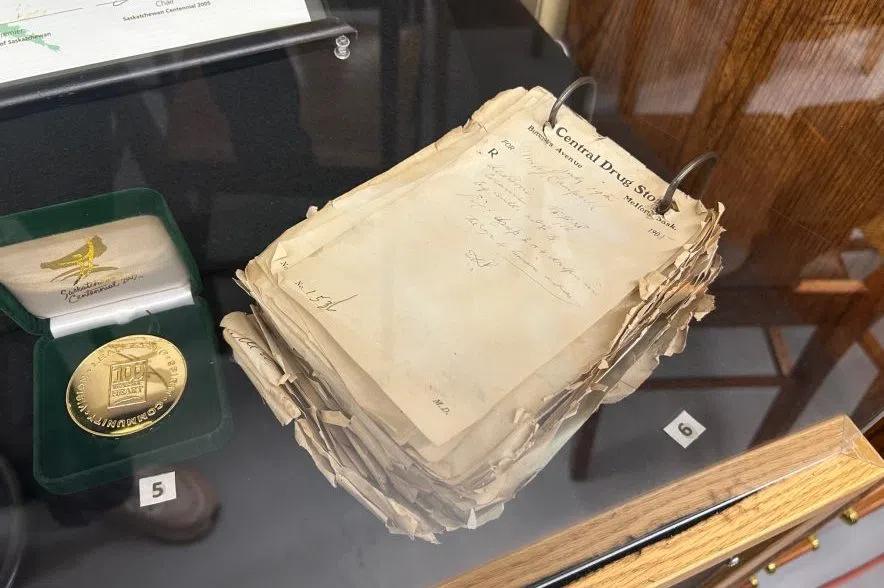
Dr. Shadd’s original prescription pad is one of the items preserved in the Melfort & District Museum’s display. (Brittany Caffet/650 CKOM)
Families were so thankful they named their children after him, carrying his name forward like a badge of gratitude.
His legend was never about spectacle. It was about showing up, again and again and again, until the town couldn’t imagine surviving without him.
Doc Shadd did not confine himself to house calls and farm fields. If something needed improving, he didn’t complain. He ran.
In 1902, he put his name forward for the Northwest Territories Assembly. It was a time when Saskatchewan was not yet a province, and a Black candidate was nearly unthinkable in frontier politics. He lost, but not by much.
“He lost by 41 votes,” Garry Forsyth recounted. “I think it was 68 years before another Black man was elected to government. So had he won, he’d have been that far ahead of the pack.”
He ran again in 1905, the year Saskatchewan officially became a province, seeking a seat in the new provincial legislature.
Again, he came close. Twice he stood before voters. Twice he nearly rewrote history. But Doc Shadd did not measure his influence by a title. He measured it by action. If he could not serve in Regina, he would continue to serve at home.
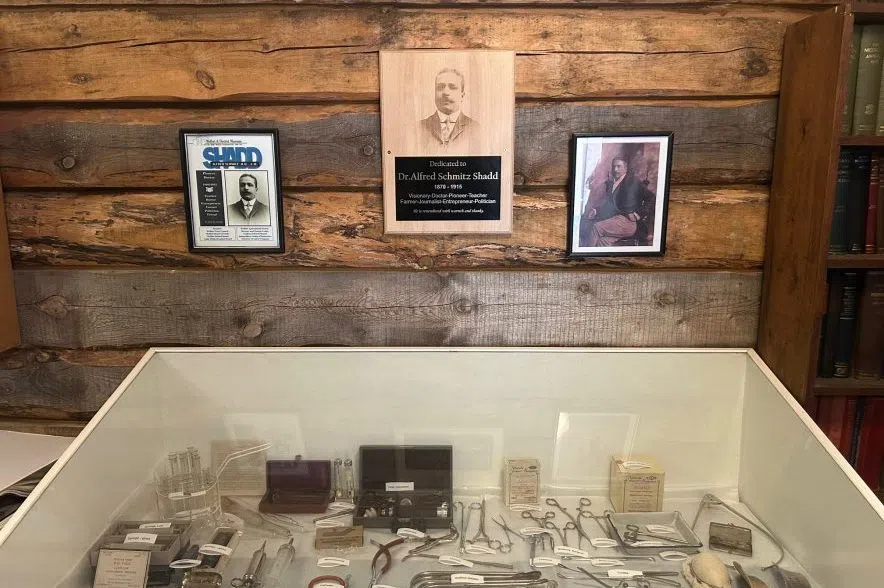
A wall inside the Doctor Office building at the Melfort & District Museum holds this tribute to Dr. Shadd. (Brittany Caffet/650 CKOM)
He joined Melfort’s town council. The board of trade. The agricultural society. The hospital board. The Anglican Church board.
“I got the opportunity to read some of the minutes from these startup places,” Forsyth said. “And I would say two thirds to three quarters of the first motions were moved by him or seconded.”
He wasn’t warming a chair. He was moving the room. Melfort would not be a sleepy prairie outpost on Shadd’s watch.
“He just had a way of getting out there,” Forsyth said. “Melfort had sewer and water before Yorkton because he had seen them somewhere else and asked ‘Why can’t we have that here?’”
Electricity. Waterworks. Telephones. Modern infrastructure in a town still shaking dust from its boots. Shadd saw what other communities had, and he refused to let Melfort fall behind.
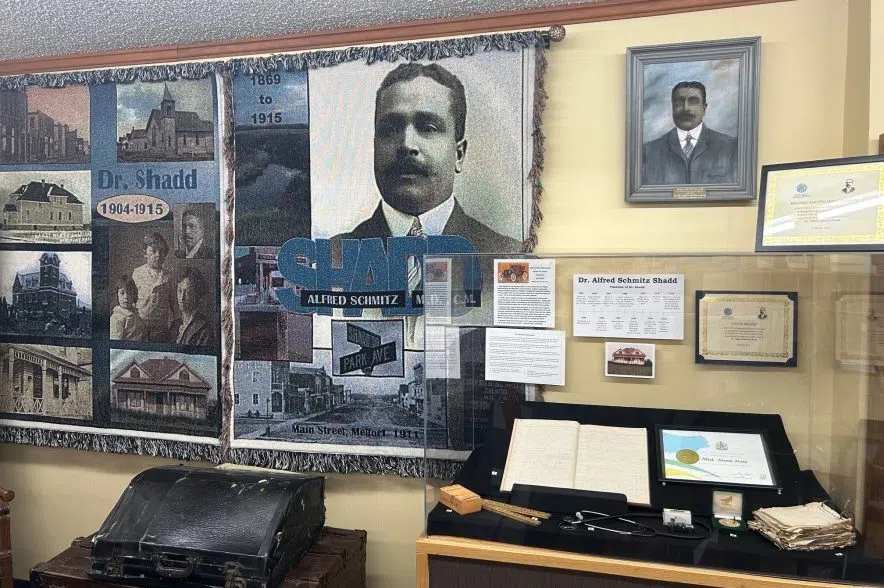
Tucked away, but certainly not forgotten in this corner of the Melfort & District Museum, you can find a tribute to Dr. Alfred Shadd. “I wish we actually had more space to honour all of the contributions that Dr. Shadd has made to our community,” said curator Brenda Mellon. (Brittany Caffet/650 CKOM)
And when he felt the town’s leadership was dragging its feet, Shadd said so.
“Some of these people on the board of trade hadn’t been working up to par, according to Dr. Shadd,” Forsyth explained, “so he addressed them one evening. He said ‘All right, you fellows… we have to get busy here. People are getting a bad impression. They’re starting to think that we’re just a bunch of good old boys sitting in the back room smoking cigars, and I won’t have that.’ And he got some action.”
Imagine the room. Men shifting in their chairs. Cigars paused mid-air. And Doc Shadd — unapologetic, direct, smiling, but serious.
“We had lots of people that were very into what had to be done to get the place moving,” Forsyth said, “but I still think Dr. Shadd was the spark, was that starting point. I know he got some of these people going.”
He was the spark, not just running for office but lighting fires under those who held it. And woven through it all was another act of leadership. Shadd founded and edited The Carrot River Journal, a newspaper that gave the region a voice and a vision. In its pages, he championed development, debated policy and helped shape the identity of a growing prairie community.
Whether elected or not, Doc Shadd led in the way that mattered most, by refusing to let his town settle for less than it could be.
A few miles outside of Melfort sits a stretch of land that many would have passed by without a second thought. But to Doc Shadd, it was full of possibility. He named it Craig Bog Farm. There, he saw more than empty fields. He saw a blank canvas.
He raised pigs, imported longhorn cattle from as far away as Scotland, experimented with new types of wheat being developed at the University of Saskatchewan and planted the first crabapple trees in the region.
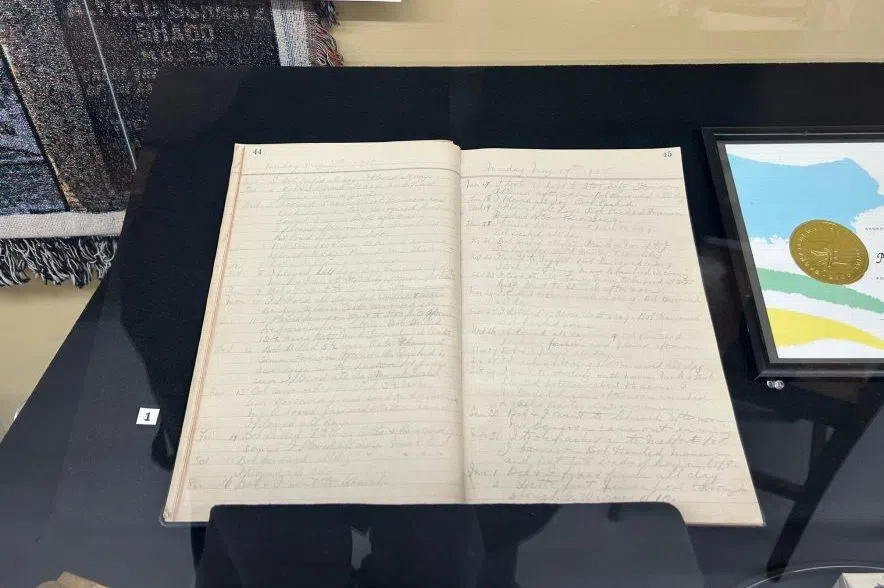
This book is the diary of Harry Slinn, manger of Craig Bog Farm from Jan. 1914 to Dec. 1915. The handwritten daily notes allowed Forsyth to take a detailed look at the daily goings on at Dr. Shadd’s farm. (Brittany Caffet/650 CKOM)
“He had one of the best herds of longhorn cattle in North America. I kid you not,” Forsyth said. “He went to national exhibitions, bought grand champion bulls in Toronto for thousands of dollars. That was how he started his cattle ranch.”
Doc shared what worked, whether it was cattle, crops or ideas. That wheat from the university? Once he got it growing, it became the major crop in the region. Those first crabapple trees? They spread, planted by his hands and by the neighbors he inspired, like a prairie version of Johnny Appleseed with a heart as wide as the land.
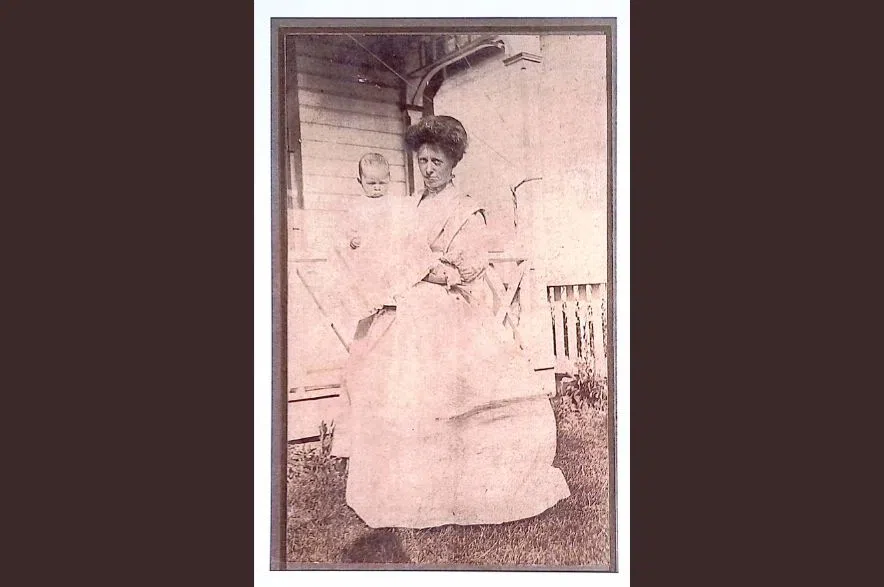
Dr. Shadd built a home on Craig Bog Farm. This photo shows his wife, Jeannette Simpson, holding one of his two children in front of their family home. (Melfort & District Museum/Submitted)
“That was his way of spreading things around,” Forsyth explained. “Any time he had something working, he spread it around.”
On Craig Bog Farm, every seed he planted, every animal he raised, every experiment he tried was a lesson in possibility and a reminder that greatness should be shared, not hoarded.
Some people fill a room. Doc Shadd filled a town.
His laughter was the kind that carried across a hall, across a street, across a lifetime. People remembered it decades later.
“‘His laughter was better than his cure,’ was one lady’s comment,” Forsyth noted with a smile. “He was known as kind of the organizer, the life of the party.”
If there was a meeting, Doc was there. If there was a dance, he was there. If there was a curling bonspeil, he laced up his boots and slid onto the ice — becoming the first Black curler in Saskatchewan, as far as records show.
Just imagine it. A prairie winter, breath rising in clouds, stones gliding over scraped ice and Doc Shadd laughing at the far end of the sheet.
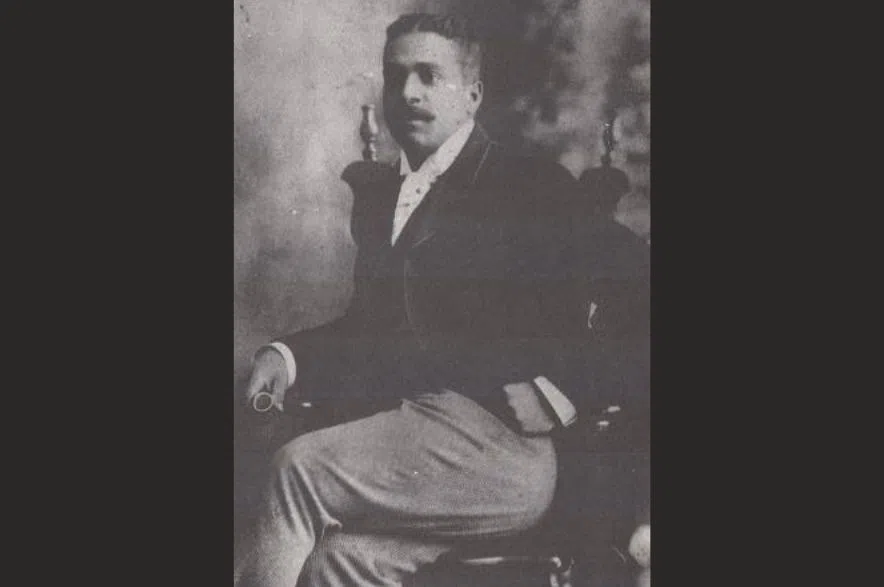
Shadd was highly regarded for his determination and curiosity. He was a man who wouldn’t let the fear of failure get in the way of a good idea. (Melfort & District Museum/Submitted)
You might wonder, as many have, why his race wasn’t the barrier some might expect it to be in that time. Forsyth has thought about that as well.
“It was a time of a lot of immigrants coming in,” he explained. “If you look around here, we have French, Ukrainian, Scandinavian… and a lot of those people couldn’t speak English when they came. So coming to the area and speaking English, I think, was a plus one, step up, when he came in.”
There were barriers in society for a Black man arriving in Saskatchewan in 1896. That is clear, evident history, but in all of his research Forsyth found only a handful of mentions of the colour of Shadd’s skin.
At one gathering, a little girl — innocently curious and brave in the way only children can be — climbed onto his knee. She wet her finger and gently rubbed it against his cheek, as though testing whether the colour would smudge away.
“Sorry, my dear,” Doc said gently, “it doesn’t come off.”
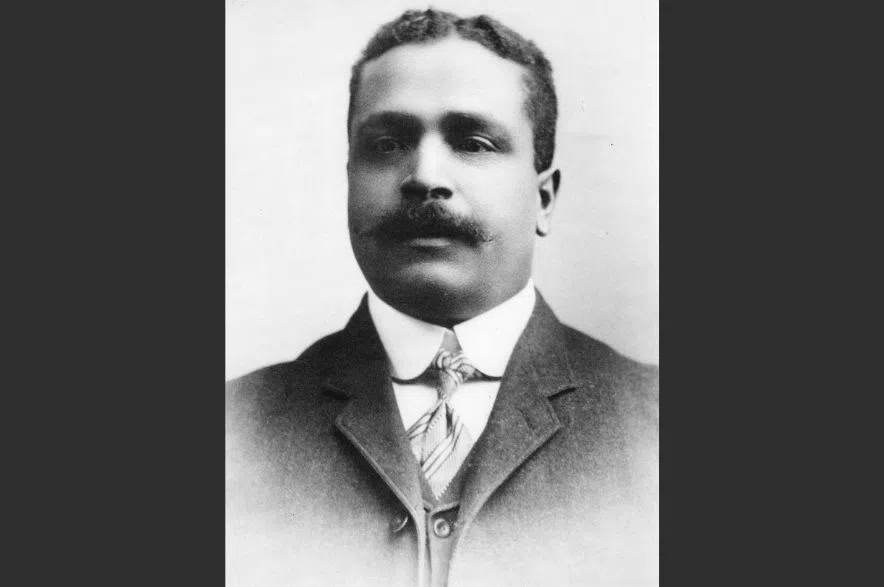
Dr. Alfred Shadd was born into a highly respected Black family in Ontario. His grandfather was one of the key players in the Underground Railroad. (Melfort & District Museum/Submitted)
The room likely held its breath for half a second. And then, of course, there was laughter.
That was another of Shadd’s gifts. He could turn an awkward moment into warmth, a question into a connection and difference into delight.
“He just made himself so important, so necessary to the community,” Forsyth said. “Nobody wanted to go against him.”
He wasn’t just present; he was essential. And he loved the spotlight.
“He liked to be the centre of attention,” Forsyth said. “Somebody said, ‘Well, we’ll have to see if he has to go and look after a patient. He’ll be late. Not much sense going until he gets there… because that’s when the party starts.’”
That was Doc Shadd. A healer by trade. A leader by instinct. And at heart? A joyful man who refused to stand at the edges of history. Instead, he stepped into the middle of it, laughing all the while.
In 1915, after just over a decade in Melfort, the legend of Doc Shadd reached its final chapter.
At only 45, taken suddenly by appendicitis, the man who had swum rivers, delivered babies, built a town and inspired a community, was gone.
He left behind a family who carried his spirit forward. His wife, Jeannette Simpson, a Scottish immigrant who stood beside him in life’s adventures, and their children, Garrison and Lavina, born in 1910 and 1912.
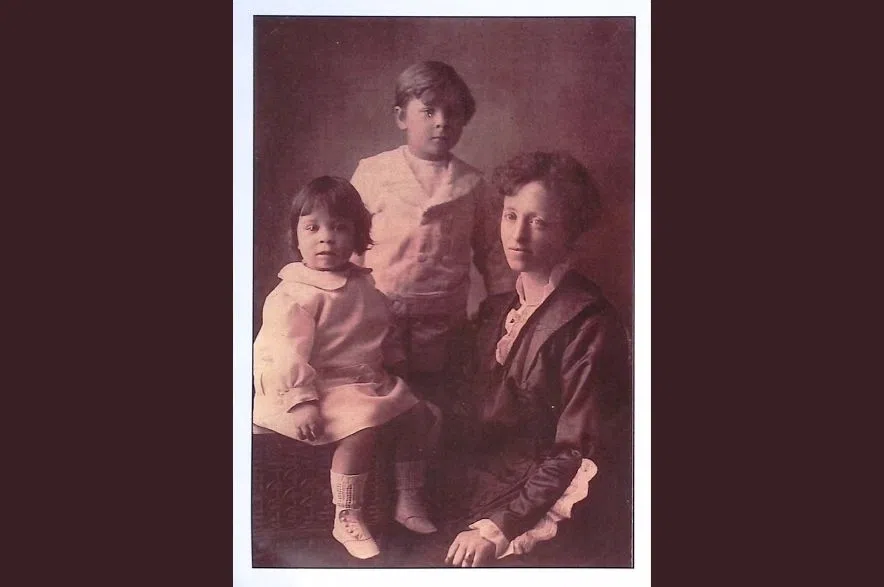
Following Doc Shadd’s untimely death, his wife Jeannette remarried and relocated to Winnipeg with their two small children. (Melfort & District Museum/Submitted)
His funeral procession stretched for miles. Seventy-five carriages and automobiles and hundreds of pedestrians all gathered to honour a man whose life had touched every corner of the region.
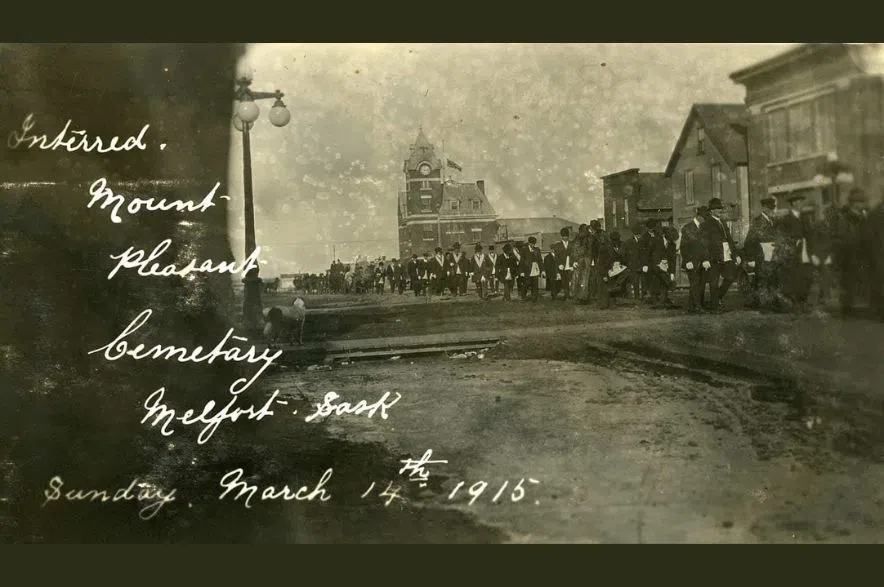
Dr. Shadd’s funeral was one of the largest Melfort had ever seen. Hundreds of mourners joined the procession from the Anglican church to his final resting place at Mount Pleasant Cemetery. (Melfort & District Museum/Submitted)
Today, lakes, streets and memorials carry his name, but the truest monuments of all are the stories: tales of laughter, acts of bravery, relentless generosity and a presence so magnetic that people still remember it a century later.
Every whispered tale of bravery and generosity is proof that Doc Shadd, the first Black man to call Saskatchewan home, was more than just a man. He was a legend.
Dr. Alfred Schmitz Shadd was the very first documented Black settler in Saskatchewan. He was a beloved and respected community member in Melfort. (Melfort & District Museum/Submitted)