

Murray Wood: Who's hot... and who's not
Every Friday, Murray Wood takes a look back at the week's news and decides who's hot... and who's not. This week's list ...
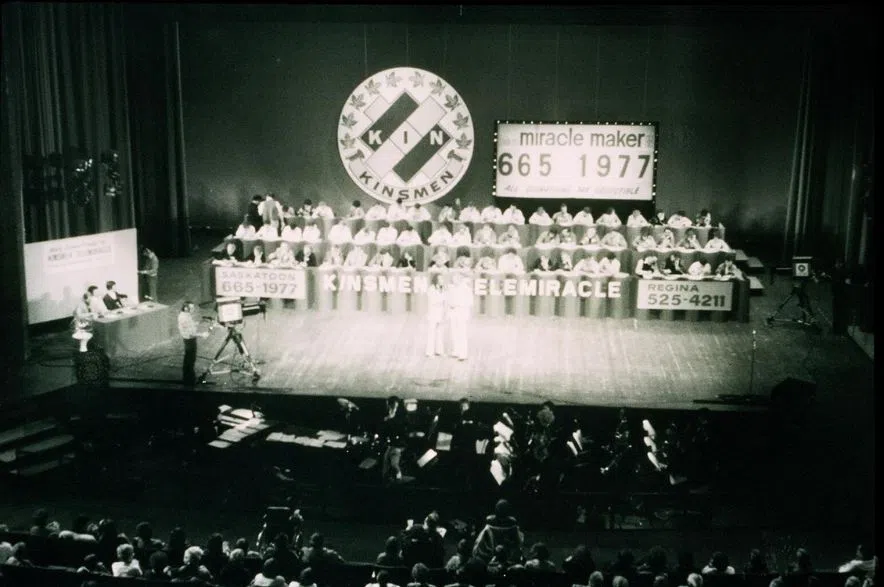
In Saskatchewan, certain events grow into something more than just a date on the calendar.
They become rituals, shared in living rooms and carried through generations, woven into the fabric of the province.
For half a century, TeleMiracle has been one of them. For Peter Kilburn, one of TeleMiracle’s founders, this beloved annual event began with a simple belief.
“People with disabilities back in 1971, those people were kind of hidden behind closed doors,” he recalled in an interview with 650 CKOM. “But those people were human beings. The only difference between them and you and I was they had a disability, which could probably be helped if they had the resources to do it.”
Kilburn believed Saskatchewan could do better.

Tammy Blackwell is the chair for TeleMiracle 50. Peter Kilburn, one of the men who started it all back in 1977, is looking forward to being involved in this year’s telethon. (Submitted)
The roots of TeleMiracle go back to the Kinsmen Club of Saskatoon, founded in 1928, and the creation of the Kinsmen Foundation in 1971.
Before the formation of the foundation, clubs focused on local projects like parks, arenas and community initiatives. But Kilburn, Urban Donlevy and other Kinsmen and Kinnettes believed Saskatchewan needed something bigger.
“We wanted to be a money-raising fund of last resort for those people who had disabilities,” Kilburn said, explaining what inspired the foundation. “And we didn’t care whether the disabilities were physical disabilities, mental, social… The Kinsmen Foundation would help to provide those funds.”
Their first fundraising goal was just $25,000.
“That was a real stretch back in those days,” Kilburn recalled.
Even so, they reached it. But the requests for help quickly surpassed $100,000. The need, it seemed, was overwhelming, and it quickly became clear that bake sales and small community projects would never be enough.
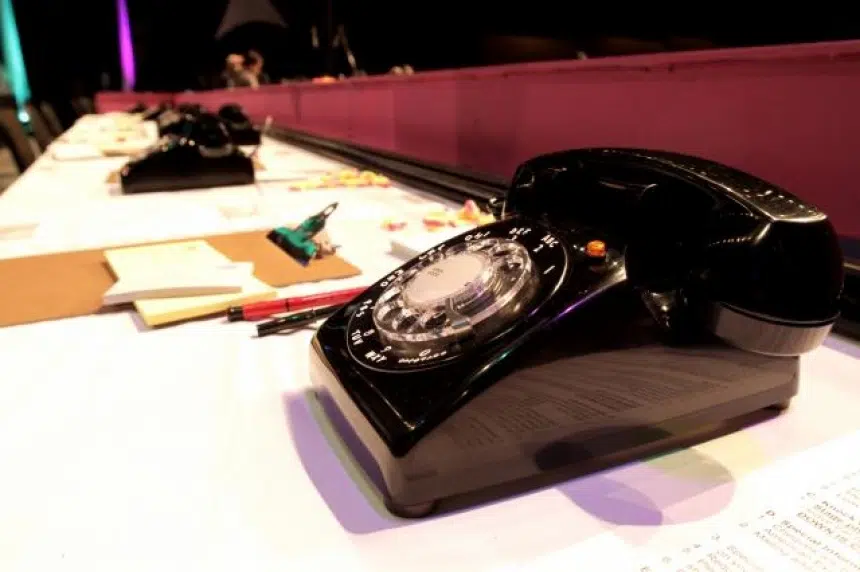
“Ring those phones!” is a phrase that’s become synonymous with TeleMiracle in Saskatchewan. (Lasia Kretzel/650 CKOM)
The idea that would become TeleMiracle started with a conversation about a variety show in Calgary. That conversation led to a late-night meeting in Saskatoon with Donlevy, who would become the first TeleMiracle chair, and the Barnett brothers, producers from Vancouver.
Kilburn said he still laughs about it.
They met under the cover of night at Boston Pizza House on Second Avenue. They talked for hours before being kicked out at 3 a.m., but continued the discussion until sunrise.
The cost to stage such a show? $140,000.
“We didn’t have $140,000. We didn’t have $140!” Kilburn chuckled.
But they moved ahead anyway.
“If push came to shove, some of us might have to second mortgage our houses in order to pay the bills if we didn’t raise the money to pay them,” he said.
TeleMiracle went to air on Feb. 5 and 6, 1977. Volunteers from Kinsmen and Kinnette clubs across Saskatchewan poured into Saskatoon to answer phones, run errands and keep the show moving.
“It was a big undertaking… and it was very, very exciting,” Kilburn said.
They weren’t allowed to check the totals themselves. They had to wait for a call from TeleMiracle treasurer Bill Lee. At 3 p.m. on Sunday, the phone rang.
“Are you sitting down?” Lee asked Kilburn and Donlevy.
They braced for bad news. Instead, they were told the fundraising total had just passed $1 million.
“You have no idea how excited Urban and I were,” Kilburn said, his voice thick with emotion.
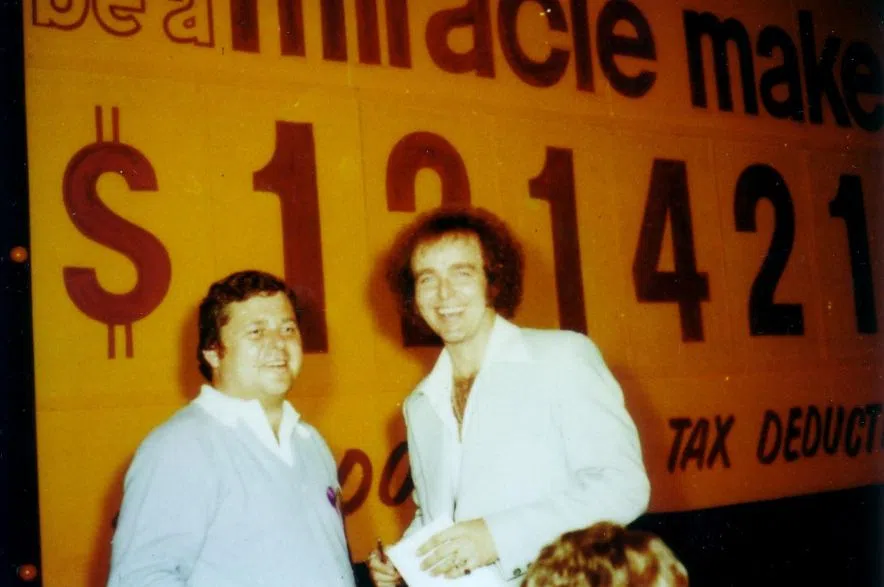
Urban Donlevy was the first TeleMiracle chair, and Blake Emmons emceed the 1977 telethon. Both men remained involved with the fundraiser for years. (Submitted)
What was meant to be a one-time event became an annual tradition, alternating between Regina and Saskatoon. The chairmanship rotated, Saskatchewan amateur talent hit the stage, and every dollar raised stayed in Saskatchewan.
In the five decades since the inaugural TeleMiracle broadcast, funds raised have been used to provide specialized medical equipment, travel, accommodation and meals for out-of-town medical treatment for families and individuals across the province.
“I believe that TeleMiracle is about neighbours helping neighbours,” Kilburn said.
Over 49 years, the telethon has raised more than $170 million. But the real measure of TeleMiracle isn’t a dollar figure. It’s dignity.
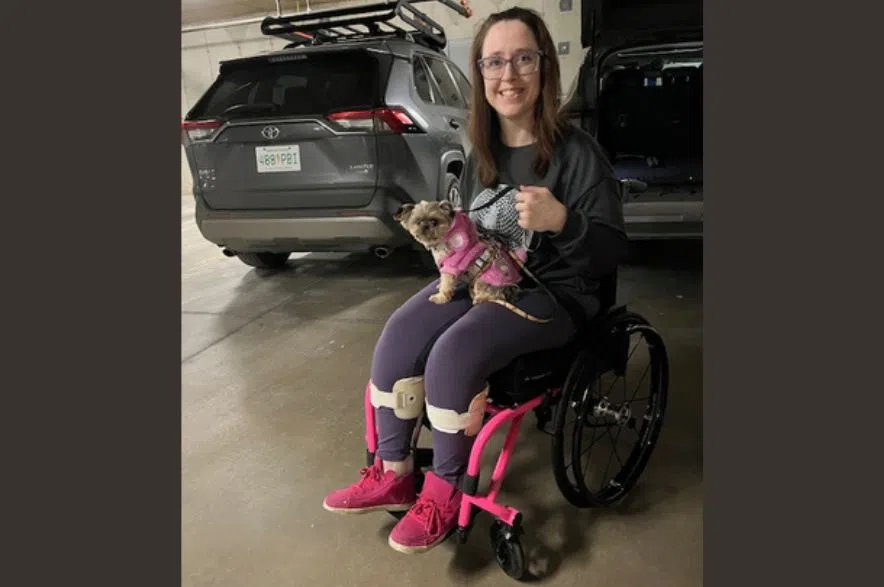
Holly Flett’s new wheelchair, funded by TeleMiracle, is more than just a piece of medical equipment. She said it has granted her a newfound sense of freedom. (Submitted)
For Saskatoon’s Holly Flett, TeleMiracle was the difference between pain and freedom.
She lives with cerebral palsy. She doesn’t use a wheelchair all the time, but the chair she had was the same one she received at 19. She’s turning 40 this year.
“I was just making do,” she said. “I was experiencing a lot of pain because I was being essentially stuffed into a wheelchair that didn’t fit.”
The cost of replacing it was between $10,000 and $12,000. Flett said that kind of expense felt impossible to justify, even though the discomfort was constant. So she endured it until she couldn’t anymore.
“I contacted them, and I said, ‘I need help.’”
She filled out the paperwork. She explained her situation. And then TeleMiracle stepped in.
Today, she has a brand-new wheelchair, one she says there’s “no way” she would have been able to afford on her own.
But what TeleMiracle funded wasn’t just a chair. It was independence.
“The wheelchair that I was able to obtain through TeleMiracle is one that I can transfer in and out of my own car myself,” she said. “I can independently use my own wheelchair, so I don’t have to wait for someone to help me get it in and out. Those things matter.”
For Flett, independence is more than convenience. It’s being able to leave her house without co-ordinating help. It’s not feeling like she’s interrupting someone else’s day.
“It just means the world to know that you don’t have to be thought of as an inconvenience,” she said.
She paused when she tried to describe what that support feels like.
“I don’t even know if there are enough words. ‘Thank you’ doesn’t feel big enough.”
A wheelchair can cost $12,000. But the feeling of being free? For Flett, that’s priceless.
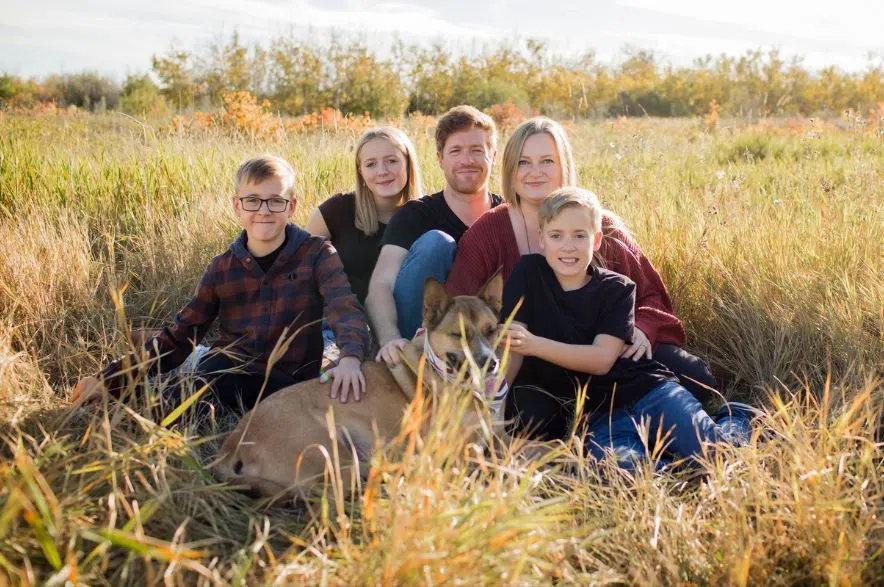
Julie Koroluk’s twin sons, Will and John, required an urgent surgery during her pregnancy. Koroluk said funding from TeleMiracle eased the financial burden on her family. (Submitted)
For Warman’s Julie Koroluk, TeleMiracle was a source of critical support during a harrowing moment in her family’s life.
In 2012, Koroluk and her husband were expecting identical twin boys. But their joy quickly turned to fear when they were diagnosed with twin-to-twin transfusion syndrome, a rare condition that required immediate surgery in Ontario.
“We got a call at 10:30 at night from our doctor, saying we had to be in Toronto the next morning,” Koroluk recalled. “Rushing to get plane tickets, which are not cheap, and then also rushing to get hotel accommodations. It really was an impact, financially, to get all of this together with less than 24 hours notice.”
The surgery was successful, but Koroluk found herself worrying not only about the twins’ health, but also about how to cover the unexpected costs. That’s when she reached out to TeleMiracle.
“They said that they would reimburse us for everything we had a receipt for,” she said. “They reimbursed our flights, our hotel, the meals that we had receipts for. It ended up being a huge relief to us, because it’s just not something that you really plan for, to have to cover that kind of expense.”
For Koroluk, the support brought the spirit of TeleMiracle — the kindness and care she had spent decades watching on screen — into her own life in a deeply personal way.
“I grew up watching TeleMiracle,” she reflected. “Me and my brother and my cousin, we would stay up all night and watch it until we fell asleep. Now, it’s something we kind of continue on with our kids, right? We stay up and watch all the performers. We call in and donate. We try to encourage our family to as well. So to have them support us when we needed it means a lot.”
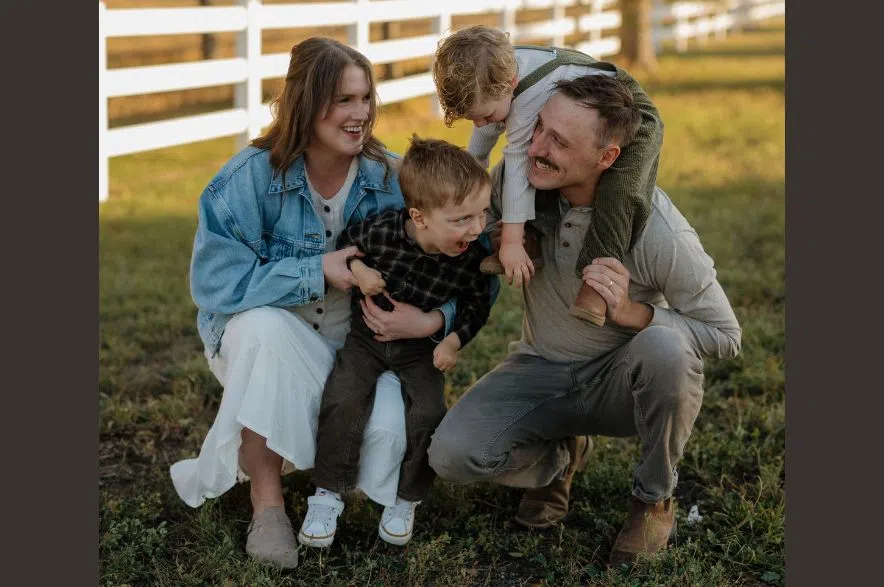
TeleMiracle has provided funding for two large pieces of medical equipment for Wells Hodnefield. His dad Lane said the annual fundraiser means the world to them. (Submitted)
For Chaydin and Lane Hodnefield, a couple from Moose Jaw, TeleMiracle’s impact is measured in steps. Six of them, to be exact.
Their son Wells was born with a rare genetic condition called MPPH syndrome. His therapies and equipment come with staggering costs.
TeleMiracle helped fund two major pieces of equipment for the family: a porch lift for their front door and a Trexo mobility gait trainer.
The Trexo alone was quoted at about $43,000. The porch lift came in at nearly $17,500.
“It’s stressful,” Lane said, “You want him to have his best opportunity in life, but you don’t even know where to start… anything under the disability umbrella, the price tag on it is just absurd.”
He described the weight many parents carry — the instinct to provide, even when the numbers feel impossible.
“I don’t think anyone expects they’re going to be in a situation like this until you’re in it,” he said. “It really means the world to families like ours that people are going out of their way and donating money to help.”
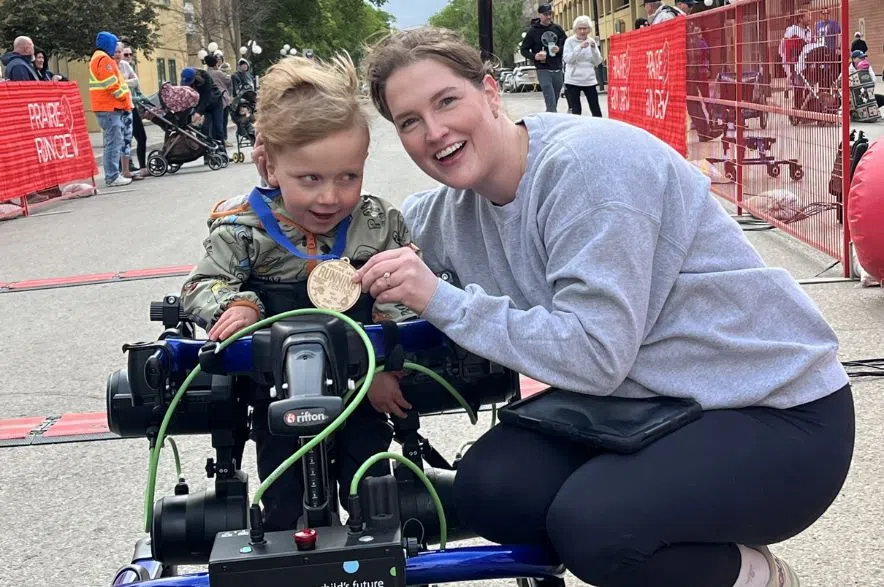
Thanks to Wells’ Trexo, he is able to practice standing upright and walking safely. His parents say the device would have been out of reach if not for TeleMiracle. (Submitted)
For Chaydin, the porch lift has been transformative.
“It’s honestly been a game changer,” she said.
Wells’ wheelchair weighs about 60 pounds, but their bungalow has six steps leading to the front door. Lifting him daily was taking a toll.
“We were lifting it and our backs were getting sore,” she said, noting that the lift doesn’t just protect Wells — it protects them, too.
TeleMiracle was built on risk, faith and a few sleep-deprived volunteers who were willing to bet their homes on a dream. But what has sustained it for 50 years is something far simpler: Saskatchewan people looking after Saskatchewan people.
This is what happens when a province decides that no one will be left behind.

The telethon has grown and evolved over the years, but the end goal has remained the same: raising funds to ensure Saskatchewan residents have access to the medical and disability support they need. (Submitted)
Kilburn still gets emotional talking about it.
“I just can’t tell you how much of a thrill it’s been,” he said.
It may have started with the Kinsmen and Kinnettes, but ask Kilburn and he’ll be sure to tell you that after 50 years, TeleMiracle belongs to Saskatchewan.
Since 1977, TeleMiracle has raised more than $171 million to help provide funds for medical equipment, treatment and travel assistance for the people of Saskatchewan. (Submitted)