

Murray Wood: Who's hot... and who's not
Every Friday, Murray Wood takes a look back at the week's news and decides who's hot... and who's not. This week's list ...
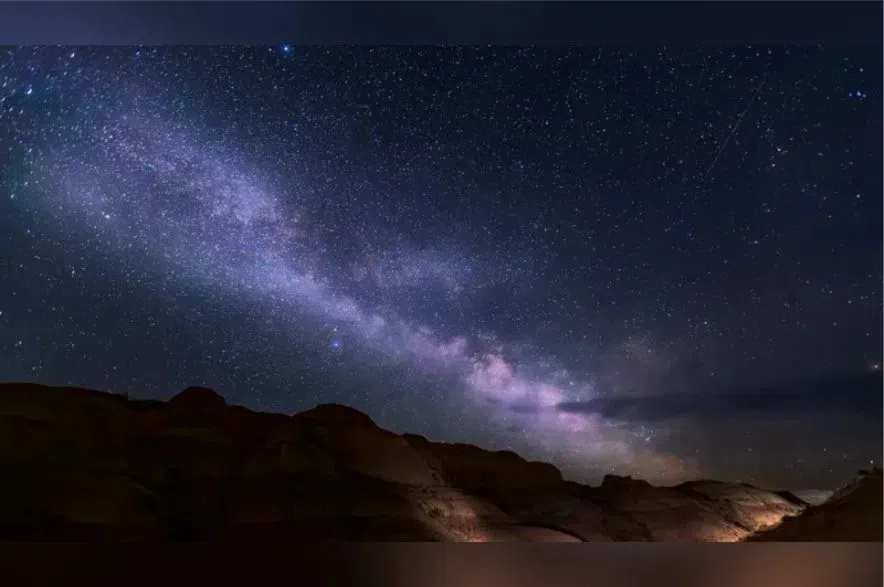
If you look up about 30 minutes after sunset Saturday night, you may see several planets lined up across the sky – a celestial event that offers a rare chance to visualize the structure of our solar system from your own backyard.
In Regina, sunset is expected between 6:37 p.m. and 6:43 p.m. In Saskatoon, the best viewing window will begin around 7:10 p.m., once the sky is dark enough for the planets to stand out. Venus, Saturn and Jupiter will be visible to the naked eye, appearing along the same path the sun follows across the sky.
Read more:
University of Regina physics professor Dr. Samantha Lawler said while planetary alignments happen periodically, they remain a powerful and accessible way for people to connect with astronomy.
“This happens about once a year or so. So it’s not super rare, but it is neat because it lets you see the geometry of where we are,” Lawler said. “You can see Venus, Saturn and Jupiter easily with your eyes after sunset.”
She said Mercury may also be visible, though it’s more challenging to spot because it sits lower on the horizon and is often lost in the fading sunlight. Uranus and Neptune are also part of the alignment, but they require binoculars or a telescope and a precise viewing location.
“But even just with the three planets, you can see that’s our solar system,” Lawler said. “That’s the plane of our solar system across the sky, right? It’s a nice way to kind of orient yourself inside the universe.”
According to NASA, planetary alignments occur because all the major planets orbit the sun on roughly the same flat plane, known as the ecliptic. From Earth, that shared orbital path makes them appear in a line, even though they remain separated by millions or billions of kilometres.
Lawler said events like this help transform abstract textbook concepts into something visible and real.
“It is neat because it kind of lets you see the geometry of where we are,” she said. “You can really see the plane of our solar system across the sky.”
Viewing conditions will play a key role in how clearly people can see the alignment. Experts recommend finding a location with a clear view of the western horizon and as little light pollution as possible. However, the brightest planets, especially Venus and Jupiter, should still be visible even from cities.
Lawler added that people in darker areas may also notice another striking feature overhead.
“If you’re in a very dark place, you can also see the plane of the Milky Way, the galaxy that we’re inside,” she said. “You can really see how everything is arranged around us.”
The alignment will remain visible for several hours after sunset, giving Saskatchewan residents plenty of time to step outside and witness a reminder of Earth’s place among its planetary neighbours.