
Sarah Mills: The perils of social media are indicated in a new ad playing in Ireland
Sarah Mills says a new commercial warning about the dangers of oversharing on social media should have all of us pausing...
Oil prices were at a several-month high at the beginning of the week due to the fighting in Iran, but on Monday ministers in the Saskatchewan government were pretty quiet about what it might mean for the province.
Saskatchewan is an oil producer and was expecting $1.1 billion to come from oil and natural gas at the start of this fiscal year.
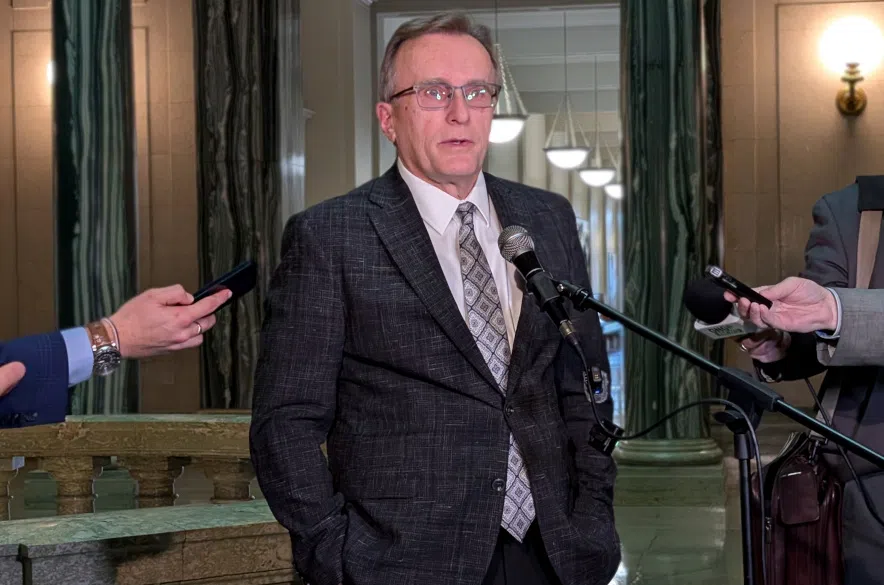
However, Finance Minister Reiter said on Monday the province has a goal not to rely too much on natural resources, explaining that fluctuations happen all the time. Former Finance Minister Donna Harpauer had often talked about trying to take volatility out of the budget.
“The price of oil’s jumped in the last few days; nobody anticipated that a month ago,” said Reiter.
The West Texas Intermediate (WTI) price per barrel closed on Monday at $71.23 U.S., its highest point in several months.
The price increase came from speculation around what the U.S. and Israeli attack on Iran might mean for oil supplies and trade routes through the Strait of Hormuz, through which about 20 per cent of the world’s oil and gas is shipped.
The higher price of oil will bring more money into the provincial government’s coffers, but Reiter said there are other things happening at the same time which have the opposite effect.
“On the flip-side of that you’ve seen recently that the Canadian dollar is now stronger, and that seems kind of opposite of what you’d expect, but that actually costs us money in the provincial treasury,” he said.
The provincial government estimated the barrel of oil at US$71 in the 2025-26 budget, and for every dollar it’s off in the year, it means positive or negative $18 million to Saskatchewan’s bottom line.
“Budget is a snapshot in time, making the best estimates that you can at that point in time,” said Reiter.
He deferred any specific questions about the budget and its deficit to budget day.
Speaking earlier in the day, Trade and Export Development Minister Warren Kaeding said it’s probably too early to determine what the oil situation will mean for Saskatchewan.
“We’ve just seen in the last couple of days the spike in crude oil prices, which certainly supports our economy here as we still have a very robust and growing oil sector. But I would say we’re going to need some time to assess exactly what this conflict in the Middle East is,” said Kaeding.
The Saskatchewan provincial budget is set to be released March 18.