
Sarah Mills: Justin Timberlake's arrest video should be made public
Justin Timberlake is fighting in court to keep his impaired driving arrest video hidden. Sarah Mills says the multi-mill...
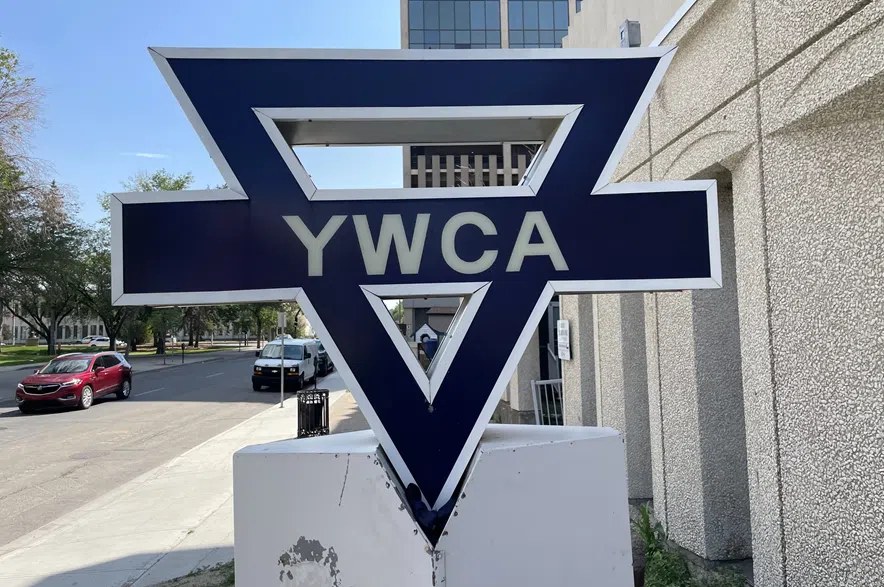
The YWCA Regina has created a new digital prevention program in an effort to reduce Saskatchewan’s rates of gender-based violence, which are the highest of any province.
The program, called Upstander Online, focuses on stopping harm before it escalates by giving workplaces and community groups real, practical tools for spotting red flags early and teaching them how to safely intervene.
Read more:
Megan Moore, the senior director of community programs at YWCA Regina, is overseeing the new program. She joined the Evan Bray Show on Tuesday to share the details.
This transcript has been edited for length and clarity.
EVAN BRAY: I know this is a tough question. In fact, I think I might have got asked this question back when I was still in policing. Why are Saskatchewan’s rates of gender-based violence so high?
MEGAN MOORE: Honestly, Evan, there isn’t one single reason. It’s truly a combination of factors. We have a large rural and northern population where people can often be isolated or struggle to access services. That makes it hard for people to seek help or to leave unsafe situations. We also have some deep-rooted, systemic issues, including inter-generational trauma, the ongoing impacts of colonization, and this disproportionately affects Indigenous communities. And now, if you take all of that and you add in the economic stress, housing pressures and the normalization of these harmful behaviours in many environments, you can start to see how these layers of gender-based violence can compound. It’s complex, but complexity really isn’t an excuse for inaction.
I think back to my policing career often we talk about the benefits of prevention instead of crisis response. But what does that look like, Megan, when we’re talking about something like gender-based violence? What does prevention actually look like in real life?
MOORE: Often people have this image of prevention that it’s like diving into a fight or pulling two people apart, but truly it’s in our small daily actions. If you hear your buddy say a joke that just doesn’t feel right, it’s taking them aside to say something. It’s making the effort to make sure that our leadership teams and the content that we’re providing and the resources and the training that we’re providing our team is inclusive and addresses the normalized pieces. I feel like a really good example is what we just saw with the U.S. men’s gold medal team. They were celebrating their gold medal win and it was a very simple comment of “I guess we have to invite the women.” That truly took away the gold medal moment from the women and we fail to recognize that the men hadn’t won gold in 46 years and the woman won gold two years ago. And so this practice is truly normalized, and it’s often just saying “Hey, why’d you say that?” or “What made you comfortable to say that around me?” so we can create safer spaces.
I know the YWCA in Regina has been part of in-person training before, but this is different how?
MOORE: We recognize that with our in-person workshop program, we could truly only deliver as much content as our co-ordinator could fit in the schedule, and we were really limited to the city limits of Regina, plus or minus a few hours of travel, and so we weren’t reaching enough people. We weren’t having a big enough impact. Like you mentioned earlier, recognizing the concerning rates of gender-based violence in this province, we just felt the need to do more, so we transitioned our content to be available online through a learning platform that really focuses on the nuances and intricacies in big corporate or Crown workplaces in nonprofit or community organizations, all the way to what is happening on First Nations and on reserves. The goal is to really make it accessible for everyone. So as long as you have an Internet connection and a screen, you can build your gender-based violence prevention toolkit.
This isn’t just workplace training? A family could do this?
MOORE: Absolutely. Our initial target is really on workplaces, community organizations and First Nations, but this content goes beyond that. Gender-based violence is everywhere. It’s in our skating rinks. It’s in our homes. And so the more widely accessible we can make these truly basic tools to help prevent future violence means that we’re leaning into the prevention aspect to avoid those potential future crises.
When you say ‘upstander,’ what does that actually mean for everyday people?
MOORE: Upstander is the idea of really recognizing the harm that the bystander effect causes. When you stay silent, when you don’t engage, you’ve actually become complicit in that violence. Your inaction says that you’re OK with what is happening, so we’re encouraging people to be upstanders. Become the person that stands up and says “Enough is enough. People in Saskatchewan deserve better.”
Let’s talk a little bit about the roll-out of this, because my understanding is you’ve got local organizations piloting this training. Have you had feedback? Can you talk about what that’s been like?
MOORE: We did a few pilots with Homebase, the friendship centre here in Regina, as well as Inspired, which is a student group at the University of Regina. We tried to get as much feedback from community as possible, because we’ve all sat in those training sessions where you’re just like “OK, this isn’t truly relevant to what I do.” The feedback we received from the community is that they really just wanted applicable tools. A lot of folks understand the impacts of gender-based violence, and so we leaned more into action than we did into the background theory. And while the background theory is incredibly important – because everybody should be aware of the crises facing our province – at the end of the day we want people to walk away with tools so that as they complete the training, they can leave their office or their workspace confident, knowing exactly what to do.
I think there’s a lot of people that are hesitant about stepping in in certain situations and getting it wrong. Does this training empower people to feel more confident in that intervention?
MOORE: Absolutely. Everybody has a different lived experience, and the way they perceive gender-based violence is through their personal lens. Folks may not feel comfortable, or there may be some fear, or if it is in the workplace there may be some fear of retaliation or fear of becoming a target. And so the training itself work focuses on the five Ds of bystander intervention, which is you can directly respond to somebody and name what’s happening. You can distract, so say, “Hey buddy, come over here. I want to get your opinion on the lunch menu today.” You can delegate, which is just really going “There’s a problem here and I need to ask for help.” Delay, so you can check in with the victim after the fact, make sure they’re OK. And then you can always be that person that documents, so take photos, record the incident and take notes for future sharing. So becoming an upstander doesn’t mean you have to be directly involved in the incident, but we do provide tools to ensure that you are safe and that the focus is disrupting that violence from happening in the future.
Where can people find out more?
MOORE: If folks want to find out more, they just have to go to YWCA’s website. We’re currently offering 15 per cent off for folks who jump on the cause in the first two weeks and, of course, all of our pricing is sliding scale. So if you want to involve your organization and cost is a barrier, please reach out to us. It’s more important that we get this information out there than it is that folks don’t have access.