

Sarah Mills: A year of Prime Minister Mark Carney resulted in mix success
Mark Carney became prime minister twelve months ago, and while there has been a trade deal that will benefit Saskatchewa...
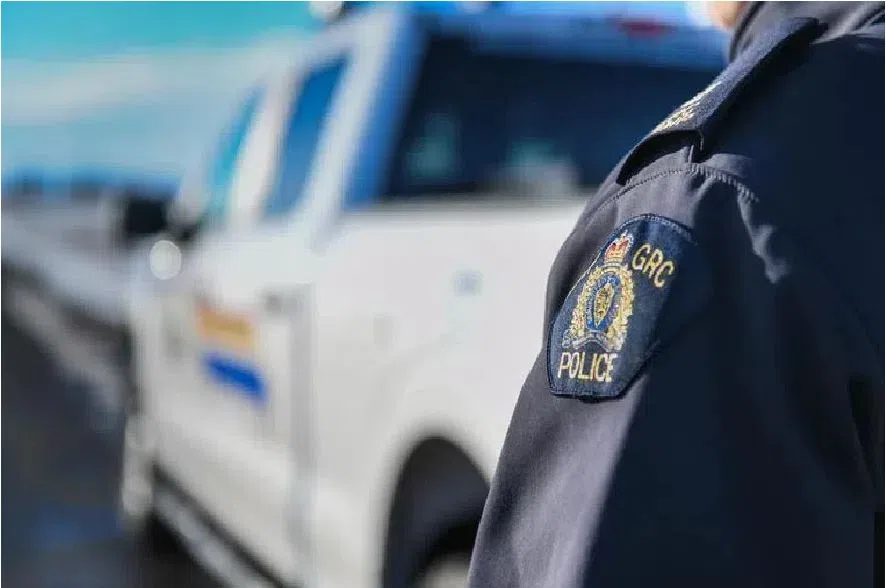
No officers have been found to have committed an offence after an investigation into an RCMP vehicle that hit a 16-year-old in April last year.
The investigation, which was conducted by the Saskatchewan Serious Incident Response Team (SIRT), has concluded there are no grounds to believe an offence was committed by any police officer in the case.
The incident happened on Kawacatoose First Nation, around 10:12 p.m. on April 8, 2025. A Punnichy RCMP vehicle was reportedly travelling through the community, responding to a call about a disturbance involving guns at a home on the First Nation. Two officers responded in marked RCMP vehicles as several additional calls about the incident came in to RCMP.
Read more:
Both vehicles were driving with activated emergency equipment. While the lead vehicle stopped at the signal of the 16-year-old standing at the roadside, the teen was seriously hurt when the second RCMP vehicle hit him in the southbound lane of the roadway.
SIRT was contacted less than an hour after the incident to alert it to the “serious incident involving police.” The group’s civilian executive director accepted the notification as within SIRT’s mandate and directed the team to investigate. The public report on the investigation is now complete.
EMS assistance was requested by RCMP members immediately after the collision, and officers provided aid until EMS arrived, who then took over care until the STARS Air Ambulance arrived to airlift the teen to a Regina hospital.
The 16-year-old’s injuries were found to be serious and within the meaning of The Police Act, 1990.
A SIRT team, consisting of the civilian executive director and six investigators, was deployed to Punnichy and Kawacatoose First Nation to begin investigating. At the outset of the investigation, a community liason was appointed to assist. The liason was given the opportunity to review the entire investigation and make comments and recommendations.
According to the report, the investigation included extensive review of video footage and audio recordings connected to the incident. In-car digital video from the RCMP vehicles were active and numerous officers wore body cameras that were “activated immediately after the incident.” A civilian witness also provided video. Various calls to 911 and radio transmission recordings were reviewed as evidence, as well as dispatch data and occurrence reports from various involved RCMP members to document police actions.
A collision reconstructionist aided the investigation and the scene of the incident was examined. The report by the reconstructionist determined the police vehicle that hit the teen was travelling between 128 and 130 kilometres per hour prior to the collision. When the driver hit the brakes, the minimum speed of the vehicle was 123 km/h and after the collision, the vehicle was travelling around 89 km/h.
Environment Canada weather conditions at the time of the incident and the roadworthiness of the vehicle were also considered.
The analysis in the SIRT report found that the evidence supported the officer being on-duty and operating a fully-marked RCMP patrol vehicle at the time of the incident that was responding to a call for service that was considered serious and urgent at the time.
“While the speeds of the involved RCMP vehicle would undoubtedly be considered excessive in the context of normal civilian travel, or even routine police duties, the nature of the call to which the involved RCMP members were dispatched warranted a rapid response and required travel in excess of typical speeds,” the SIRT report stated.
“While the overall environmental conditions were clear, the lead police vehicle created significant dust in its path, which, combined with the active emergency equipment on
the lead vehicle, served to obscure the brake lights on that vehicle and delay the Subject Officer’s awareness that the lead vehicle had come to a rapid stop.”
The officer involved in the collision hit the vehicle brakes hard, according to the report, but that was not enough to avoid a collision and the vehicle veered into the opposing lane of travel, hitting the 16-year-old victim instead of the lead RCMP vehicle.
“The situation faced by the Subject Officer, namely the rapid and unexpected stop of the lead vehicle in his lane of travel, presented a situation that required immediate action to attempt to avoid a collision and did not provide significant opportunity to consider or weigh options before action was required,” the report read.
In consideration of all the factors considered, the report concluded that the conduct of the officer involved in the collision “cannot be said to represent a
marked departure from the standard expected of a reasonable police officer in similar circumstances.
“While the collision with the affected person was an unexpected and serious outcome, it occurred in the context of a police response to an emergent and potentially life-threatening situation which required urgent action and cannot be viewed in isolation. The totality of the circumstances, including the call for service and the overall
environmental and traffic condition both justified and allowed for a rate of travel which exceeded that permissible in more routine circumstances.”
The report concluded with the decision that there are “no grounds to believe an offence was committed by any police officer” in this incident.
SIRT is a civilian-led, independent body that investigates incidents where a person has died or suffered serious injury arising from the actions of on and off-duty police officers, or while in the custody of police, as well as allegations of sexual assault or interpersonal violence involving police.
Final reports into SIRT investigations are issued to the public within 90 days of the investigation ending.