
Murray Wood: Who's hot... and who's not
Every Friday, Murray Wood takes a look at the week's news and decides who's hot... and who's not. This week's list inclu...
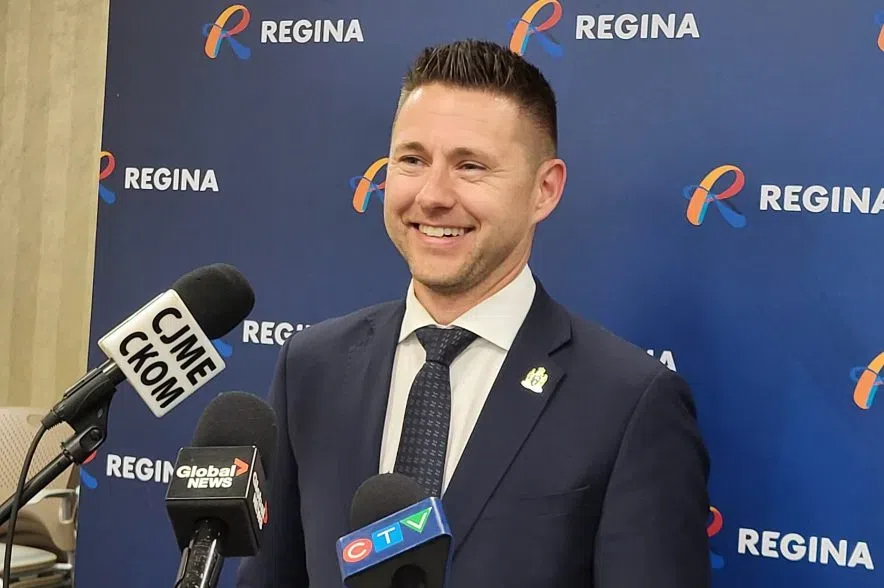
“There’s only one taxpayer” is a sentiment Regina’s mayor says he understands.
Chad Bachynski is reacting to the provincial budget, which pledges just over $61 million to the City of Regina in municipal revenue sharing.
The formula set aside three-quarters of one percentage point of the provincial sales tax to divide among municipalities based on their population.
Read more:
Speaking on the Evan Bray Show on Thursday, Bachynski said he is especially appreciative that those dollars come without strings.
“We do our budget well before this comes out,” he said, “and a part of that, too, is cities are always changing. We’re doing a lot of work all at once, especially through construction season. Things change. Projects shift around as we’re trying to be effective in the way we execute.
“Knowing that those funds aren’t tied directly to a specific project – that we have the agility to move that around within what we need as a city – is important.”
Bachynski said similar to the province, which is facing challenges related to world events and inflation, the city is seeing construction costs and other expenses go up, as well.
That’s why he has been helping lead the push for a new funding model. Mindful of the fact that all revenues ultimately come from taxpayers, Bachynski says it’s the balance between governments that should be looked at.
“Property taxes is our only way to pull right now, and then we cannot run a deficit,” he said. “So some of the ideas around, we pay PST on construction – that’s one where I’d love to see that taken out. We’re investing in critical infrastructure.”
The mayor continued, “If we’re building projects and we’re investing tens of millions of dollars in projects – for example, water and wastewater infrastructure – and those projects are going to unlock housing developments and commercial opportunities that will undoubtedly lead to more revenue for the city and the province, then why are we having this cyclical loop of taxation on a construction project?”
That’s one of the requests Regina intends to bring to the Saskatchewan Urban Municipalities Association (SUMA) convention in April as part of a resolution.
Others include asking the province to collect education property tax directly or to reinstate a grant to municipalities to compensate them for the administrative burden and bringing back surcharges for Crown electrical and natural gas revenues.