

Murray Wood: Is anyone surprised at Trump's response to Robert Mueller's passing?
Murray Wood says when you have no dignity, it's hard to manufacture some, even if you're the leader of your country comm...
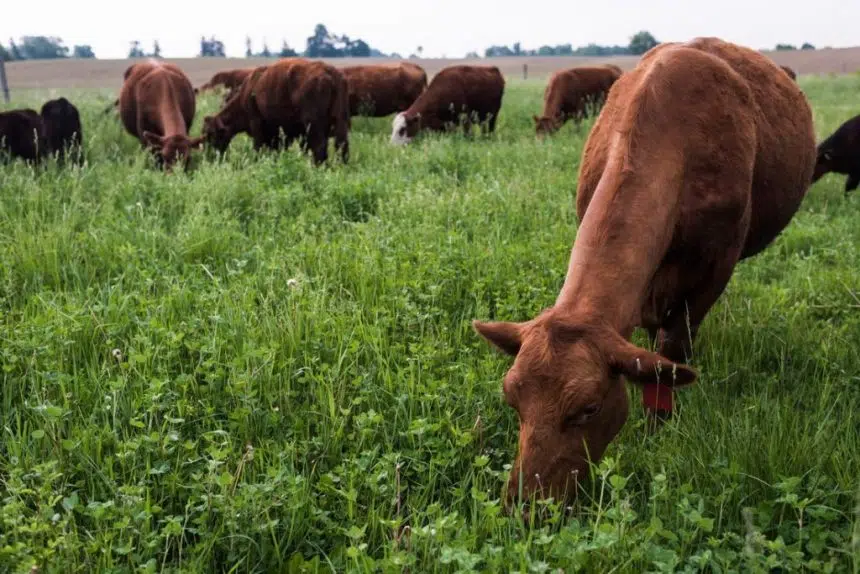
Helping livestock producers better manage their risk is the aim of changes being made to the AgriStability program for 2026.
“This is something that we’ve been lobbying for for a number of years,” Bill Huber, president of the Saskatchewan Association of Rural Municipalities, said at a news conference Monday.
“They heard us and they listened to us, and that’s always encouraging.”
Read more:
Starting this year, the costs associated with renting pasture land for grazing will be considered allowable under the program. Producers will have to demonstrate it’s to feed their own livestock and not to produce crops or forage.
The expense must also reflect a reasonable feed volume.
The other change was already announced, and relates to feed inventory pricing by using the end-of-year price along with opening and ending feed quantities to calculate the value of the change in a producer’s inventory.

Agriculture Minister David Marit outlined changes to the Agristability program for the 2026 season at a news conference on March 23, 2026. (Geoff Smith/980 CJME)
“This is something that we as a government have been advocating for a few years now, and now we finally got it across the line and approved with the federal government,” Agriculture Minister David Marit explained.
He provided the example of a producer who has 100 bales at the start of the year, with a value of $100 per bale for a total of $10,000. Dry conditions might reduce that inventory to 50 bales, but each of them valued at $200 due to the shortage. As a result, the value is the same: $10,000.
Under the change, Marit said the starting inventory would be valued at the end-of-year price, resulting in a loss in inventory value from $20,000 to $10,000, allowing that producer to benefit from the program.
“Some areas in western Saskatchewan, especially in the southwest, have experienced eight, nine years of continuous drought,” Huber said, “and they’re right at their the end of their wits, I guess about them.
“They’re a resilient group out there. They’re strong-willed and they keep going on, and an announcement like this, I think, will certainly put some comfort into their spring planning needs and to continue on in their ranching and livestock operations.”
Chad McPherson, general manager of the Saskatchewan Stock Growers Association, said his group had also lobbied for the changes.
“It just makes the program overall more reflective of all the costs that producers have on their operations,” he said.
Saskatchewan Crop Insurance, which administers the program, estimates between 4,500 and 5,000 producers are in the AgriStability program.
The deadline to enrol for 2026 is April 30.
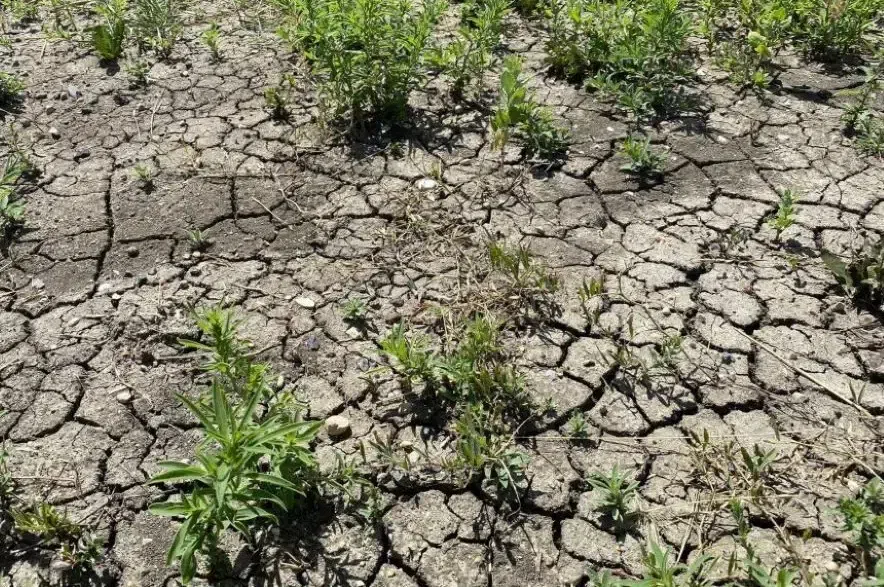
Farmers in southwest Saskatchewan sounded the alarm after nine straight years of drought pushed the RM of Big Stick to formally declare a state of emergency in 2025. (650 CKOM files)
In response to a question, Marit said he’s hopeful that moisture conditions in southwestern Saskatchewan, which was expecting a much-below-normal runoff, are improving.
“Probably two weeks ago, I was more concerned than I am now,” he said. “I know the southwest, in fact a big part of my riding, we had over a foot of snow, and probably four to five inches of good wet snow.”
He says that doesn’t put an end to drought concerns, but it can only help.
“I’ve always said as a farmer all my life, we never lose a crop in March or April. We lose it in July. So hopefully we’ll see some significant moisture through the summer, and we’ll see a big crop again.”
Marit is also optimistic amid concerns about the rising price of fertilizer related to the war in the Middle East.
“I was just talking to some of my friends on the weekend,” he said.
“A lot of them had already locked in their fertilizer price last fall. I think where they’re going to see some, I don’t know if I want to call it challenges, is if they might not just have quite enough, so they might have to get 20 ton or 10 ton.”
The war has also caused spikes in fuel prices, but Marit said it’s a similar situation, with producers locking in their price.
“It’s the market we’re in. We’re hoping we saw the oil prices have come down again here, just, I think, today or on the weekend.
“So hopefully we’ll see some price adjustment there as well.”
Read more: