
Murray Wood: Is it time to review royalty rates in Saskatchewan?
Murray Wood says he's hearing people wonder how Saskatchewan keeps running deficits with all of the activity in the reso...
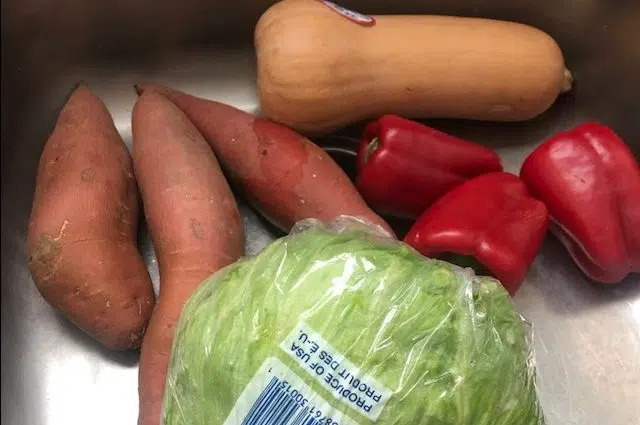
Manitoba’s decision to remove the provincial sales tax on all grocery items put fresh attention on food affordability. It quickly raised a question in Saskatchewan: could the same thing happen here?
“It’s actually surprising and interesting news to see an NDP government eliminate a sales tax on groceries,” said Sylvain Charlebois, director of the Agri-Food Analytics Lab at Dalhousie University.
“You would expect that from a conservative government, but here we are, an NDP government actually going ahead with a very bold move.”
Read more:
Manitoba announced in its 2026 budget that, starting July 1, it will remove PST from all food sold in grocery stores, including previously taxed items such as rotisserie chicken, sandwiches and salads. The province said the move is meant to make groceries more affordable for families.
For Charlebois, the direct savings may not be dramatic, but that does not make the move any less important.
“A lot of people will say, ‘Well, we only tax junk food, and we don’t really pay much taxes at the grocery store.’ It’s partially true,” he said. “The average family of four will likely save anywhere between $20 to $150 for the entire year out of $17,000 spent at the grocery store. So it’s not a whole lot. It’s just the symbol, though, is very powerful.”
He said the change matters most for shoppers who rely on ready-to-eat foods and smaller portions.
“Vulnerable groups like seniors and singles who do go to the grocery store to buy snacks and small portions are likely more disadvantaged than other groups,” Charlebois said.
“They tend to be considered as snacks by Revenue Canada and they are taxed.”
He also said more shoppers have been surprised at the till as shrinkflation has changed portion sizes and pushed more items into categories treated as taxable snacks.
While Charlebois said Saskatchewan could, in theory, follow Manitoba’s lead because it has a PST system rather than a harmonized sales tax, the province signalled Tuesday that it was not interested in taking that route right now.
Asked why the government rejected an NDP call to remove PST from some grocery items, Finance Minister, Jim Reiter, said Saskatchewan already taxes very few grocery products and is focused on broader affordability measures, instead.
“There’s very few groceries that have PST now,” Reiter said. “We’ve taken a different approach.”
Reiter said the government’s strategy centres on income tax relief and other affordability measures included in the provincial budget. Saskatchewan’s 2026-27 budget said it was delivering more than $2.5 billion in annual affordability measures, with a major focus on lowering personal income taxes and increasing credits.
“We think people are best equipped to know where they need to spend their money, so we’re allowing them to keep more of their own money,” Reiter said.
That left Saskatchewan with a different answer than Manitoba, even as both provinces tried to sell voters on affordability. For Charlebois, Manitoba’s move stands out in a country where governments have more often added costs somewhere along the food chain than removed them.
“It’s the first time in many years I’ve seen the government reduce its fiscal footprint across the food chain,” he said.