

Sarah Mills: Tiger Woods should know better after another DUI case
Sarah Mills says Tiger Woods could easily pay for a car service, and he should also have an NDA to keep his business his...
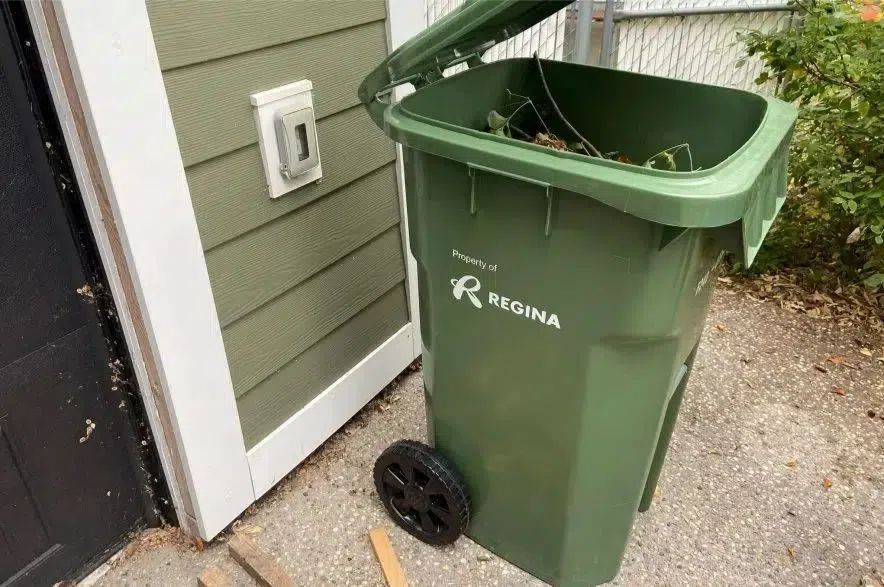
If it hadn’t been for recycling, Regina’s garbage situation could be very different.
At one time, the city’s landfill was expected to be full by 2025. That date has now been delayed to 2053, including a three-year extension credited to the adoption of green cart collection.
Read more:
Given that the estimated cost of both closing the current landfill and commissioning a new one is in the neighbourhood of $100 million, the city would like to keep pushing that back.
Regina’s Executive Committee heard the latest update on Waste Plan Regina at its meeting on Wed, April 1. The plan was first adopted in 2011, which included a waste diversion target of 65 per cent.
Right now the city is at 40 per cent, but Mayor Chad Bachynski believes the 65 per cent target is achievable.
“It’s going to be a continued concerted effort and so it’s going to be a combination of help from our residents to achieve those goals,” Bachynski told reporters, “as well as ongoing collaboration with the city to look at creative ways, how we implement and adapt our programs to the behaviors of our residents as well, trying to find a way to make it as easy as possible for folks to help with that.”
Administration hopes to have a new 25 year plan ready to present for council in 2028/2029.
Kurtis Doney, the deputy city manager of city operations, credited operations at the landfill for helping to extend its life, as well.
“It is essentially a construction site,” Bachynski said, echoing Doney, “and it’s a construction site with ongoing innovation to try and continually build more and more efficient every day.”
And while the current focus is on ensuring people are properly sorting their garbage and recycling, Doney also told the meeting innovation may help in the future.
“We definitely have lots of interest from different proponents about how new technology can improve operations with the city and solid waste,” Doney told reporters after the meeting, “and that’s part of the solid waste management plan that we’ll look at in the future.”
Executive committee is also recommending council adopt updates to its early adopter incentive program for food and yard waste recycling.
The program set aside $1 million for incentives, but so far hasn’t paid anything out. Proposed changes give the owners of multi-unit residential buildings for options on how they can get financial help.
The changes come after consultation and Jeff Campbell of the Canadian Condominium Institute is mostly on board.
He does warn there will have to be more consulting and flexibility for owners in difficult situations.
“We have condominiums that have absolutely no land,” he said, “and it makes it very difficult for them to do any extra, or any other type of garbage, recycle, and food waste.”
If approved, the program will offer two options to the owners of multi-family buildings, with a limit for condos to one application per condo board.
One option is to receive $55 per month as a rebate for every green cart, from the time the application is approved until the mandatory program begins, as well as a one time offset of $25 per unit to provide in-unit collection.
The other option is to reimburse capital investment up to $10,000 and then 50 per cent of costs to a maximum of $20,000.
Owners of industrial, commercial, and institutional buildings are being offered assistance as well.
Food and yard waste collection will become mandatory for both types of property in 2027.