


Sarah Mills: Left-lane hoggers are everywhere
Passing lanes allow a faster driver to pass another vehicle. But Sarah Mills says it seems the left-lane hoggers have es...

A provincial police force, which is still in its infancy, is helping tackle crime across Saskatchewan.
The Saskatchewan Marshals Service was first announced in the fall of 2022 as a way to enhance policing around the province through enforcement in high-crime locations, arresting high-risk and prolific offenders and providing assistance to other police forces when they tackle challenging investigations.
Read more:
The new police force officially launched a year ago, and its officers hit the ground running. Most recently, the marshals have been assisting the RCMP in Pelican Narrows following a shooting on June 1 that left a woman dead and a man seriously injured.
Chief marshal Robert Cameron joined The Evan Bray Show on Monday to discuss the first year for the new force, and what still needs to be accomplished by the growing organization.
The following questions and answers have been edited for length and clarity.
EVAN BRAY: It’s (the marshals are) still relatively new in the province. You’re not up to full staff yet, are you?
ROBERT CAMERON: No, and we are in the building phase right now, and we made some good progress. We’re around 27 officers, as of this moment. We just had two of our newest recruits graduate from the police college last Friday. They’re starting their new careers up in Prince Albert today, in fact.
So 27, and the total will be 70 when you’re fully staffed. Am I right?
CAMERON: That’s right. We’re looking at having our full staffing complement within the next few years. Of course, we’re in the process of recruiting all the time and bringing people on and building those numbers.
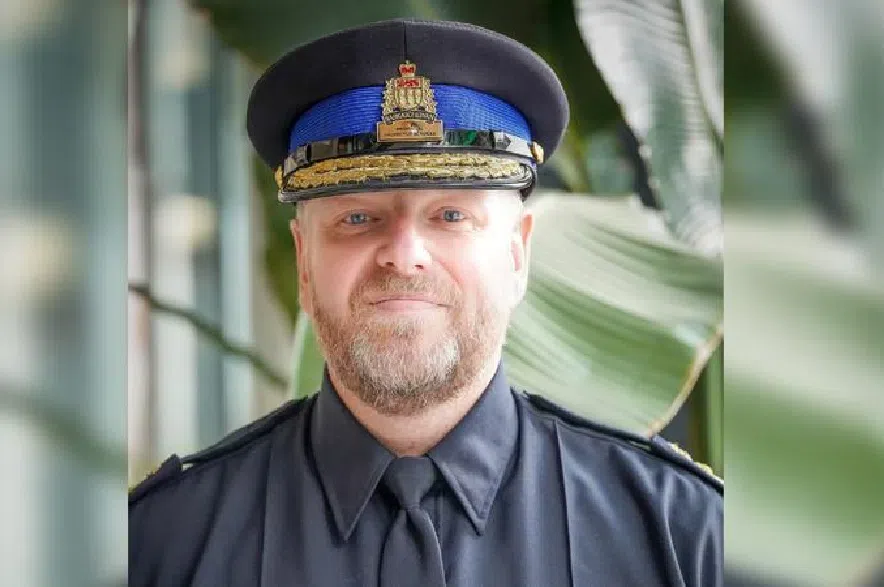
Chief marshal Robert Cameron says the Saskatchewan Marshals Service has made 128 arrests in the past year. (Robert Cameron/Submitted)
What does deployment look like right now for the marshals? What are the types of things that you can do to complement a local policing agency or other agencies in the province?
CAMERON: That support can be a lot of different things. It can be providing high-visibility patrols, it could be following up leads or supporting different scenes of security. It can be looking at individuals that need to be apprehended. There’s a variety of things and we work with the police force of jurisdiction to determine what those things are, and each case is a little bit different. We’ve actually been operational now for just over a full year. When I think about it, those things have involved all kinds of different crime types and files – everything from warrant apprehension to homicides – and so there are quite a few things happening. We even supported the Saskatchewan Public Safety Agency in the fires from last year.
You’ve got 27 members now and 70 when you’re fully up and running. What difference will that make in terms of how you’ll be able to deploy and the type of work you’re able to do? Will it be a big difference once you’re fully staffed?
CAMERON: It does make a big difference, and I believe that by having a dedicated, specialized police service like the marshals, what it allows us to focus on those individuals that are under the radar. What the marshals do is they provide those resources that are able to focus on those types of individuals – that high-risk, high-impact crime – and those people that are wanted by the system. Since being operational back in June, and it just being over a year, 128 individuals we’ve apprehended. We’ve cleared up 202 warrants and we’re closing in on 400 compliance checks, and those are folks that are on bail conditions or release conditions from the courts – maybe electronic monitoring – and need to be checked to make sure they’re complying with those conditions. So there’s been a lot of work done in the last year.
We talked last week a fair bit about the situation in Pelican Narrows. People in that community, it’s come out, are very aware of who the problems are and which houses they’re associated with, and it sparked the conversation online that what they really need is the police to go in and flush out the problems. Is that something that your agency will be set up to do?
CAMERON: That’s what we’re actually doing now, Evan. When you have an event as tragic as this and as impactful as this, there’s a need to, first of all, stabilize that community. People are nervous, they’re upset, they’re scared, and they need to have something that re-establishes the confidence that things are under control and it’s safe, and having that extra police presence, I believe, it helps with that. Beyond that, there’s the need to help and assist that police force of jurisdiction, and for us, that’s our bread and butter. It’s going in there and providing that support and making sure that the police force of jurisdiction has the resources that it needs to carry out that investigation, but also maintain the regular policing functions and duties that are happening within that community. And certainly, as the marshals service, it is one of those things that we were designed to do and are equipped to do.
Can you speak to the relationship-building piece, and how that works for an agency like yours that doesn’t really have kind of a community of jurisdiction, but really works through the whole province?
CAMERON: We spend an awful lot of time working with communities and engaging with different community leadership and members of the community to establish that trust, to establish that connection and to get to know one another. So when there are times of something like this, where you have a crisis in the community, when we’re coming in, it’s not an unfamiliar face that they’re seeing. They know who we are and they know what we’re about.
How do you see the situation in northern Saskatchewan? Is it getting worse? And what does the plan in your mind look like to try and bring some stability up there?
CAMERON: First of all, I would say crime and violence are obviously not unique just to the northern areas. It’s all over the province, and every province probably sees the same kind of scenario, but there seems to be a disproportionate amount that seems to occur in certain areas in the north and central areas, and I think really what we’re looking at is a collaborative approach in a very aggressive policing model where we go out and we tackle those folks that are out there doing the crime. And we’re talking about gangs in some cases, we’re talking about drug trafficking in some cases. A bit of both. When you look at the reason organized crime goes into one area or another, it’s about profit, it’s about making money and it’s about exploiting people. And collectively, as police services and law enforcement in this province, we need to tackle that. We need to really get in there and take a proactive stance and deal with these people that just can’t follow the rules and are bringing poisons like drugs into our communities.
How will you measure success?
CAMERON: I think success, for us, is a multi-system process. Sure, it can be numbers of how many people we arrest on warrants and how many people we bring back to the justice system to be accountable. It can be how many times we are engaged with communities and how that proactive and positive relationship builds for gaining things like intelligence and being able to tackle crime, being able to really make a difference in preventing organized crime from getting footholds into our communities. It’s really a lot of things that are going to lead to success but, more importantly, I think it’s also looking at the fact that Saskatchewan becomes a safer place, and people want to live here and they want to bring their families here, and they want to be part of our communities. And that’s a pretty important piece.
Are your members still up in the Pelican Narrows community, or have you wrapped up efforts up there now?
CAMERON: No, we’re still there. And, in fact, a new team just went there this morning and we’ll be there at least for the week. We are working with the RCMP to determine what that looks like for the future, but at this point, for this whole week here, we will be there.