


Evan Bray: Data centre project offers real opportunity for Saskatchewan
Evan Bray says he understands skepticism about Bell's giant AI data centre project, but some are so afraid of the idea t...
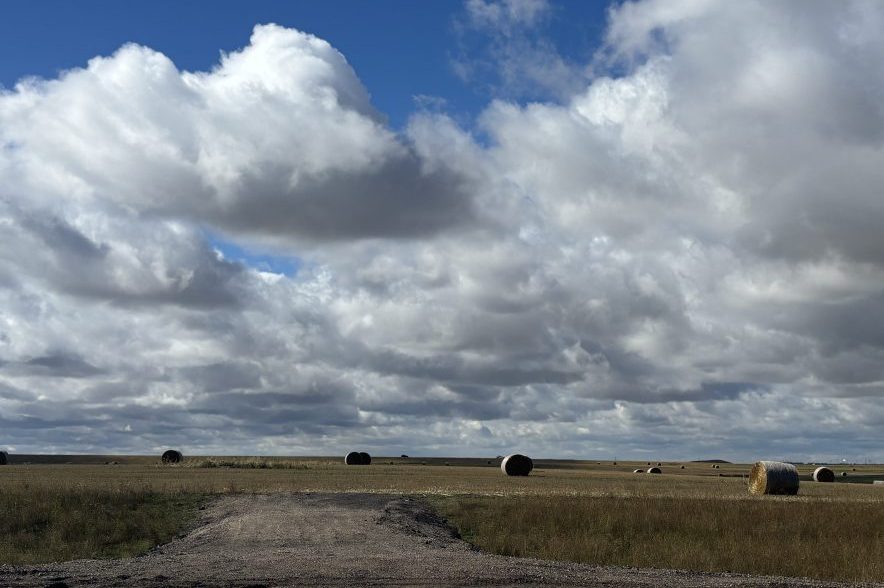
While many Saskatchewan farmers are waiting for fields to dry out after weeks of rain, Tyson Jacksteit isn’t complaining too much about the moisture.
After nearly a decade of drought in southwest Saskatchewan, he says this year’s crop is the best he’s seen since 2016.
“I would rather have this situation instead of dry. That’s for sure,” Jacksteit said.
Read more:
Jacksteit farms near Golden Prairie, an area hit hard by years of dry conditions. When the growing season began, he feared another difficult year could be ahead.
“We went into the year dry again, and then had a very good May and an exceptionally wet June,” he said.
The rain transformed the outlook.
Jacksteit said crops looked strong by the end of June before conditions changed again in July, when hot, dry weather returned.
“It was kind of a tale of two seasons,” he said. “Fortunately, we had enough moisture in May and June to carry us through, and yeah, we got quite a nice crop coming off.”
Jacksteit described his crop as above average and said there’s little doubt about how it compares with recent years.
“It’s the best year since 2016 for sure,” he said.
The moisture that helped produce that crop is now making it harder to get into the bin.
Jacksteit estimated his operation was about 65 per cent finished harvesting, but said progress has been inconsistent as rain repeatedly moved through the area.
“The first half of harvest when we got going kind of near the end of August was pretty good,” he said. “Then we got some rainy weather, and it’s kind of been off-and-on rain ever since.”
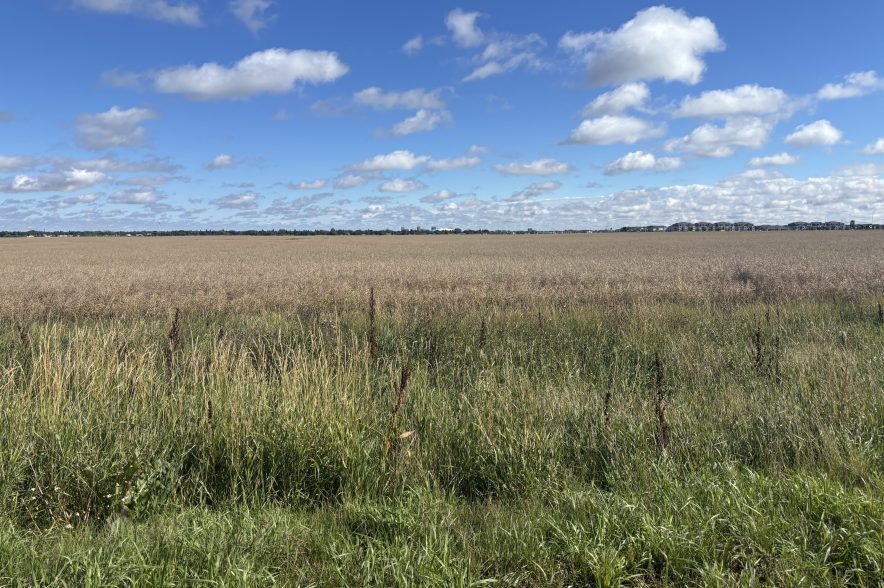
A crop stands ready for harvest in Saskatchewan. Farmers have faced repeated rain delays after spring moisture helped crops through a hot, dry July. (Jacob Bamhour/980 CJME)
That slowdown isn’t limited to his farm.
Saskatchewan’s latest crop report, covering Sept. 1 to 7, showed 27 per cent of the provincial crop had been harvested, up from 18 per cent the previous week. That’s well behind the five-year average of 58 per cent and the 10-year average of 50 per cent.
Widespread rainfall stalled fieldwork across much of Saskatchewan, with many fields saturated. The province said excess moisture and high winds have also caused crop damage and raised concerns about lodging, bleaching, sprouting and overall grain quality.
Jacksteit said wet conditions mean the windows to get onto the field are becoming shorter.
“Now with all the moisture around, it’s late,” he said. “It’ll be late starts and early shutdowns because of the moisture.”
A better crop doesn’t necessarily mean a better financial year.
Jacksteit said weaker crop prices and rising operating expenses are taking some of the shine off his strongest crop in a decade.
“This is probably the highest-cost crop farmers have put in this year, and the prices are nowhere near where our costs should have them,” he said.
Fuel is one of his biggest concerns.
Jacksteit estimated his operation burns about 600 gallons of fuel per day during the busy harvest period when its trucks and combines are running.
“You start looking at eight to $10 a gallon,” he said. “You’re, you know, spending four to $6,000 a day on fuel.”
Those figures are Jacksteit’s estimate of what his operation, and he said larger farms, could face in fuel bills.
“It’s a large number to digest,” he said.
The pressure doesn’t stop at the fuel tank.
“Parts were high already, but they’re going to hurt,” he said.
For Jacksteit, that creates a bittersweet end to a growing season that finally delivered something southwest Saskatchewan farmers have been waiting 10 years to see.