

Evan Bray: What would 'associate' EU membership mean for Canada?
There's been a lot of talk about Canada possibly becoming an "associate member" of the European Union. Evan Br...
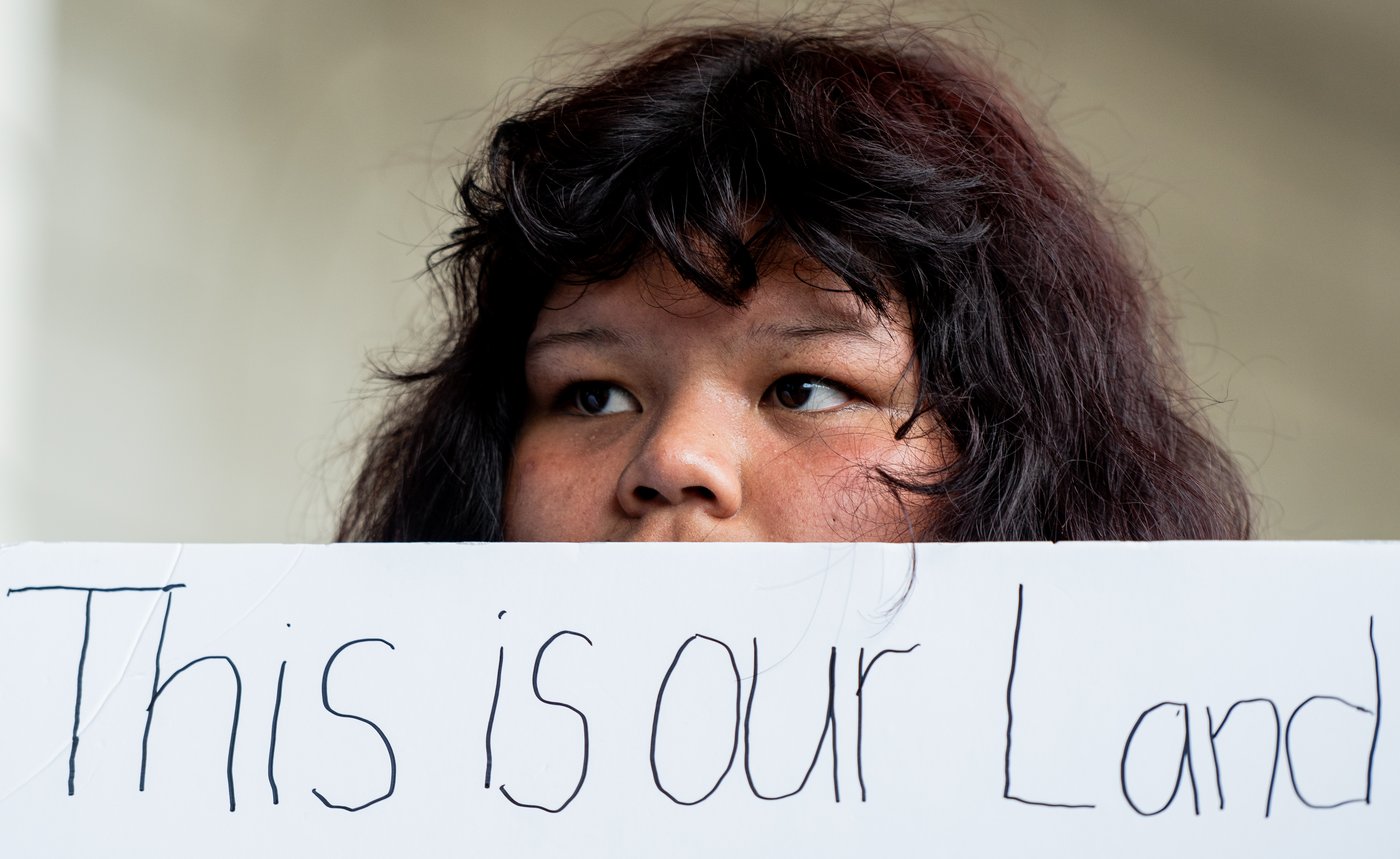
OTTAWA — As Canadian politicians were pitching their major projects plans to foreign investors at a first-of-its-kind summit in Toronto, First Nations youth in Ottawa were making their own pitch to Canadians to join the fight against them.
Jeronimo Kataquapit and his cousin Ramon had just returned Wednesday from a weeks-long journey on the coast of James Bay, a body of water that straddles Quebec and Ontario at the southern tip of the Hudson Bay.
Jeronimo called it “hardcore camping,” where he, Ramon and his parents roughed it on the shorelines, spotting polar bears, flocks of geese and caribou along the way.
The trip wasn’t for rest and relaxation for the family from Attawapiskat First Nation. It was part of their ongoing efforts to leave physical traces of First Nations occupancy on the land and waters as the provincial and federal government work to develop the mineral-rich Ring of Fire — a so-called “major project” the Kataquapit family vehemently opposes.
“I didn’t want to wait around for our elected leaders to take action,” Jeronimo told attendees at an event held in St. Andrew’s Presbyterian Church on Tuesday evening, steps away from Parliament Hill.
“We needed to make our presence known on the river.”
Prime Minister Mark Carney’s tenure to date has been defined by his desire to build major projects in an effort to strengthen the Canadian economy in the face of increasing trade hostility from U.S. President Donald Trump.
This week’s two-day summit in Toronto — a gathering of hundreds of domestic and global executives with trillions of dollars in assets under management — sought to address concerns about Canada’s investment climate.
The goal of the summit was to push back against the country’s reputation as a tough place to earn a return and replace it with a message that Canada is “open for business.”
The Kataquapits say it isn’t — or, at least, not in the way Carney and Ontario Premier Doug Ford claim.
“They talk about the region as if it’s a statistic, as if it’s a number, as if it’s money to be made,” Jeronimo said, sitting in a wooden pew in the oldest Presbyterian church in Ottawa, as the mostly non-Indigenous attendees funnelled out of the Together for Nature tour.
“But it’s people’s homes … We know what’s at stake. It’s our future that will be affected.”
The Together for Nature Tour, organized by Ontario Nature and Legal Advocates for Nature’s Defence, is seeking to build solidarity between Indigenous and non-Indigenous Canadians to protect the environment and push back on Ottawa’s major projects agenda.
Carney’s government faced some loud opposition from Indigenous leaders last year when it pushed through legislation to speed up major projects. First Nations leaders warned his fast-track approach to development could infringe upon their rights, and accused Carney of sidelining their concerns in favour of investors.
The message from elected community leaders has changed since then, but not the one from young people — who warn these developments could irrevocably harm the landscapes and waterways they’ve known their entire lives.
The Kataquapits are taking that message across the province this week, with stops in Ottawa, Toronto, Kitchener and London. It’s the message they want attendees to share with their networks long after the events end.
“It’s all about the dollar (for Carney and investors). It’s about money and what they can gain in the short term,” Ramon said. “But when the long term comes to bite them and their children when they’re in the spirit world, they’ll wish that they would have done what was right.”
The investment summit was protested by Indigenous leaders, environmental groups and union leaders who said they rejected the idea of leaving Canada’s economic future in the hands of CEOs.
“Canada is getting very good at blackmailing the public,” Wet’suwet’en Hereditary Chief Na’Moks said at one such demonstration in Toronto, citing the prime minister’s argument that Canada needs to build more major projects to protect itself from predatory U.S. trade policy.
“That’s their story. Their story is false, the same way that they think that these projects will go on without your support, without our support.”
Youth on the other side of the country are making similar efforts to voice their displeasure with the actions of their provincial and federal governments.
Katisha Paul, founder and principal consultant of NEPENEK and women’s representative for the Union of B.C. Indian Chiefs, called the investment summit an “extraction pitch” and questioned whose “national interest” is being served by politicians and the business leaders they’re trying to court.
“Right now it’s not Canadian citizens,” she said. “It’s a banker sitting in front of a trillion dollars, deciding that their own national interest exists above any taxpayer. And he’s going to do anything that he can to further that.”
Paul said she worries about the salmon, the whales and the land in her territories.
She said the federal government is failing to adequately consult with First Nations title- and rights-holders who are often on the front line opposing developments.
“Everybody around the world loves the idea to stand up against somebody like Trump,” Paul said.
“But at the same time, what are we giving up? Who’s going to be hurting in the end?”
This report by The Canadian Press was first published Sept. 17, 2026.
— With files from Craig Lord
Alessia Passafiume, The Canadian Press