


Evan Bray: What would 'associate' EU membership mean for Canada?
There's been a lot of talk about Canada possibly becoming an "associate member" of the European Union. Evan Br...
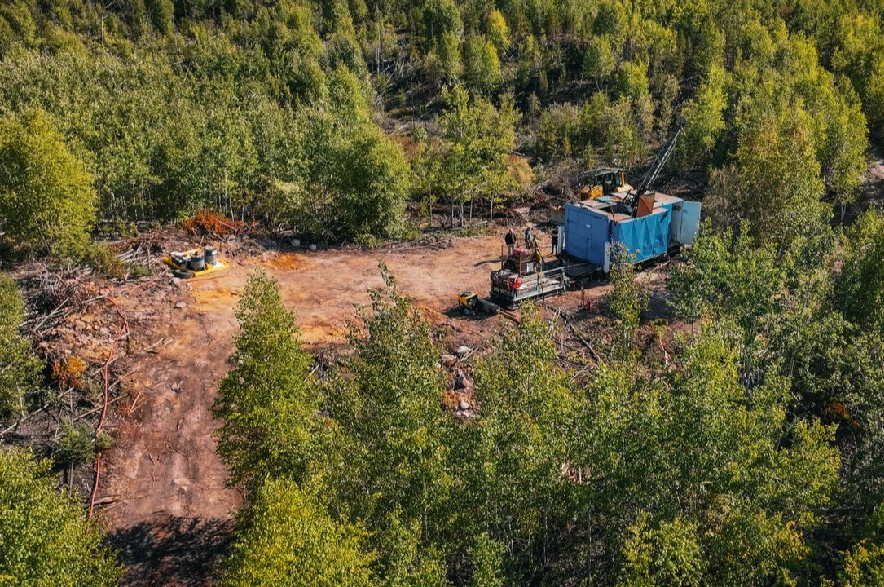
Uranium City was once home to thousands of people drawn by mining. Now, a company exploring nearby hopes new drilling will show whether uranium mining could return to the area.
On Wednesday, Triton Uranium said it had completed four technical reports on its Atlas project, a roughly 46,000-acre property in the historic Beaverlodge uranium district near Uranium City. The reports put an exploration target of up to 46.56 million pounds of uranium, a figure based largely on historical drilling and geological information. It points to what Triton hopes further exploration will find.
Read more:
“We think the best stuff was left behind, and we’re going to try and prove that,” Triton president Scott Evans told paNOW.
Evans said 46.56 million pounds may sound like an enormous amount of uranium. For comparison, he said Cameco’s Cigar Lake mine produces roughly 18 million pounds in a year. But Triton still has to confirm how much of its exploration target is actually on its property and whether it could be mined economically.
“So in the grand scale of things, it’s not huge numbers, but it’s a good start,” Evans said.
Evans said the company inherited decades of drilling records when it took on the project, giving it places to investigate rather than starting its search from scratch.
Former mining areas lie within or next to Triton’s property. The company said the Beaverlodge district produced about 77.8 million pounds of uranium in the past. The reports identify a much smaller current mineral resource at one deposit called Red Rock, which contains about 559,000 pounds. Evans said that amount would not be enough to support a mine, but Triton is drilling to find out whether more uranium can be found elsewhere on the property.
A successful mine could have a significant effect on Uranium City. Evans said the community had more than 3,000 residents during its mining years, compared with just 90 to 100 today. He believes renewed mining could create jobs and support more businesses and services in a community where goods can be difficult to access.
There is interest in new uranium supplies beyond Saskatchewan. Triton pointed to plans for new nuclear reactors and the refurbishment of existing ones in Canada. The company believes Saskatchewan is well placed to meet some of that demand because of its mining history and existing industry.
“Saskatchewan has a critical role to play as a reliable, allied source of uranium for Canada and the United States,” Evans said in a statement.
That potential market helps explain the search at Atlas, but Triton is still at the exploration stage. The company said it was carrying out a 10,000-metre drilling program and planned more drilling this winter.
Evans said he hopes that within two years the company will know enough about the size and cost of a potential mine to decide whether to pursue development. Permitting and mine planning would follow.
“It’s too early to tell,” he said when asked when uranium might be shipped from the site. Evans said a larger mining company would likely develop the project if Triton proved it was viable.
The company is considering whether shallow uranium deposits could be mined from an open pit, but it has not selected a pit site or determined how mine waste would be handled. Evans said those decisions depend first on finding a deposit worth mining.
For now, Triton has identified where it wants to look and why. Its drilling will determine whether Uranium City’s mining history has a commercially viable next chapter.