Sarah Mills: Ending door-to-door is the future for Canada Post
Rural Sask. has picked up mail from shared mailboxes for decades. Now, it will be the same in some parts of in Regina an...
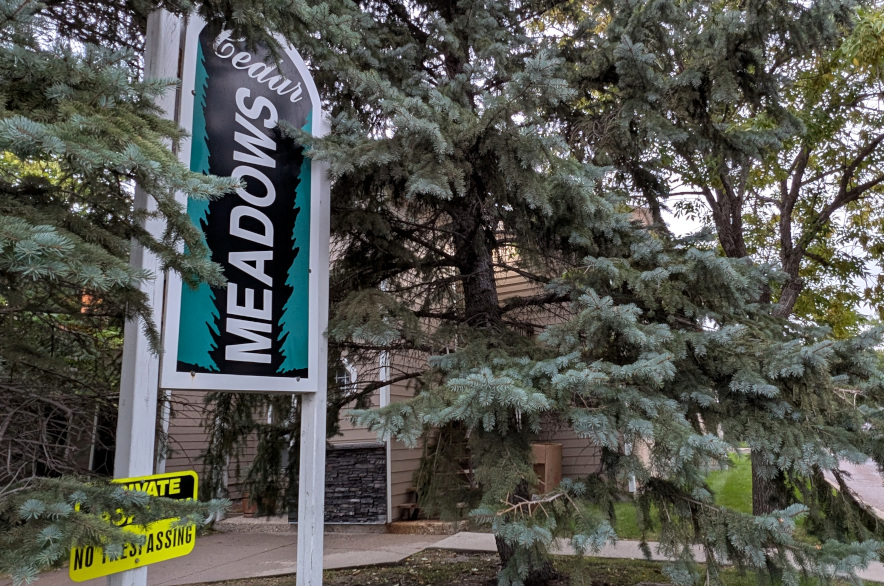
Mark Delaney’s troubles with his Regina condo board have taken up a lot of time, effort and printer paper.
He lives in the Cedar Meadows condo development in northwest Regina. He said he bought a unit and moved in about three years ago.
He was briefly involved with the board, saying he wanted to be of help to the community, but left when he said he tried to fix governance and operational problems but got little support.
Now, Delaney is watching from the outside and believes the board is breaking the law. The condo community has its own bylaws, but they also have to abide by provincial legislation.
He claims the board hasn’t held a proper annual general meeting in three years — one is required every year. He also contends there have been numerous conflicts of interest involving the board and its operations. The president of the condo board didn’t return several calls for comment on these allegations.
The most recent situation that’s spurred Delaney into action is a levy he believes the board is trying to ram through, against the rules, for construction and updates in the community.
He said the board has decided it wants to do $2 million worth of work right away and is only giving condo owners a say in whether the condo board takes out a loan, with the cost added to their condo fees to the tune of hundreds of dollars more a month, or the owners take out their own loan to cover the several thousand dollars needed all at once.
“Two million dollars, I think, is just outrageous. To have to come up and pay that suddenly, it would just put people right out of their homes,” said Delaney.
If a condo board decides on a special levy and a condo owner doesn’t pay, the legislation says the board could put a lien on the unit, sell it out from under the owner and take the levy amount from the proceeds, giving the rest back to the owner.
Delaney believes the work could be deferred while the board builds up a reserve fund to pay for it.
He said he’s been talking to other condo owners in the complex, letting them know what he believes is going on.
“What we’ve done is we’ve gone around knocking on doors and asking people to sign the petition and get involved in this, and vote this levy down and ask them to help reset, call for an election, get a new board on,” Delaney explained.
He said he got enough signatures for a petition and handed it to the board, but hasn’t heard anything since then.
However, Delaney has had to do all of this research, organizing and action by himself with little help because Saskatchewan’s condo legislation is what’s considered self-enforcing. It means there is no inspector, auditor or tribunal employed by the province to keep an eye on condo boards or do periodic audits to make sure everything is above board.
Owners like Delaney have to know what the rules require, realize something is going on, then do the research and write and submit a report.
If the owners can’t work things out directly with a condo board through discussion, mediation or arbitration, they can go to court and file applications, including a request for an administrator to be appointed and put the board’s operations to rights.
A condo corporation could also be prosecuted for violating the legislation, but it’s extremely rare to the point that, when asked, Public Prosecutions said it wasn’t aware of any that had recently been pursued.
Delaney said he’s filed a complaint with the Office of Public Registry Administration but hasn’t heard back from that yet. He’s also tried to go to the Court of King’s Bench but has had trouble navigating that system. He said his group of condo owners would have to figure out how to get money together to pay for a lawyer if they’re going to go forward through court.
The process has taken a lot of time and effort on Delaney’s part and could end up costing money if a lawyer and court fees come into it. He feels the legislation needs to be changed to put someone in place with authority who can oversee these situations.
Jeff Campbell agrees Saskatchewan’s condo laws can be hard to navigate.
“There are easier systems out there,” said Campbell.
He’s president of the South Saskatchewan Chapter of the Canadian Condominium Institute, an advocacy group for condo owners that also provides education for owners and boards.
Campbell said the group is looking to work with the provincial government to make changes to condo legislation to resolve a number of issues it sees, as well as add a tribunal.
B.C. and Ontario have condo tribunals, and Alberta recently implemented one as part of its legislation overhaul. A tribunal is a place for condo owners and boards to go when there are disputes that can’t be solved any other way.
“A lot of time with a tribunal board, the condominium owners (either) understand — wait, they aren’t breaking the act, they’re actually doing what they’re supposed to be doing — or, they are breaking the act, and it’s corrected immediately,” said Campbell.
Without a tribunal, he said navigating the system can be “a bit much.”
He said the organization would also like to have some requirements put into the act around mandatory education for people who serve on condo boards, so they can better understand what’s allowed and what’s not.
At this point, the provincial government said it’s not considering a formal review of the condo legislation, and it doesn’t appear to be considering implementing a tribunal. It said the legislation lays out dispute resolution without government intervention.
In a statement, the Ministry of Justice said it’s found many disputes are just misunderstandings of the legislation, and it’s prepared a number of documents available online to clarify and answer questions.
In the meantime, Delaney and his group of dissatisfied condo owners are in a holding pattern — they’re waiting to find out what might come of their complaint, waiting to find out whether the board will push forward with its plans, and waiting to see if they’ll need to seek court time and costs in their fight.