


Murray Wood: Who's hot... and who's not
Every Friday, Murray Wood takes a look back at the week's news and decides who's hot... and who's not. This week's list ...
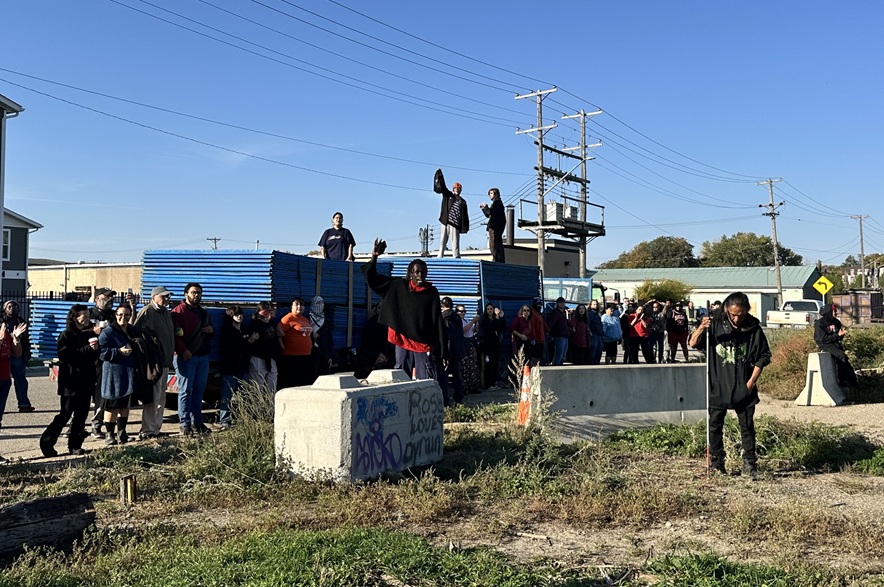
Regina housing advocates who travelled to Saskatoon say the city wrongly described Thursday’s protest as aggressive and unsafe.
Five advocates involved with Regina’s downtown encampment travelled to Saskatoon as officials prepared to clean up and install fencing around an encampment near 20th Street West and Avenue K South.
Shawn Koch was among them.
Read more:
He said the Regina group travelled north after following what was happening at the Saskatoon encampment. They saw similarities to the issues advocates have dealt with in Regina.
According to Koch, protesters formed a human chain around a truck carrying fencing to stop the work. Some protesters also climbed onto the fencing on the truck.
“We were there to show solidarity with our Saskatoon brothers and sisters,” he said.
The City of Saskatoon offered a different description of Thursday’s events.
In a news release, the city said the cleanup and fencing work was paused because the level of “aggressive protest” from community advocacy groups made the site unsafe.
The release said protesters directed “profane, derogatory and vulgar comments” at Saskatoon Fire Department staff, police officers and other workers.
It also said most of the protest activity did not involve people living at the encampment.
Madi Massier, another Regina advocate who travelled to Saskatoon, said the city’s characterization was inaccurate.
“To be labelled aggressive, and all things considered, it was just, like, the opposite, honestly,” Massier said.
“It was smudging. It was drum circles. It was connecting and networking with people living there and with other activists in Saskatoon.”
Massier said the experience also highlighted differences between the encampments in Saskatoon and Regina.
Regina’s encampment in Core Community Park has access to portable washrooms, some water and garbage disposal. According to Massier, organizations and services have also been able to come directly to the park.
Massier said she would like to see people living in Saskatoon’s encampment given access to similar basic services.
People living at the encampment have also publicly called for washrooms and garbage bins. A sign photographed at the site Friday specifically pointed to the services available at Regina’s encampment while asking for similar treatment in Saskatoon.
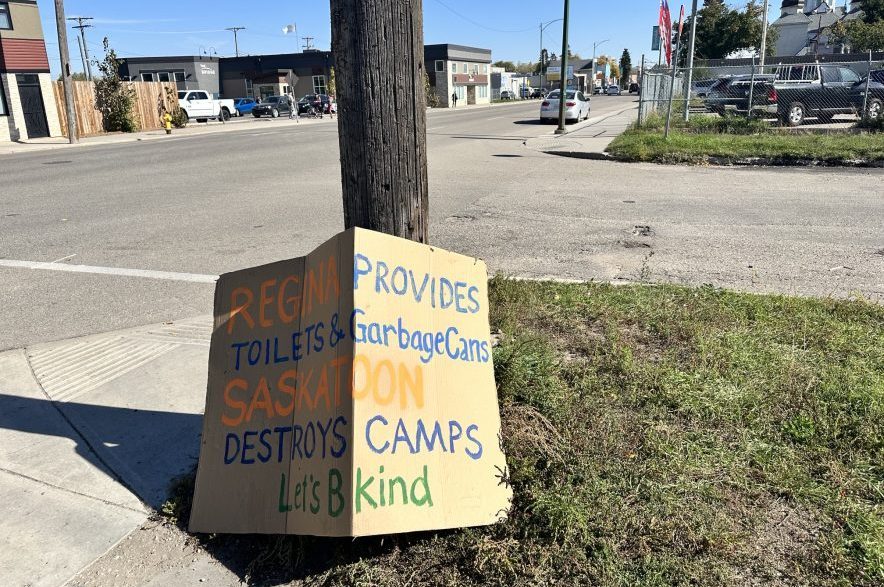
A piece of cardboard near the Saskatoon encampment on 20th Street at Avenue K reads “Regina provides toilets & garbage cans. Saskatoon destroys camps. Let’s B kind.” (Libby Gray/650 CKOM)
Koch said Regina being held up as an example caught him off guard.
“Our bar here is so low, but Regina is being held up as the high bar around the province,” he said. “It’s kind of mind-numbing, actually.”
Neither Koch nor Massier described encampments as a permanent answer to homelessness.
Massier called them a “band-aid solution” and said the goal should ultimately be getting people into permanent housing.
“It’s the bare minimum you could do to keep the encampment up and support the encampment,” she said. “The next step is you need to actually help people and get them access to services. Like, housing is the main one.”
The Saskatoon encampment remained in place following Thursday’s confrontation.
Saskatoon lawyer Crystal Fafard has filed a court application seeking to stop the cleanup. The city said it was opting not to clean up 301 Avenue K South while that property is before the court.
Previous CKOM reporting said the application is expected to be heard Monday.
City officials have said allowing encampments to remain carries risks, including human waste, garbage, discarded needles and other safety concerns. They have said their approach is to connect people with available supports rather than allow encampments to remain indefinitely.
Koch argued people shouldn’t lose the shelter they currently have before another option is available.
“Again, our group and any and every housing advocate out there would say they’re not pro-encampments; they’re pro-housing,” he said.