


Murray Wood: Who's hot... and who's not
Every Friday, Murray Wood takes a look back at the week's news and decides who's hot... and who's not. This week's list ...
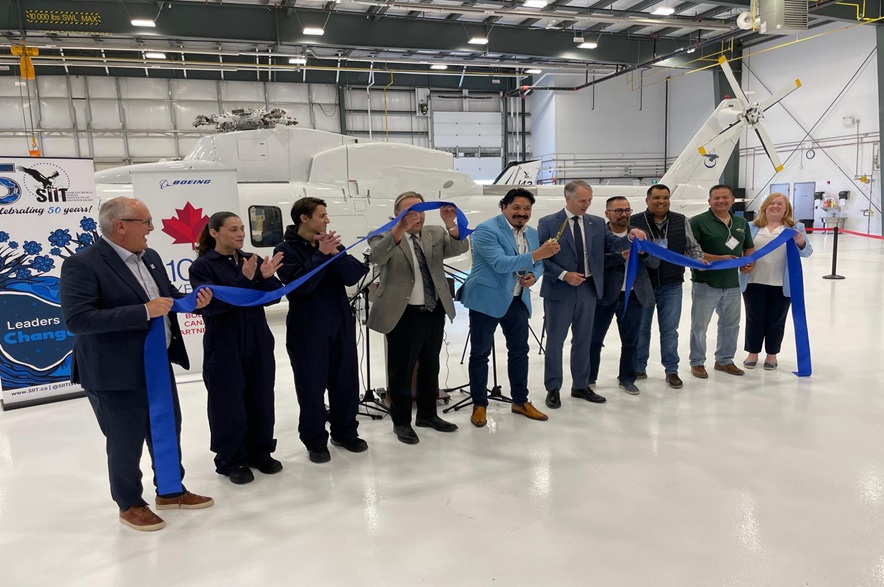
A longstanding partnership aims to create additional opportunities for students on the Prairies.
The Saskatchewan Indian Institute of Technologies, alongside Boeing, celebrated the grand opening of the expanded Saskatchewan Aviation Learning Centre this week.
Read more:
The expanded SALC aims to help increase the number of aircraft maintenance engineers in Saskatchewan, support the province’s aerospace sector and help address the shortage of skilled workers across Canada’s aviation industry.
The centre features modern classrooms, a specialized avionics lab and expanded hands-on training spaces designed to prepare students for careers in aircraft maintenance engineering.
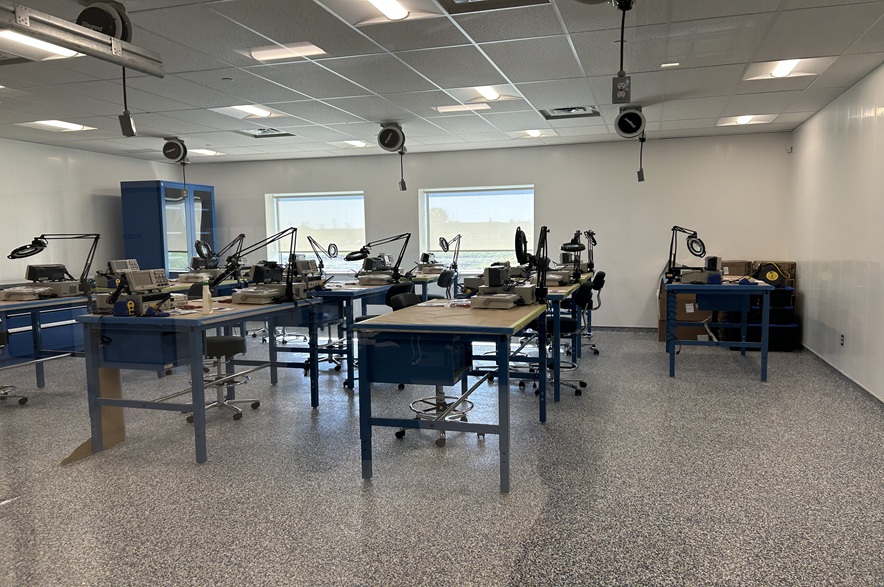
The Saskatchewan Aviation Learning Centre Lab at SIIT. (Roman Hayter/650 CKOM)
Boeing supported the centre’s expansion with a $17-million Industrial and Technological Benefits investment.
“This investment was so important because we couldn’t keep up with the demand. There’s a growing demand, a long waiting list of individuals who actually want to come through and take the aircraft maintenance programme and the avionics program,” said Riel Bellegarde, president and chief executive officer of the Saskatchewan Indian Institute of Technologies.
The investment stems from the Government of Canada’s selection of the CP-8A Poseidon as its multi-mission aircraft.
According to Bellegarde, that investment also helped double the centre’s capacity for students.
“We can actually now grow to close to 50 students per year, so that’s doubling what we used to be able to do in the past. So it’s a significant investment for us, and it’s going to have an enormous impact on the labour opportunities that exist in this industry,” he said.
When it comes to what those students will do once inside the new facility, Bellegarde gestured to the multiple aircraft that filled the facility’s floor.
“They’re going to tear apart some of these things. They’re going to actually work on helicopters. They’re going to work on aeroplanes. They’re going to work on engines, and with avionics, they’re actually going to get inside the cockpit, and they’re actually going to learn how to repair and fix all the wonderful instruments that keep these planes and helicopters in the air. We have some wonderful simulators out there,” Bellegarde said.
“So not only can they work on a live craft, but they can actually go into a simulator and actually work on a whole host of different types of aircraft to help enhance their skills and abilities.”
It wasn’t just students who were impressed by the new facility.
“It’s a magnificent building. I just love the way they’ve designed it. It really has an aerospace feel to it. You’d note the blue colours that sort of dominate the facility. Of course, I love Boeing blue, so I might have a little bit of a bias here,” said Al Meinzinger, president of Boeing Canada.
“But I think they’ve really done a superb job in building the right classrooms, the right labs for the students. It’s world-class, and I commend the entire team for being able to deliver on time.”
He said the demand for jobs in the aerospace industry is growing and that the centre will help ease that need.
“There’s a huge demand, and so you know institutions like this being able to sort of double the throughput, year after year after year, that’s going to really add capacity into the industry. So, it’s going to take a lot of people to focus on the effort. But I’m really excited about the big step forward that they’ve taken here today,” said Meinzinger.