Sarah Mills: Swearing at sports games can't be policed
A Carolina Hurricanes post saying fans can be ejected for swearing has everyone questioning whether it is a joke. Sarah ...
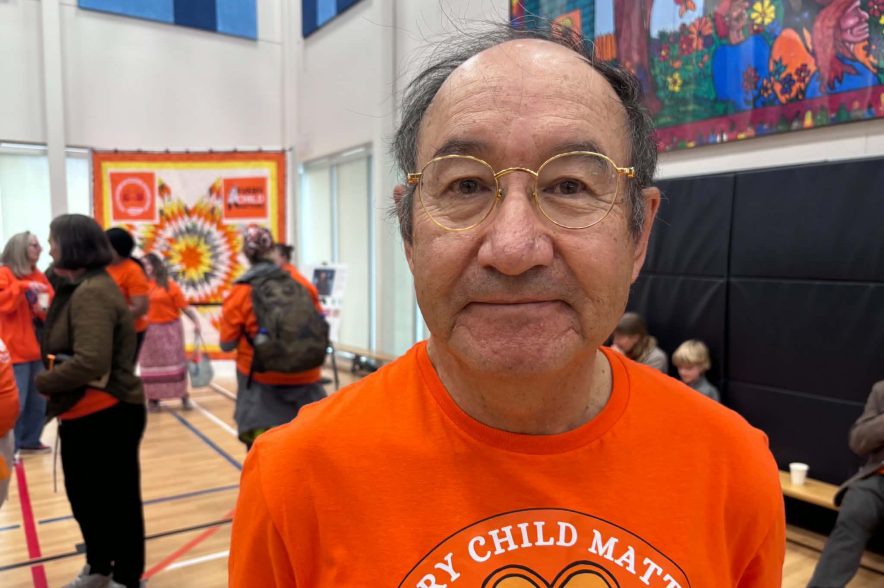
An audience dressed in orange listened intently on Wednesday as Dr. Blair Stonechild spoke about his experience at a Saskatchewan residential school.
Stonechild, an author who taught for many years at the First Nations University of Canada, described his time at the Qu’Appelle Indian Residential School in Lebret, 80 kilometres northeast of Regina.
Read more:
“It was sort of a like a soul-destroying experience in a way,” he said.
“We suffered from an identity crisis, and we didn’t really have the tools to function as effective citizens.”
The National Day for Truth and Reconciliation took place on Wednesday, with events around the province inviting people to learn about Canada’s residential schools and honour survivors across Saskatchewan.
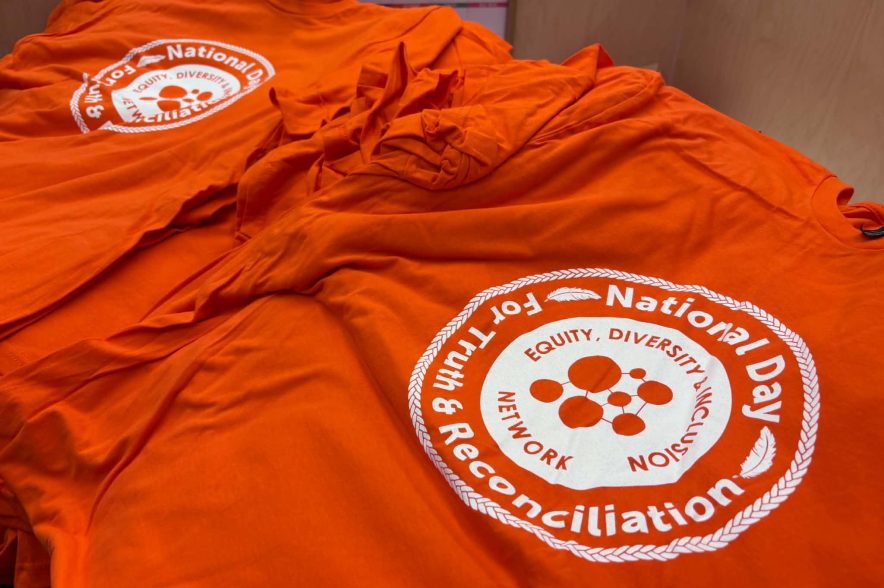
Orange shirts were handed out at the front desk of the mâmawêyatitân centre in Regina on Sept. 30, 2026. (Gillian Massie/980 CJME)
Stonechild said going to a residential school was like attending a reformatory school.
“Education was originally used as like a tool of assimilation against Indigenous people,” he said. “And today, it’s being used as a tool for creating mutual understanding and reconciliation.”
Fawn Redwood helped organize the truth and reconciliation event at Regina’s mâmawêyatitân centre.
She said many people did not speak about what happened at residential schools for decades.
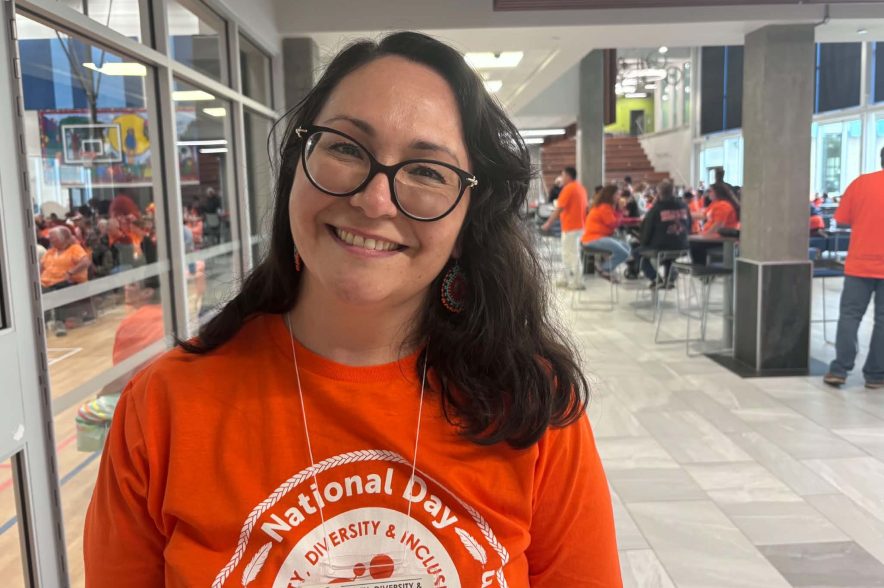
Fawn Redwood helped organize the National Day for Truth and Reconciliation event at the mâmawêyatitân centre in Regina on Sept. 30, 2026. (Gillian Massie/980 CJME)
She said generations of families were changed by attending residential schools, including members of her own family.
“Being a part of today is taking a step back to remember,” Redwood said, “but also how we move forward together.”
Today, at the Every Child Matters Pow Pow at SaskTel Centre
— Mia Holowaychuk (@miaholoway) September 30, 2026
On this day of Truth and Reconciliation we can reflect and learn about the history of residential schools in Canada@CKOMNews @CJMENews pic.twitter.com/uHsTi819go
Hundreds gathered at SaskTel Centre in Saskatoon on Wednesday to participate in the annual Every Child Matters Pow Wow.
Irene Nippi, from Kinistin Saulteaux Nation, said she attends gatherings and ceremonies to help reclaim the culture and traditions that were taken away from her as a child.
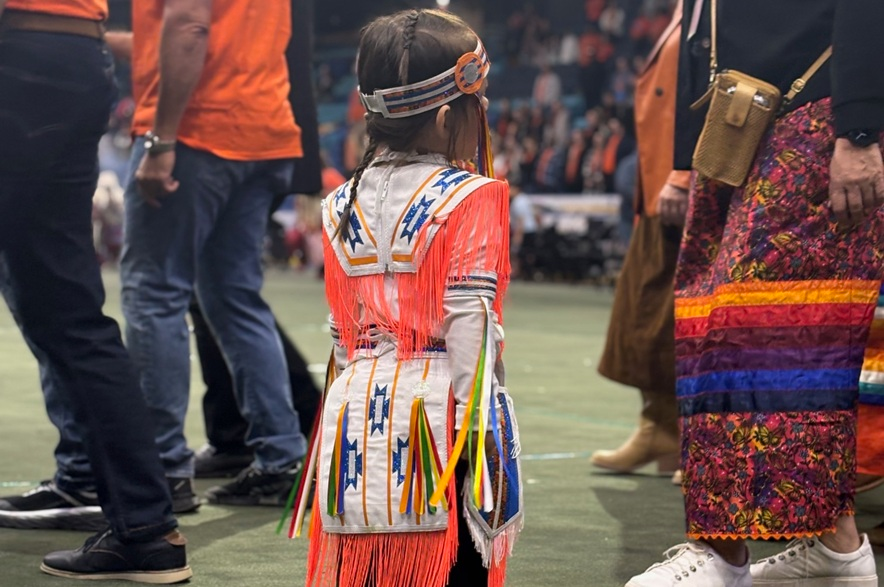
The National Day for Truth and Reconciliation is a time for the public to reflect on and learn about the impact of residential schools in Canada. (Mia Holowaychuk/650 CKOM)
Nippi said she was sent to residential school when she was six years old, and years later her children went to residential school where they experienced the same abuse.
“Somewhere along the line I had to wake up and try to stop that cycle,” she said.
Nippi explained that understanding intergenerational trauma is crucial to understanding how homelessness and addiction impact Indigenous communities today.
“People are always telling us to ‘Get over it,’ but how can you get over it when it’s happened and seeps into our children?” she asked.
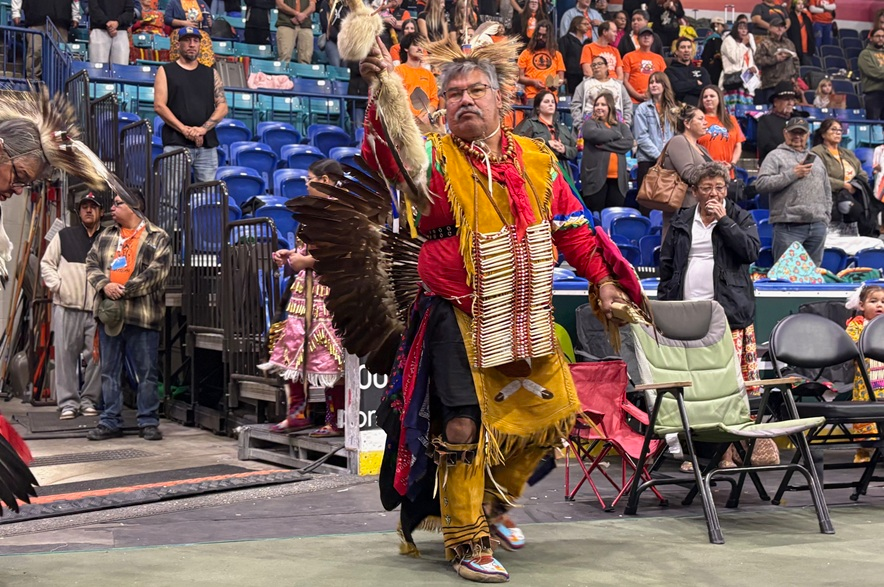
A dancer in traditional regalia at the Every Child Matters Pow Wow at SaskTel Centre on Sept. 30, 2026. (Mia Holowaychuk/650 CKOM)
Howie Tompson, from Carry the Kettle First Nation, said he was sent to residential school in Lebret in 1965.
“They told us our parents didn’t want us no more,” he said. “That’s why we were there. That’s why nobody’s looking for us.”
Years later, Tompson said his father said his family was searching for him.
Tompson said the National Day for Truth and Reconciliation is a “hurtful day” for him because he has to “dig up memories.”
Tompson said he is still proud to represent his Indigenous culture today, despite being sent to residential schools where he was unable to speak his own language.
“They didn’t take the Indian out of us,” he said. “They tried hard to do it, (but) they couldn’t do it.”
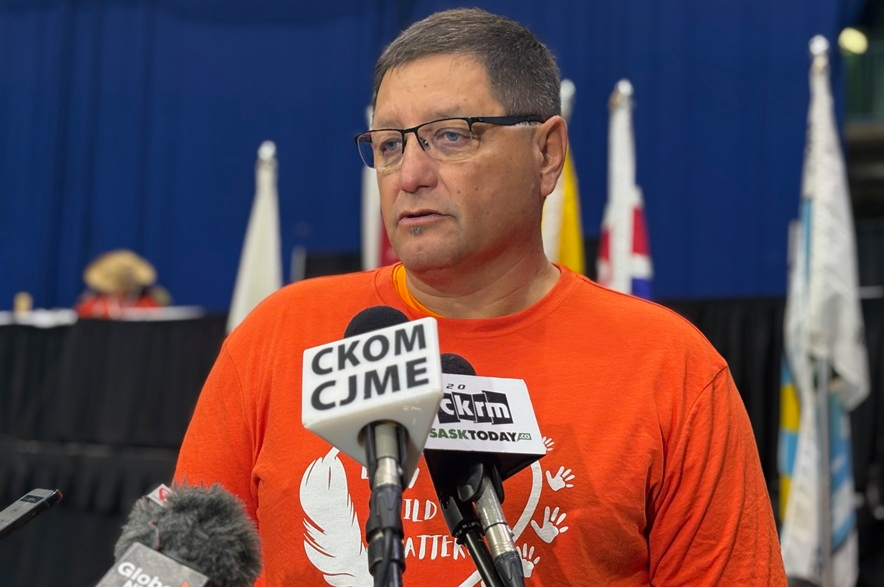
Saskatoon Tribal Council Chief Mark Arcand said the Every Child Matters Pow Wow on Sept. 30, 2026 was an important way to honour residential school survivors. (Mia Holowaychuk/650 CKOM)
Saskatoon Tribal Council Chief Mark Arcand said the event was an important way to honour residential school survivors.
“It’s a significant day for our elderly people that had the courage to break the door open and tell their stories and talk about all the hardships and all the negativity that happened to them in the schools,” Arcand said.
Arcand encouraged members of the public to have discussions about reconciliation at the kitchen table, at school or at the water cooler at work.
“How do we help? How do we make a difference? How do we support? How do we advocate?” he asked.
“Let’s start making a change together, as a city, as a province, as a country.”
–with files from 650 CKOM’s Mia Holowaychuk