

Murray Wood: No collector plate for you!
Murray Wood is puzzled and annoyed by all of the "collector" licence plates on vehicles that will never be def...
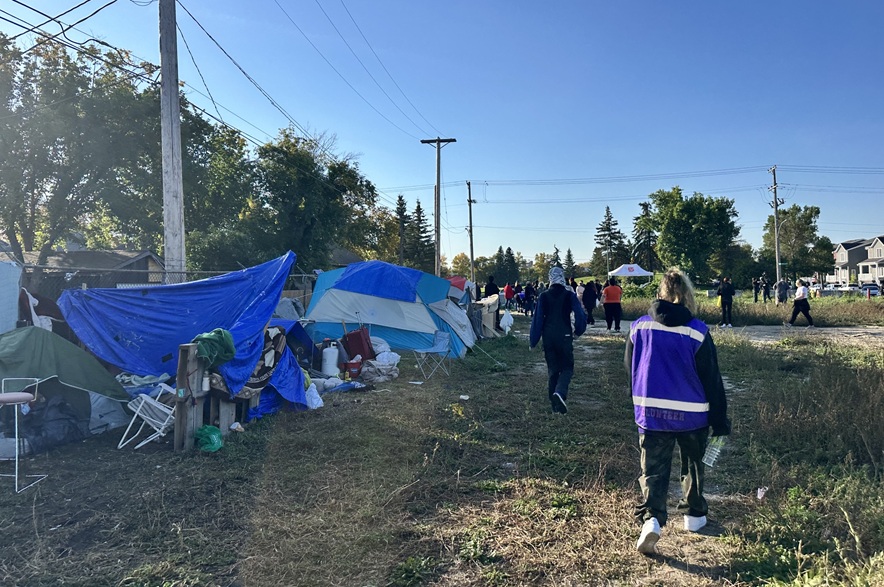
The encampment population over on Avenue K and 20th Street in Saskatoon is slowly shrinking as residents find housing.
Melissa Zimmer, president and founder of Bridge City Warmth, said the organization has housed four people in the past week and is working to find homes for three others.
Read more:
More people have expressed interest in housing, so she expects that number will grow.
“The nights are getting a lot chillier. They’re cold when we come. We’re bringing extra supplies, and they’re just realizing that if there is help out there, that they’d like to proceed with it,” Zimmer said.
According to Zimmer, Bridge City Warmth goes to the encampment one to three times a day, offering people blankets, clothing, and food.
Not everyone is keen to move, though.
Of the roughly 150 people living in the encampment, Zimmer said 25 to 30 per cent are happy to stay. That equates to roughly 38 to 45 people.
Zimmer said the hesitancy around finding housing is partly because of the unknown.
“They’ve been on the streets for a while, and they don’t know how they can afford the rent out there. The rent is quite high, as we all know. They don’t know if they’re going to be able to be successful in housing, get the supports that they need,” Zimmer said.
She described one instance where a woman in the encampment talked with someone about supportive housing but wasn’t sold on the idea.
“Then we talked to her last night, and she’s like, ‘I made a mistake. I do want housing. Please help me.’ So, sometimes people have a change of heart once they hear what we can do for them,” Zimmer said.
According to Zimmer, the process of finding encampment residents a home starts with meeting them, reviewing their circumstances and what they can afford.
For instance, she said, if a person is on social services, they may be on two different programmes. So, someone with Bridge City Warmth discusses that with them.
The organization also does advocacy work, like three-way calls with social services and the person looking for housing. She said this helps Bridge City Warmth ensure the individual gets the maximum amount of money they’re entitled to.
Then, the non-profit determines whether it has the resources to help.
Once someone is housed, Zimmer said Bridge City Warmth keeps in touch and follows up, offering wraparound services if people need support with mental health and addictions.
Read more: