


The Wood File: Who's hot...and who's not
Every Friday, Murray Wood takes a look back at the week's news and decides who's hot... and who's not. This week's list ...
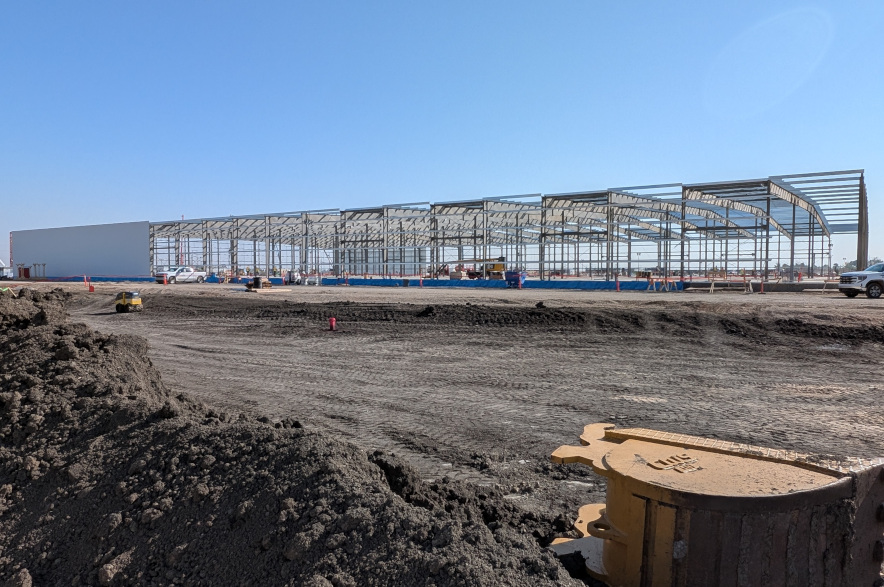
While a massive AI data centre is being built on the outskirts of the Queen City, a nearby First Nation is sharing its frustrations with the project.
Rodger Redman is chief of Standing Buffalo Dakota First Nation. He recently sent a letter to Mirko Bibic, president and chief executive officer of BCE Inc. and Bell Canada demanding answers.
Read more:
In the letter, the First Nation outlined concerns about the AI data centre in the Rural Municipality of Sherwood and its proposed expansion, including groundwater monitoring, cooling systems, proposed power generation, equipment disposal and eventual site rehabilitation.
“From a public perspective, these AI data centres — the environmental impact assessment was done on one. Now they’ve quadrupled the size of that, and there’s disregard for any environmental impacts,” he said.
“My questions and the information we’re requesting are about the use of natural gas. They want to consume one-third of the province’s natural gas to run this plant. What does that mean for everybody living in Saskatchewan? What does that mean for their gas bills? Are they going to be controlled and dictated by economic impacts, let alone the environmental impacts or water impacts? These have to be looked at.
“For the government to say, ‘Well, we’ve got legislation that’s pushed through at the federal level, we can do what we want’ — to me, that sounds more like communism than a democratic society,” Redman said.
In September, it was announced that the project would expand from the originally announced 300-megawatt facility to 1.2 gigawatts, with the number of permanent jobs also increasing from 80 to 500.
Standing Buffalo Dakota First Nation isn’t the only group to raise concerns about the project.
Saskatchewan NDP Leader Carla Beck raised similar questions in September, seeking clarification on whether the natural gas used to power the facility would increase utility bills and what impact the project could have on the land and surrounding area.
But the facility’s potential environmental impact isn’t the First Nation’s only concern. Redman also pointed to a lack of consultation.
“What we’re saying is that our rights are going to be impacted by these projects that are going forward without proper consultation and, more importantly, accommodation, which we set out and give them copies of.
“We sent Premier Scott Moe a copy of our consultation framework and one to the Privy Council. No response. They’re still moving ahead, and I guess the only way we’re going to be able to address this is to challenge them through litigation and at the international level,” Redman said.
The First Nation has given Bell Canada’s senior leadership 10 business days to respond. If the deadline passes without a response, Redman said the First Nation will pursue legal action or seek a judicial review.
“We have a process in place, a consultation framework. If the government — provincial, federal and industry — are not going to recognize that, then we’re prepared to move forward with litigation until our rights are defined through the courts, mediation and negotiation.
“We’re going to be opposing projects that are coming forward that are going to jeopardize the rights of the Dakota-Lakota people,” he said.
George Gordon First Nation is a partner in the Bell Canada project. While Redman said he respects the choices of that First Nation and its leadership, he called on other First Nations to stand up for their rights.
“I challenge all leadership to stand up and take a stand. Stand up, back yourself, stop begging for crumbs and start demanding what’s rightfully ours: to be included in these important steps and also start advocating for the environment. We can work together in partnership, but we’ve got to be included in how to sustain life,” Redman said.