

Sarah Mills: Alberta's referendum is Canada's wake-up call
Sarah Mills says Canada needs better collaboration between Ottawa and the provinces. She says what's good for Quebec sho...
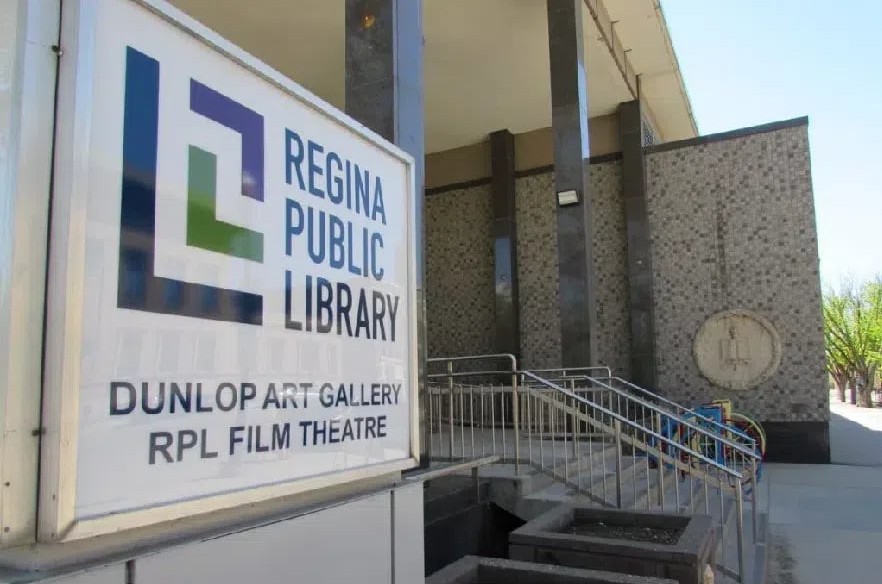
The Regina Public Library’s proposal for a dedicated tax increase to save for a new central library building could face tough scrutiny during budget deliberations.
The library is requesting a 3.99 per cent increase for operations, which works out to 82 cents per month for the average household.
On top of that, it’s asking for an 11 per cent increase dedicated to saving for the central library project. That would amount to an average increase of $2.27 per month.
Read more:
The requested increase appears to be giving some councillors pause, including Ward 4 Coun. Mark Burton, who worries about the unpredictability of inflation.
“I have no problems with the operational rate increase,” he said, “but the central library increase is problematic during this time, when we are struggling with inflation.”
Ward 5 Coun. Sarah Turnbull said she understands the role the library fills, but wonders how the Regina Public Library compares with libraries in other cities in terms of spending and number of branches.
“It’s not just the library that has been beat up by the times,” she said. “We’re all a bunch of bruised bananas.”
Turnbull referred to the catalyst committee, which was created in 2022 to prioritize five major projects: the central library replacement, the indoor aquatic facility, an arena, a baseball stadium, and an outdoor soccer facility.
“The real truth of it is that we’re not in the era of the catalyst projects anymore,” she said. “We’re in the era of fixing the pipes and sidewalks and, unfortunately, finding people places to sleep outside of a park.”
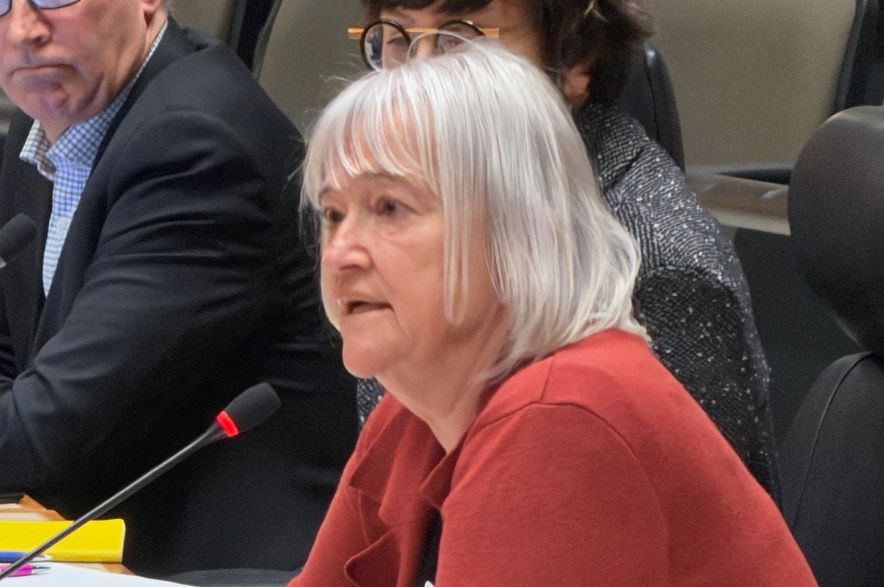
Library board chair Marj Gavigan speaks to the city’s executive committee Oct. 21. (Geoff Smith/980 CJME)
Joanne Havelock of Friends of the Regina Public Library reiterated the group’s concerns about the deterioration of the existing central library, arguing that it should be repaired and expanded.
RPL representatives said the main obstacle to renovating the existing central library is a lack of space, with little room to grow except upward.
It said the cost of a full renovation was estimated at $100 million in 2019.
However, Curtis Smith, the RPL’s executive director for finance and strategy, told committee members the existing central library will be maintained now that it’s not expected to be replaced for at least a decade.
“We haven’t been spending money on it because we thought we were moving,” Smith said. “Now that we know we’re likely not for 10 years, we are putting together a detailed plan that is a smart investment plan.”
Mayor Chad Bachynski told reporters he would need to look at the overall picture during budget deliberations before making a decision.
“We will need to see a renewal of that space,” he said. “Now, over time, is it a new build? Is it a leased space? How does the maintenance play into that?”
He has requested a more detailed report on the different scenarios.
“I want to compare what role can the city play versus what kind of savings that the library can do over time,” he said. “Ultimately the library is independent in the sense that they have a board that oversees the needs for the library system, and we should definitely take that seriously.”
The proposal will be forwarded to budget deliberations, which are scheduled for the week of Dec. 7.
An administration report concludes creating a special tax subclass for standalone surface parking lots in the city centre would not contribute to their redevelopment.
Instead, the administration recommended spending $400,000 on a transportation study and strategy, with a report expected in 2028.
However, the executive committee rejected the recommendation in a 6-5 vote. A vote in favour on Wednesday would have sent the recommendation to the next council meeting for approval, although the study itself would also have required approval as part of the 2027 budget.
“I’m wondering how many studies we need to do, and whether it’s more studies that are actually needed instead of either incorporating this into the work plans for existing studies, or just coming up with some actions at this point,” Ward 8 Coun. Shanon Zachidniak said. “I’m not convinced today to support this plan of action.”
Ward 3 Coun. David Froh agreed, saying he would rather spend the $400,000 on parking, travel, and safety improvements in the city centre.
In response to questions from Zachidniak, the administration said city centre property owners were contacted directly during the engagement process, but residential tenants were not. The online survey was open to all Regina residents.
The committee was also told that recommendations from a 2014 parking study are still being worked through, although portions of that study are now out of date.
Faisal Kalim, the city’s director of community standards, explained that the study came near the end of a series of major changes in parking operations.
“It kind of ran headlong into feedback we were getting from the community, in terms of resistance to that change,” he said.
The committee heard from Mitch Molnar of Mitchell Developments, who owns downtown property and parking lots. He argued that removing surface parking would drive people away from downtown.
“Once (the administration) told me what they were anticipating to be a four-and-a-half-times increase to the taxes of downtown parking lots, only to have that additional revenue sprinkled around warehousing and retail developments in the rest of Regina, I think it’s safe to say it wasn’t one of my better mental health days,” Molnar said.
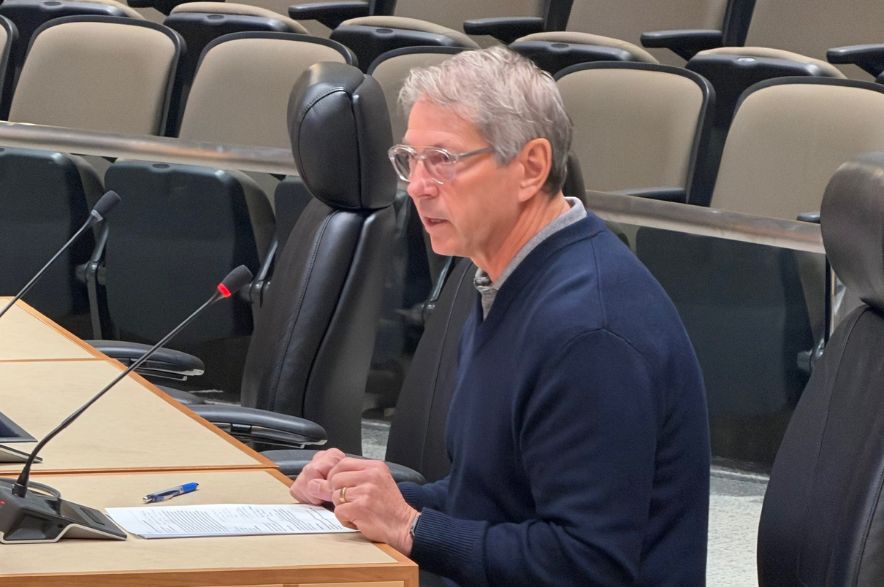
Mitch Molnar of Mitchell Developments spoke out against a special property tax class for surface parking lots in the city centre. (Geoff Smith/980 CJME)
Molnar agreed with Burton’s contention that Regina is a car-centric city, and he expects it to remain so until the population reaches 500,000 to 600,000 people.
He also said demand would determine new construction in the city centre.
Molnar pointed to Bell’s plans for a head office related to its AI data centre project, which could employ up to 100 people, saying he would hate to see parking regulations push that head office from downtown to a location like the Research and Technology Park at the University of Regina.
The city’s report defines the city centre as including not only downtown but also the Warehouse District, the Centre Square neighbourhood south of downtown, and portions of North Central, Heritage, Cathedral, and REAL District.
It says within that area there are 142 standalone surface parking lots — defined as those not on the same lot as a related home or business — accounting for 4 per cent of the total land area. Within downtown and Centre Square, the figure is 9 per cent.
An increase in property tax on those lots alone would result in a lower tax rate on other commercial property around the city, but the report said it would likely also be passed along to the renters of parking stalls.
For a paved electrified stall, the increase could be as much as $122/month, depending on the subclass rate chosen.
Bachynski said after the meeting that councillors appear to want something done, but a specific course of action remains unclear.
“I think that our folks in administration have some good ideas that we can still move ahead with in terms of policy areas,” he said, “but when it comes to the report and even the dollars associated, the work that would be boots-on-the-ground work, really doing traffic flow studies and things like that, maybe that’s something that we want to take a pause and think about before we move ahead.”




