


Sarah Mills: Left-lane hoggers are everywhere
Passing lanes allow a faster driver to pass another vehicle. But Sarah Mills says it seems the left-lane hoggers have es...
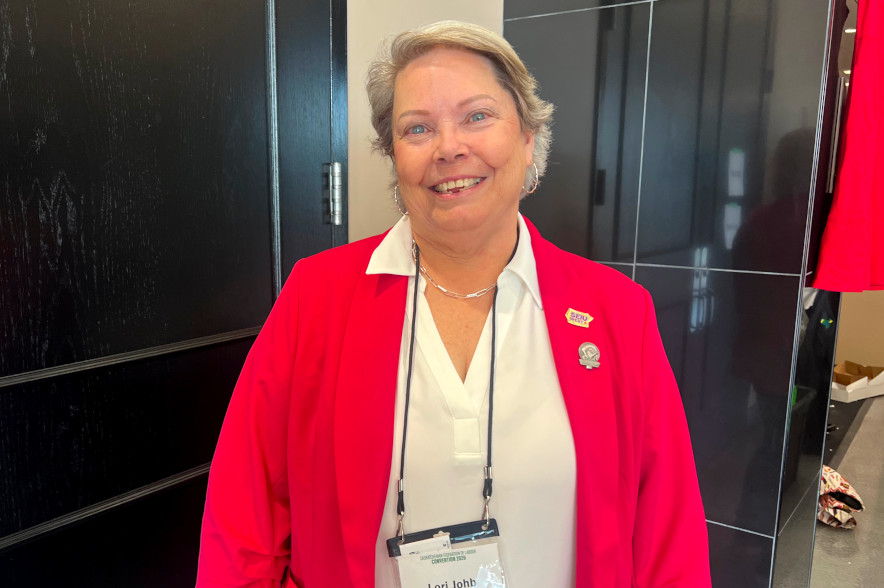
The crowd at the Queensbury Convention Centre in Regina erupted in cheers and applause for Lori Johb as she finished her last address to the Saskatchewan Federation of Labour as president.
Johb is retiring from the position after eight years. She said she’s excited to be heading into retirement and believes she’s leaving the union in a great place.
In her eight years in the position, Johb said there have been a lot of changes. Shortly after she became president, the COVID-19 pandemic hit, and Johb said it changed everything.
“It changed how we work, how people work. Our message had to be very cautious and careful. We needed to make sure we included everybody,” she said.
Johb said the union decided to look inside and make changes to ensure it was meeting the needs of its affiliated unions.
Looking back, Johb said she believes the federation has been successful in getting workers to the table where decisions are being made. She pointed specifically to the transit union and bus drivers in Saskatoon, saying they were able to sit down with management in order to make their workplace safer.
“It’s those kinds of things that make a difference. That’s why I do what I do,” said Johb.
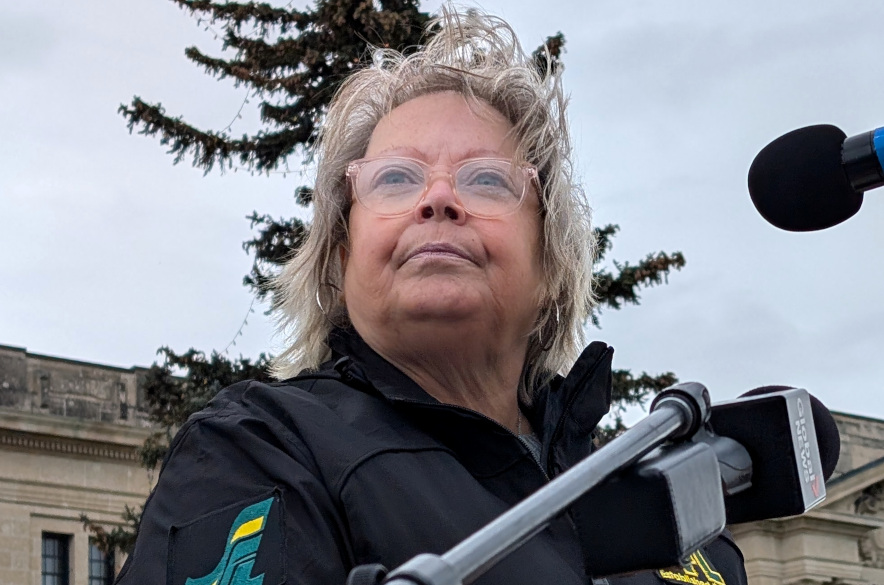
Lori Johb, speaking at a health care rally in front of the legislative building in 2024 (Lisa Schick/980 CJME)
The union’s new leadership is expected to be voted in on Friday at the federation’s convention. Johb said her advice to the new president is to remember that relationships are the most important part of the job.
“Make sure you’re talking to folks – not only union leaders and members every day, but talking to organizations that we work with, the folks that control the levers of power,” said Johb.
Johb said there are a lot of important issues that labour leaders will face in the near future, pointing to federal legislation she said will take away their right to strike. She said they also need anti-scab legislation in place, and in Saskatchewan, Johb said health-care unions need a deal.
“Because they have no right to strike, their power is very much diminished. We need to change that, and it’s rooms like this that is going to make that change happen,” she explained.
Johb said the decision to retire was a difficult one, but it had been on her mind for a while.
“My grandkids are growing up so fast. I just really want to be able to spend time with them,” she said.
“I don’t want to miss anything, and I really do believe, when I look out in a room like this, and there’s so many people that I haven’t seen before — so many new people — it’s time. They need new leadership.”
She said she’s confident the new leaders will be able to successfully guide the union into the future.




