


Sarah Mills: Left-lane hoggers are everywhere
Passing lanes allow a faster driver to pass another vehicle. But Sarah Mills says it seems the left-lane hoggers have es...
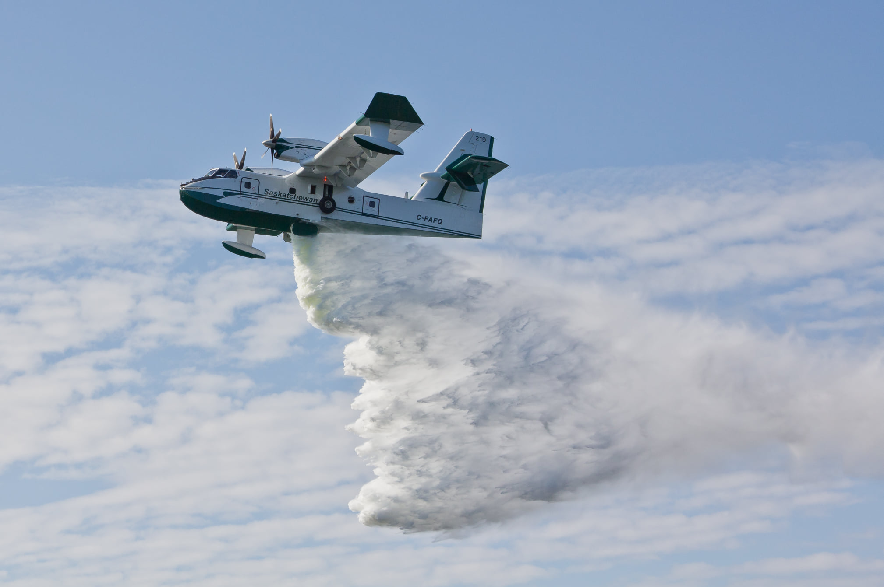
Between wildfires that burned hundreds of thousands of hectares and widespread spring flooding, the Saskatchewan Public Safety Agency has seen its share of challenges this year.
The agency responded to 358 fires in the 2026 season, a significant decrease from the devastating 2025 fire season, when the agency responded to 520 wildfires.
Read more:
Marlo Pritchard, the agency’s president and fire commissioner, joined The Evan Bray Show on Thursday to look back at the season and share how preparations are going for next year.
The following questions and answers have been edited for length and clarity.
EVAN BRAY: I think about the spring when we, last year, were focused on fires. It was all about flooding in the early part of the year, and that was a big part of the work that your team was doing.
MARLO PRITCHARD: We started off with two significant fires right off in May, with the Lobstick Fire and the Cayford. The one was threatening Shellbrook and Duck Lake, so significant efforts went into that for about probably the first three to four weeks, and then we went into the snowmelt. We had floods prior to that with the snowmelt, and then we had more floods after that, so it was a very challenging year. But, as the numbers point out, the number of fires was significantly less than last year.
Is there a significant difference? A big part of what I have observed the Saskatchewan Public Safety Agency do is community mobilization. Sometimes it’s more about safety and evacuation, but other times it’s “What can we do to protect the community?” Is there a difference? Is it easier to help and get communities working against flooding versus fires, or are they very similar in terms of disaster preparation?
PRITCHARD: We encourage every community to be prepared for an emergency event, whether that is flooding or fire or some other natural event, but it really does start with the community and the first responders, of course. We supported a number of communities with sandbagging machines and sandbags. We had resources out in different communities as well, but we saw our first responders, our fire departments, volunteers out with sandbags and water bladders, trying to protect as many values as they could. Often we see similar responses to wildfire, but it’s usually focused on first responders and individual homeowners, not a collective, just because of the level of danger at times.
We have a fire-smart program, which I’ve talked with different community leaders about the importance of. Is there an equivalent to that when it comes to flooding?
PRITCHARD: It’s always about preparation. There isn’t a program in regards to it, but the Water Security Agency and flood mapping and being aware of your risks is always important, because we discourage building in flood plains where communities or locations could be prone to flooding. And if you are in those areas, you have to try to do some mitigations as homeowners and communities.
Do you feel like after last year – and what was a very challenging year – you were more prepared and better able to handle it?
PRITCHARD: I think, with the precipitation throughout the year, we were able to move our resources and not be overwhelmed with the number of starts. I know you talked about the fires that were up near Shellbrook. That was early in the season. We had two significant fires, and we brought resources from across the province and, for the most part, we were able to handle it with our own resources. We did get assistance from the federal government in regards to their air assets, and we brought in some air assets from the east coast as well to just assist us, especially on the Lobstick fire. But over time, it seemed we’d get a little bit of precipitation in areas, and we were able to really allow our staff to move back and forth and hit them relatively quickly. We kept most of our fire starts under 10 hectares, which is what we strive for. Well over 70 per cent this year, again.
I look at the information that we learned from the release that was done this week on wildfires, and so we saw 358 wildfires, 165 of them human-caused. What does “human-caused” mean?
PRITCHARD: Human-caused could be anything. I know a lot of people right away think somebody’s out intentionally starting them, like an arsonist, and we do get some. We just saw one individual that was charged and convicted and sentenced just a little while ago in regards to the Ditch Fire last year, but the vast majority of them are unintentional, accidental. You know, a person doesn’t put out their campfire properly. The wind comes up. Machinery, you know – we both come from a farm. You know how easily fire starts out in the field. It’s no different in the north. We’ve got equipment out there working, and we have unintentional fires. Two weeks ago, three weeks ago, at Meadow Lake Provincial Park, we had a fire start late in the season, because individuals were cutting grass and started a spark. So that’s an area that we really do focus on – trying to improve education and prevention. We can’t do a lot about the lightning strikes and the lightning starts, but we really do want to encourage people to just use that extra caution, especially when they’re travelling in the north and when it’s dry and the indices are high, so that’s what we really focus on.
We have seen cases where people have intentionally started fires. They’ve been held to account. They’ve been charged, convicted, sentenced. Is there any sort of enforcement that’s done on a human-caused fire that maybe isn’t intentional?
PRITCHARD: Historically, the conservation officers would give the right warnings. We have an investigative arm within the Saskatchewan Public Safety Agency that does investigations, and we have opportunity, and we’re looking at other ways of holding people accountable for those unintentional or negligent aspects, so we’ll be continuing to work forward over the next year on that.
I know the amount of property damage this year was minimized, certainly compared to the year before. Is there anything you can point to that accounts for that?
PRITCHARD: Part of it goes back to that we had the ability to move our value protection units around faster, and they weren’t overwhelmed, and we were able to get them onto property quickly, and a lot of it was where the fire started, which gave us an opportunity. They weren’t getting pushed by 100-kilometre-per-hour winds into communities or into built-up areas. The fire was moving toward built-up areas, but gave us time to do value protection and bring in contractors with huge sprinklers just to protect those properties. So we still did, unfortunately, lose some cabins and some trailers, but it was significantly less than last year.
Last year we had a number of people that had to be evacuated from communities. They went back, obviously back to their community, eventually, but often went back to serious damage or maybe, in some cases, no houses, and that sparked some frustration about quick and easy access to that after-incident support that they needed. Did we have to do better there? Have we struck that balance?
PRITCHARD: I think we’re still working on that. There’s always room for improvement, but we do have a recovery task team and we did utilize it for the floods this year. They were out into the communities very shortly after that, working with administrators, setting up information sessions and wrap-around sessions. We continue to support Denare Beach that we know was devastated in 2025 with that recovery task team. We had temporary housing, and and over the last year, 18 months, about a third of that community has been rebuilt, and we’re seeing significant efforts in working on mitigation, and it’s kudos to the leadership in that community and the community pulling together, and we’re here to support them. We’ve got a really good team in that recovery task team, and we’re going to continue to build that strength and strengthen that process, because we know other communities are going to face similar problems.
Do we have all of our water bombers available and ready to work? And how did we do this year? And how are we heading into 2027?
PRITCHARD: We had one water bomber that was down for long-term maintenance this year, but we again had opportunities to capitalize and utilize air assets from the federal government and outside of the province through SIFC. We are actually taking possession of our next Q400 here at the end of the month. That is our tanker, but it’s a multi-role tanker, so that can be used for moving passengers, cargo and, if needed, be enhanced air ambulance support. We’ll be introducing that into a fleet, and one of our older tankers will be taken offline. Right now, the forecast for us moving into next year is that we will be 90-plus per cent ready to go at the beginning of the year. We still have some maintenance going on in the winter, and if everything is completed, no delays in equipment, we could have all of our planes ready to go for next season
Those reciprocal agreements that we have with other provinces and with the feds, that’s part of the plan. Having to call those resources in is not a failure. We can’t purchase assets for the most extreme situation. That’s why you have these agreements. Am I right?
PRITCHARD: That is correct. We work in the off-season to strengthen those agreements and understand what assets other people have. Even this year, we sent resources out of the province. We went from the Northwest Territories down to the United States, Oregon, and others. B.C. as well. That is part of all of the province’s plans. Those mutual aids are so important, because we can’t do it all alone. No different than partnering with local fire departments. It really is all of a society to protect all of us.