

Murray Wood: Who's hot... and who's not
Every Friday, Murray Wood takes a look back at the week's news and decides who's hot... and who's not. This week's list ...
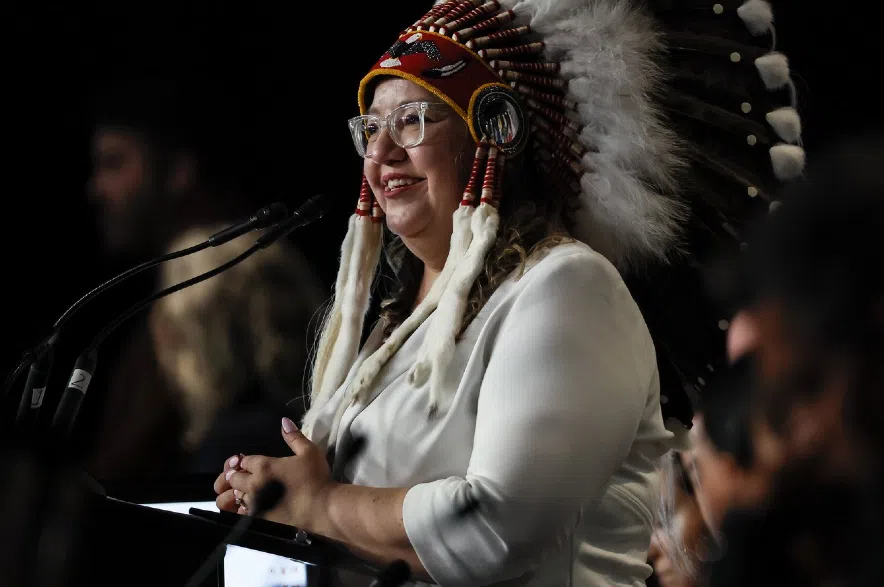
OTTAWA — Assembly of First Nations National Chief Cindy Woodhouse Nepinak is feeling the weight of the moment as she approaches something her predecessors sought for years: a sit-down meeting with the prime minister and premiers.
“I look at some of our former leaders that had to really push and pull just to open these doors, and I wish they could see that today,” Woodhouse Nepinak said recently between last-minute meetings with chiefs to prepare for the First Nations-First Ministers meeting in Ottawa on Monday.
Read more:
“It is historic, but at the same time we don’t want it to be one-and-done. We don’t want it to fall flat and not offer hope again.”
The meeting comes as Prime Minister Mark Carney works to speed up major project approvals and development — efforts some First Nations chiefs say threaten their rights.
Tensions between Ottawa and First Nations spiked soon after Carney was elected in 2025 when his government passed legislation to create a new office tasked with streamlining major project developments and approving projects within one year.
First Nations leaders warned the compressed timelines would interfere with their rights and lead to court challenges. Provincial governments have enacted similar legislation.
But tensions are boiling over for a number of other reasons as well, including the lands claim process in British Columbia, the newly announced Pacific Link pipeline project in Alberta and development of the mineral-rich Ring of Fire in Ontario.
The Assembly of First Nations has been preparing for the meeting for months by holding town halls with chiefs to discuss actions they want to see governments take.
Gina Wilson, who recently served as deputy minister at Indigenous Services Canada, helped to advise chiefs as they lined up their priorities for the meeting.
The AFN released a handful of position papers last week on economic development, policing and public safety, employment and health.
One of the main goals for First Nations leaders going into the meeting is a First Nations sovereign wealth fund. The fund, proposed by Chippewas of the Thames First Nation, would pool capital to ensure First Nations can build long-term wealth in their communities and invest in projects.
Chippewas of the Thames First Nation Chief Joe Miskokomon has told The Canadian Press the fund would bypass governments and allow major projects to be developed faster by giving communities more authority over investments.
The Monday meeting will be preceded by a day of ceremony on Sunday hosted by the AFN. Woodhouse Nepinak said such First Nations ceremonies were once prohibited under the Indian Act and it’s important for Carney and the premiers to be there.
First Nations will be represented in the closed-door meeting on Monday largely by regional chiefs from the AFN. The Privy Council Office has not said which premiers will attend the gathering.
Woodhouse Nepinak said the meeting ought to be broadcast to the public and she continues pushing the Privy Council Office to do so.
The meeting is the first such gathering since 2005, when premiers and then-prime minister Paul Martin met with Indigenous leaders in Kelowna, B.C., to work out how to close socioeconomic gaps in their communities.
That gathering of some 1,000 individuals, including representatives from the AFN, Inuit Tapiriit Kanatami, the Métis National Council and the Native Women’s Association of Canada, was meant to change policies from prescriptions from Canadian governments to something more collaborative.
The meeting ended with commitments from governments to spend billions of dollars to reduce infant mortality rates, increase education rates and tackle unemployment — the Kelowna Accord. But progress stalled when Martin’s government fell just days after the meetings wrapped.
Stephen Harper succeeded Martin as prime minister and launched an aggressive resource development agenda. That led to more tensions between Ottawa and Indigenous Peoples that culminated in the 2012 Idle No More protest movement.
Jeff Copenance, the chief of Ojibways of Onigaming First Nation, worked in Martin’s office at the time the Kelowna Accord was being drafted.
He said while the agreement itself offered a practical approach to improving the Canadian economy by lifting up its fastest-growing population, the meeting in Kelowna showed many Canadians who Indigenous people really are.
Copenace said a smudging ceremony was conducted at the meeting, giving many Canadians their first glimpse of a traditional practice. He added it was also one of the first times he saw Indigenous people portrayed in the news in relation to something positive.
There’s been some progress in the years since, he said, but not all of the goals set at that meeting have been achieved. He fears a heavy focus on economics in the Monday meeting will further delay action on addictions, homelessness and suicide.
“Unless the prime minister, the premiers and the territories are going to look a little bit deeper than resource development or economic reconciliation, I worry that they’re not going to be successful with their agenda,” Copenace said.
Read more: