


Sarah Mills: Saskatchewan's throne speech a blueprint for... what?
The Government of Saskatchewan has laid out its legislative plans for the year ahead, but Sarah Mills says families meas...
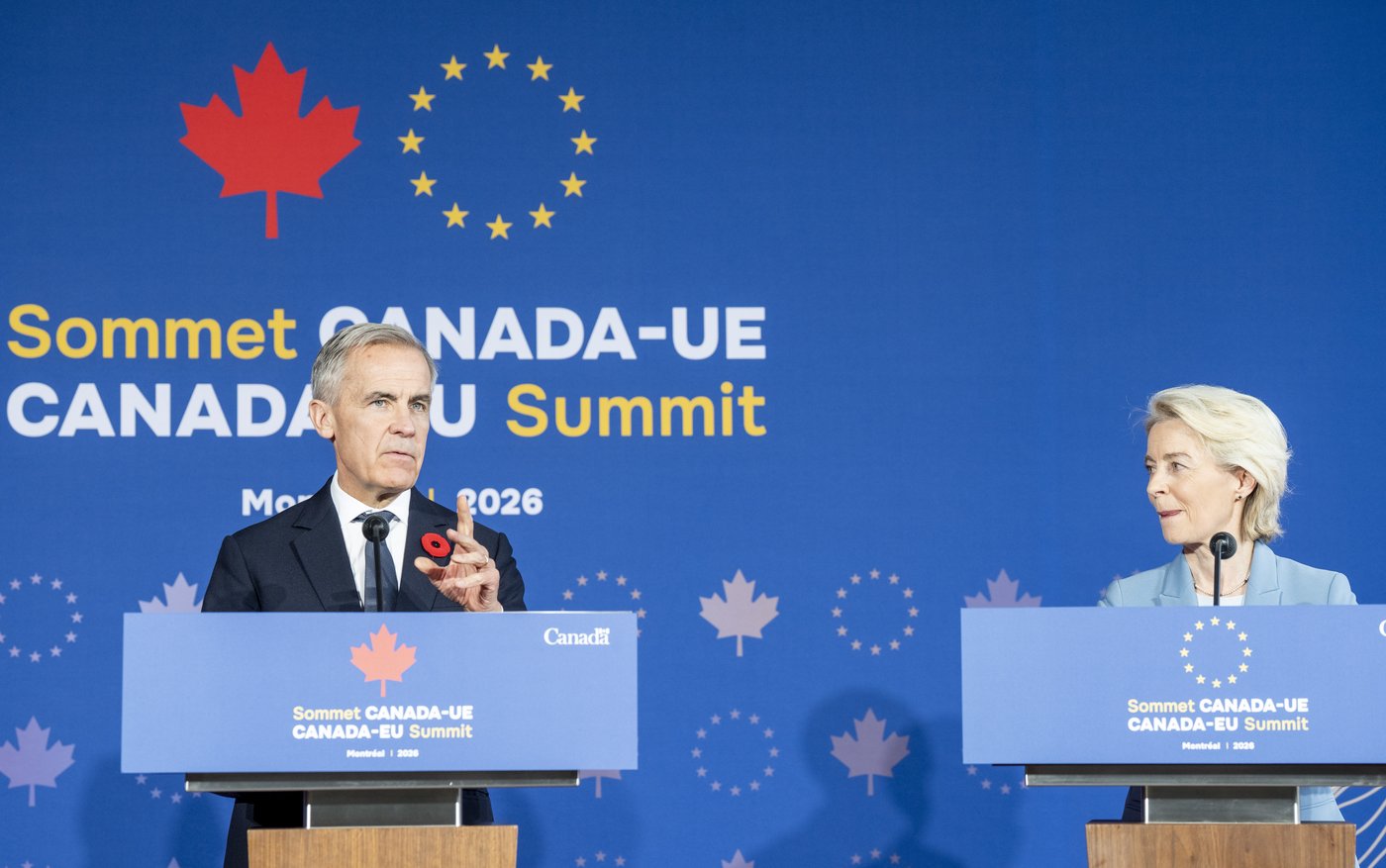
OTTAWA — Canada’s new partnership with the European Union is meant to provide benefits to people on both continents.
The two jurisdictions wrapped up a summit in Montreal on Friday with various agreements, many of which will take months or years to finalize.
Here’s a look at some of the possible benefits for different groups.
Youth
Canada and the European Union are promising to eventually update their “youth mobility partnership” with the goal of offering young people more opportunities to go abroad.
That would build on existing university exchange programs and working-holiday programs Canada operates with multiple European countries.
European Commission President Ursula von der Leyen said the EU wants Canada to fully join Erasmus+, the EU’s student exchange program that offers training and study opportunities in member nations.
Canada is also hoping to become a full member of the Horizon Europe research partnership program by 2028, which would offer new funding for research and innovation projects undertaken with European peers.
Tech workers
Prime Minister Mark Carney said the pact with the EU will give Canadian researchers access to European supercomputers that can cut processing times from six months to a single day.
Canada and the EU have signed a digital trade agreement that looks to fold certain sectors into the trade agreement that has governed how goods are exchanged for a decade.
The European Commission website defines digital trade as “commerce enabled by electronic means.” It cites banks transferring data, agricultural commodity traders using e-signatures and freight companies tracking their machines through the internet.
Canada is also working on joining the EU’s “instant payment systems” to make it easier to send funds. Both jurisdictions are also exploring opening each other’s markets further to Canadian and European banks, insurers and fintech companies.
Mining firms
The European Investment Bank will seek to fund projects to mine critical raw materials in Canada, thanks to negotiations that concluded Friday.
Von der Leyen said Thursday that European “industrial demand, technology and investment” can help get such mineral projects off of the ground.
Regulators
Canada has signed some sort of updated competition agreement with the EU that looks to crack down on anticompetitive actions by transatlantic businesses, though there were few details provided Friday.
The EU’s border agency is also helping its Canadian counterpart tackle migrant smuggling, human trafficking and identity fraud by exchanging information through the European Border Surveillance System.
Both jurisdictions have also agreed to launch formal discussion groups on the Arctic, foreign information manipulation and interference, climate security and transport.
A joint statement says on misinformation, both sides have agreed to move “from a reactive stance to a proactive one.”
Soldiers in Latvia
In June, Canada became the only non-European partner in the EU’s defence procurement program SAFE.
Just one project had come out of that arrangement until Friday, when Canada announced a contract worth up to $43 million to provide helmets to Latvian troops.
Montreal-based firm Galvion will produce the helmets for Latvia, which has been home to Canada’s largest foreign military presence for years. Canadian soldiers are in Latvia to prevent a Russian invasion.
Ukraine
As Washington pulls back support for Ukraine’s defence against Russia’s full-scale invasion, Europe has stepped up with more funding.
Carney announced Friday that Canada will join an EU loan program for Ukraine. Ottawa has pledged an initial contribution of 500 million euros, roughly C$775 million.
“We will continue to provide comprehensive political, financial, economic, energy, humanitarian, military and diplomatic support to Ukraine and its people,” says the joint statement Canada and the EU inked Friday.
This report by The Canadian Press was first published Oct. 30, 2026.
Dylan Robertson, The Canadian Press