


Sarah Mills: LEGO prices are becoming ridiculous
Gone are the days of a basic LEGO set. Sarah Mills says sets for adults are so intricate and large they run up to $1,000...
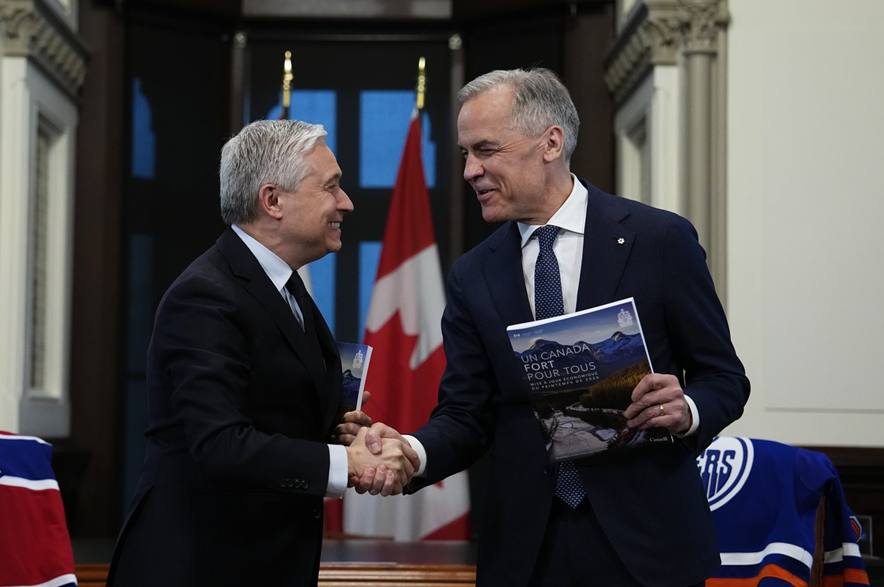
OTTAWA — The Liberal government is getting ready to table its 2026 budget on Thursday — but Ottawa’s own focus groups suggest Canadians aren’t watching the state of the federal purse too closely.
Finance Canada commissioned market research firm Environics to host a series of roundtables with Canadians roughly a week after Ottawa tabled its spring economic update on April 28.
Read more:
Mid-year fiscal updates offer Canadians a glimpse of federal finances between budgets and sometimes include announcements of new items or spending priorities.
Over the course of a week, Environics conducted 10 online focus groups across the country involving 73 people, divided between younger and older Canadians.
A final report from the focus groups was delivered by Environics on June 4, a month before the federal government embarked on pre-budget consultations for the summer. The report was only recently published online.
The report suggests Canadians tend to tune out fiscal updates.
“Top of mind awareness of the spring economic update was very low, even after participants had been prompted about it having taken place,” the report found.
Since the 2025 federal election, the Liberals have broadly deepened deficits with new spending to pivot Canada’s economy away from reliance on the United States. The April fiscal update showed a general improvement in near-term deficits, thanks mostly to stronger-than-expected economic results at the end of last year.
Regardless of the state of the borrowing track, the report noted focus group participants expressed “little concern about the deficit.” Most participants felt there was no point in trying to balance the budget quickly, given disruptions from U.S. tariffs and the war in the Middle East.
“For most, the deficit is just a number and they had little sense of what that really meant or how it affected their personal lives or standard of living,” the report stated.
Among other consequences, prolonged deep government deficits require more federal money to service interest costs. A tighter fiscal situation can eventually restrict a government’s ability to respond to economic shocks.
Many participants did tell Environics they understood on some level that running deep deficits can harm the economy and there should be a plan to bring borrowing under control.
Conservative Leader Pierre Poilievre regularly rails against the Liberals over deficits and is urging the government to cut wasteful spending ahead of Thursday’s budget.
The Liberal government claims its fiscal guardrails — shrinking the deficit as a share of the economy and borrowing only for capital investment starting next year — are keeping it on a sustainable track.
Some roundtable participants did say they were aware of a few specific items highlighted in the update. But awareness was low even when it came to the Liberals’ landmark affordability measures, Environics found.
Few participants reported knowing about the Liberals’ grocery and essentials payment, which replaced and expanded the previous GST benefit for lower-income households.
A pause on the federal fuel excise tax was viewed positively, Environics reported, but some confused it with the Liberals’ move to kill the consumer carbon price a year earlier.
The spring economic update also included a plan to spend nearly $6 billion to foster more careers for young Canadians in the skilled trades.
“Most participants had not heard anything” about such a plan, the report said, adding most reacted favourably when informed about it.
Finance Canada uses regular roundtables to get a sense of how the public is responding to its efforts to guide the economy. Environics noted these focus groups offer a range of opinions but the firm does not weigh those findings as a traditional poll might.
“The use of qualitative research allows the department to get a clear and current sense of the evolution of the public mood towards the state of the economy, the sense of personal economic well-being and government actions in the economic sphere,” the report states.
This week’s budget will show whether a tailwind from higher global oil prices has offset the surge in federal spending commitments since the spring economic statement.
When Prime Minister Mark Carney took office in 2025, he reversed the federal government’s fiscal schedule — the budget is now tabled in the fall, and mid-year updates in the spring.
Only two or three older participants who labelled themselves as “news junkies” reported being aware of a spring economic update, the Environics report noted.
There was stronger awareness of Carney’s travels overseas to find new trading partners for Canada, and a broader recognition of American news stories over Canadian ones.
That was particularly true among younger participants, who reported getting more of their news from TikTok and Instagram, where Environics noted U.S. news is more prevalent.
Despite the low awareness of the spring economic update, Environics said that after they were told about the contents of the plan, participants’ “opinions were mixed but generally neutral to positive.”
“Many participants noted that they did not have high expectations from the federal government in the first place,” the report said.
This report by The Canadian Press was first published Nov. 3, 2026.
Craig Lord, The Canadian Press




