

Sarah Mills: Critics don't define whether or not a movie is good
Filmmaker Taika Waititi has thrown a hissy fit on social media because critics don't like his movie, and neither do movi...
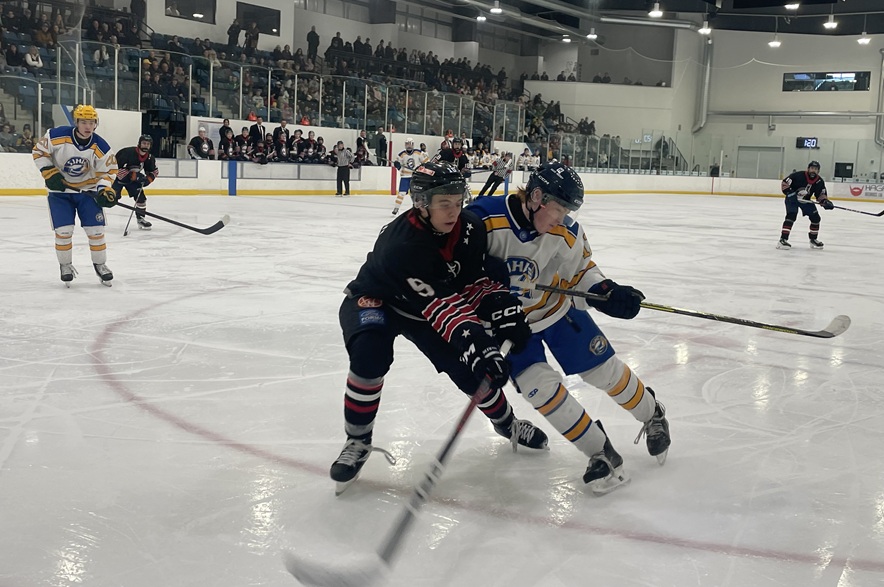
Playmaking forward Carson Park admits it was difficult at first being sent down from the Western Hockey League’s Brandon Wheat Kings to the Junior A ranks this fall.
After a breakneck start to his junior career with the Nipawin Hawks, however, Park is seizing every opportunity he can in the Saskatchewan Junior Hockey League.
Read more:
“I was bummed not to make the team (in Brandon) this year, but they have an unreal squad,” Park said. “Hopefully my opportunity comes soon to go up and play a couple of games with them.”
The 17-year-old Wheat Kings draft pick has enjoyed a breakout campaign with the Hawks, scoring 18 points in 12 games to sit second in SJHL rookie scoring.
That early production earned Park a spot on the SJHL’s U19 all-star roster, which hit the ice in Martensville this week against the best U19 players from the Manitoba Junior Hockey League as part of the 2026 Western All-Star Challenge.
On Wednesday afternoon, the Pilot Butte product netted the SJHL’s first goal in the second period and helped kick-start a wild comeback for the hosts to earn an 8-6 victory to close out the week.
“It was a lot of fun,” Park said. “A lot of good players I’ve been playing with this weekend and it was nice to get the two wins. I thought we had a good, bonded group.”
Coming off a 5-2 victory in the first game of the week on Tuesday night over the MJHL, Team SJHL rallied from a 5-2 deficit late in the second period on Wednesday.
The Saskatchewan all-stars scored six of the next seven goals, including a three-point performance from Warman Wolverines forward Jaggar John to secure the bragging rights.
John, who began the season in the WHL with the Saskatoon Blades, said they began to chase after pucks more aggressively as the middle frame went on.
“I thought we were really hard on the forecheck towards the end of that second period,” John said. “It obviously caused us to score a few and get back on the board there.”
Already with eight points in five games since being assigned to a Wolverines team that leads the SJHL with an 11-3-2 record, John is eager to carry over the success of the back-to-back wins this week.
“It was unreal, obviously winning is great,” John said. “Got to meet lots of new guys, it’s good to meet a couple of boys around the league. Lots of talent, so it’s good to see.”
This was the second straight year Martensville has hosted the Western All-Star Challenge, but the first under the new U19 format after the dissolution of the World Junior A Challenge, which the SJHL-MJHL event helped determine roster spots for.
SJHL commissioner Kyle McIntyre said they’re happy with how the change was received by younger players and visiting scouts.
“It’s a really great opportunity for our kids to showcase their talents,” McIntyre said.
“We had lots of scouts here from the Western Hockey League, the NCAA and some (NHL) Central Scouting. Really, it achieved all the outcomes that we set out to achieve at the beginning of the event.”
The changing landscape of junior hockey has seen an evolution for not only major junior clubs in the WHL, but has also meant younger rosters in the SJHL.
According to McIntyre, that has meant more collaboration between junior leagues, with the goal of events like the Western All-Star Challenge advancing their players to higher levels of hockey.
“With the Western Canadian Development Model, we have more Saskatchewan and more Manitoba content,” McIntyre said.
“We have 14 players from Saskatchewan in our lineup, Manitoba has 16 (players) from their province. These kids are fast, they’re skilled, a lot of them are on the precipice of playing in the Western Hockey League.”
Park added the week was a big boost of confidence that he can compete with some of the best Junior A players in his age group.
“Playing with younger guys was awesome,” Park said.
“Being able to show off my speed against some younger players, that was awesome too. I just got to keep it rolling into the regular season here and getting to showcase my skills was a great opportunity that I’m grateful for.”
With games set to resume on Friday night across the league, McIntyre said he’s pleased with post-harvest attendance at rinks across the league.
“Generally, we’re pretty happy,” McIntyre said. “We’re probably averaging about 780 fans per game, which is kind of on par to what we had last year.”
While the attention of McIntyre and other league executives was on the ice this week in Martensville, they’ve kept an eye on a developing story out of other Junior A leagues in Western Canada.
On Monday, RCMP announced the arrest of former junior hockey business executive and broadcaster Tyler King, who is facing several sexual offence charges related to his time in Alberta.
Police allege King solicited and compensated underage players for sexual videos. The allegations stem from his time with the Okotoks Oilers while the team competed in the Alberta Junior Hockey League.
He faces three charges of luring a person under 18, sexual exploitation of a young person and making child pornography, with at least one of the three identified victims by RCMP being originally from Saskatchewan.
The allegations have not been proven in court.
King spent time with Oilers, Brooks Bandits and Fort McMurray Oil Barons in the AJHL, as well as the Nanaimo Clippers in the BCHL, but has not been linked to any teams in Saskatchewan.
McIntyre said it’s a distressing story for the junior hockey community and added the SJHL continually reviews its player safety policies to make sure they’re up to date.
“We’re all here for players and for the players’ betterment,” McIntyre said.
“Anytime you hear that, whether it’s in your league or a neighbouring league, it’s not something you want to hear in hockey. We do really try to be rigorous in terms of criminal record checks with a vulnerable sector check, screening our volunteers, having codes of conduct, screening coaches.”
While McIntyre said no system is infallible to abuse, they have looked to the past to make sure they can limit these types of cases as much as possible.
“In Swift Current where I’m from, we have Safe Places certification, which was brought on by the Sheldon Kennedy Foundation,” McIntyre said.
“I think that’s important as well, because you want the right people working with children. You want people that are going to be positive role models for children.”