


Sarah Mills: Birthdays bring a sense of wistfulness and nostalgia
Sarah Mills says getting older isn't for the faint of heart, and turning a year older can make a person think about youn...
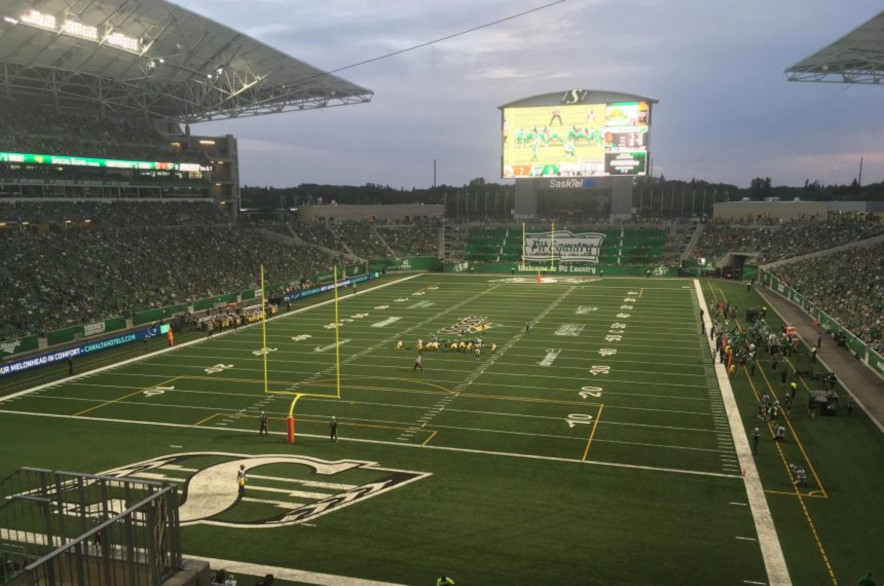
Discussions got heated in Regina on Friday when it came out that the city had chosen to order the new turf at Mosaic Stadium to be stitched with the new CFL dimensions.
The league will be switching to a 100-yard field with 15-yard end zones in 2027, and the stitched-in dimensions will make it harder for amateur leagues, which aren’t following the CFL’s lead on field size, to play there.
In order to paint the lines, it would have cost the city around $200,000 upfront for the required equipment, plus $7,000 every time the switch had to be made, according to Melissa Coderre, manager of sports facilities and special events with the City of Regina.
“The biggest issue here wasn’t cost for the city; it was the lost time. We live in a cold climate, and football is played in the fall. Between the time it would have taken to remove the old paint, put on the new paint and wait for that paint to dry, we would lose about 18 hours of play at Mosaic Stadium every time we switched this,” Coderre said.
“The wonderful thing about Mosaic Stadium, unlike any other stadium in Canada, we accommodate 700 hours of community use so that’s your kid’s soccer team, flag football, Regina Minor Football, high school football, all of that would go away because we would not have time for them to play while it was drying.”
Coderre said continuing community use was a major point when it came to the new turf. Outside of the Riders, other facility users are FC Regina, Regina Minor Football, Football Saskatchewan, Regina High School Athletic Association, flag football, along with smaller bookings.
“(The organizations we talked to) wanted to be able to have local teams continuing to play. This was the way we could support community use in this facility,” Coderre said.
She said the city had always planned to have the turf replaced ahead of the 2027 season.
She indicated that the CFL made their rule changes, including new dimensions for the field, while the city was in the midst of ordering the stadium’s new turf.
Coderre said the Riders are paying for the turf and ongoing maintenance that would be required to allow the City to switch the turf between the Riders’ and high school football games.
“It was the city’s final decision, but the Roughriders were a partner and well-consulted throughout the process,” Coderre said.
Coderre said they worked with the different groups who use the facility to determine the best option for the new turf.
“After we spoke to them, we started working with turf specialists and other stadium owners to get an understanding of how we could make this work. The way we are able to accommodate 97 per cent of our current users was to stitch the 100-yard turf with a 15-yard end zone and an optional extra five yards and two field goal placements, and so this is allowing us to have as many groups use Mosaic Stadium as possible,” Coderre said.
She said the two groups they won’t be able to accommodate in 2027 would be the Regina Thunder and the University of Regina Rams.
“The Thunder prefer to play at Leibel Field, and they haven’t played any games (at Mosaic Stadium) this year. The Rams did play two games at Mosaic Stadium, and we are committed to working with them and their league in hopes of getting a 100-yard exemption for future seasons to help bring the Rams back to Mosaic,” Coderre said.
“If we are unable to do that, the city still offers Leibel Field as a 110-yard football layout, and we are working with the Rams to make sure we can accommodate them going forward as well.”
She said the City has advocated for minor sports, such as U18 football, to receive that exemption from Football Canada to be able to play on both turf sizes.
Executive Director of Football Sask, Mike Thomas, said he’s been assured by Football Canada it will make the rule change in the new year to allow amateur football play on the smaller CFL field.
“They, themselves, will have a provision, from what we have been assured, in the 2027 amateur rule book in regards to the adjustments that would have to be made for amateur football when it’s being played in a CFL stadium that is smaller than 110 yards,” said Thomas.
He said he had asked Football Canada, on behalf of the city, to get that provision and other football associations across the country were doing the same thing.
“We wanted to ensure that, regardless of what the city decided, that amateur football could still be played at that stadium without any issue from a risk management perspective for any of our member groups,” said Thomas.
At the same time, he said the decision by the city to go fully stitched-in is difficult to swallow for Thomas.
“It’s disappointing to know there isn’t a plausible solution to make it all work,” he said.
He said the situation is difficult in a lot of ways.
“We understand that this stadium was built to be able to host multi-sport activities, and it still can host multi-sport activities, it just may not and won’t be able to host major events,” explained Thomas, specifically pointing to the Vanier Cup.
He said the championship held in Regina in 2025 was one of the most successful there’s been, and the U of R was likely going to be looking to put in another bid, but with the new field dimensions it won’t be able to.
“It’s unfortunate that the CFL didn’t look to make some adjustments that would have been adopted across the country that could have worked,” said Thomas.
He understands the city’s decision, that it was in a difficult spot and was under a lot of pressure.
Thomas hopes the city will look to help upgrade or provide resources to the other facilities that are going to have to take more traffic in 2027.
— with files from 980 CJME’s Britton Gray