

Sarah Mills: A stamp price may cost Canada Post's future
The federal budget includes a significant increase in the cost to mail a letter. Sarah Mills says that could have Canada...
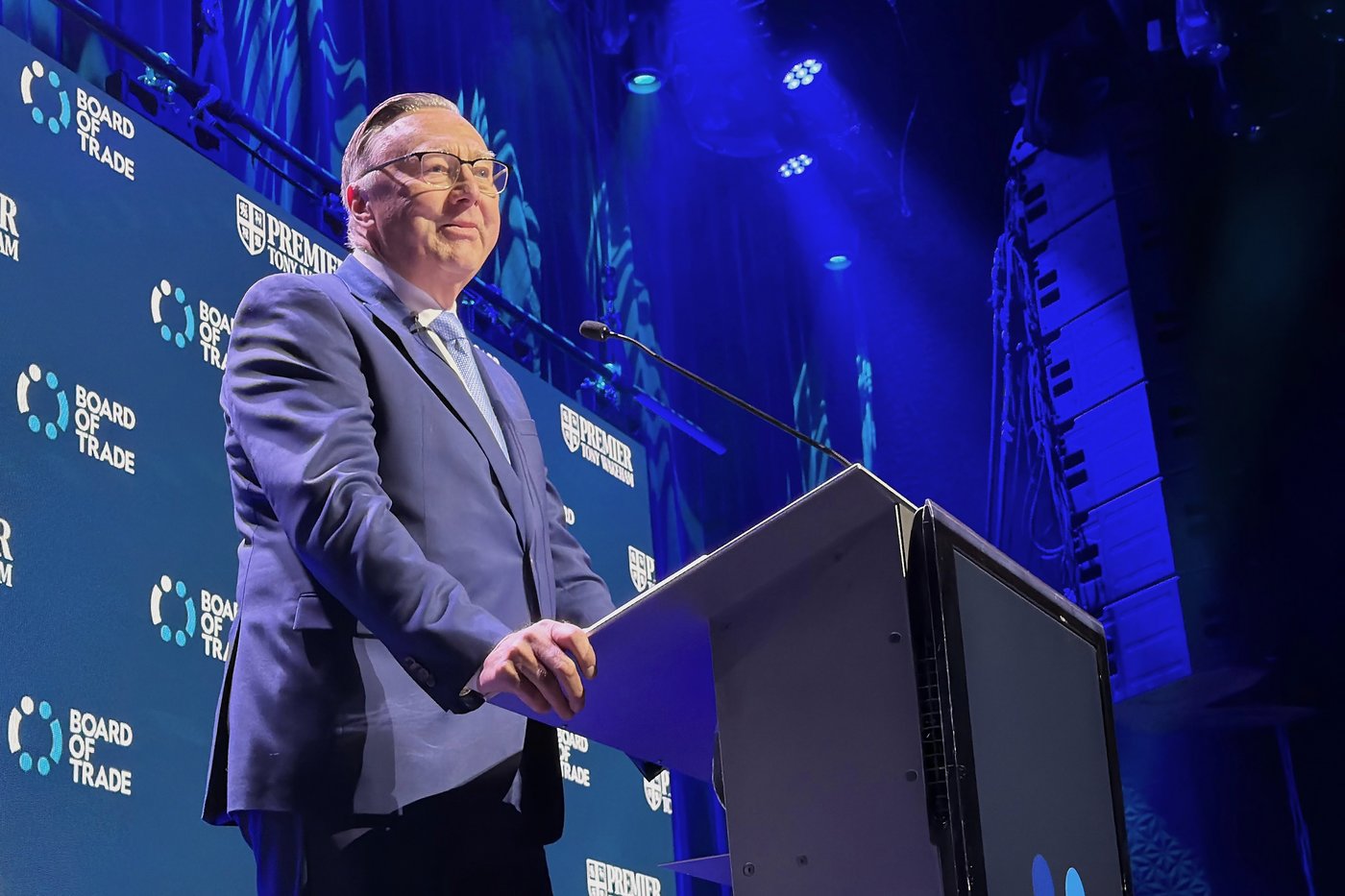
ST. JOHN’S — Newfoundland and Labrador Premier Tony Wakeham says he values the media but is stopping short of saying whether he stands by claims made by a minister who said the media twists stories.
Andrea Barbour, the provincial minister of environment, conservation and climate change, told reporters last week that the media twists narratives.
In a video published by CBC News, Barbour said everybody knows the media twists stories, “that’s nothing new.”
The Canadian Press asked Wakeham’s office on Friday if the premier stood by Barbour’s comments.
His office emailed a statement saying the government is committed to communicating openly with the media, and it recognizes there is always room to improve.
The statement did not directly answer the question.
Wakeham’s office said that the premier values opportunities to speak to the media, “whether to provide information, clarify issues or answer difficult questions, recognizing that this is part of the responsibility that comes with being elected.”
“Our government remains committed to open communication with the media and recognize that there is always room to improve,” said the email from spokesperson Ashley Politi.
Russell Williams, an associate political-science professor at Memorial University, said it was lazy of Barbour to claim the media routinely distort facts.
“Obviously we see a lot of that from the White House and people are now thinking that’s an acceptable norm in politics. It’s not,” he said, referring to United States President Donald Trump’s attacks on the media.
“This is the state of politics these days, and this is the way people learn about politics in the social media universe, they learn that lazy generalizations are good enough.”
Williams said Wakeham appears to be a careful, thoughtful leader, and he is likely now having to think about whether Barbour should remain in his cabinet, after several apparent missteps.
Wakeham’s Progressive Conservatives hold 20 of 40 seats in the legislature. The speaker — who only votes in the case of a tie — is an Independent, thus giving the Tories a working majority of the votes.
“Right now, they would like to have the public talking about their affordability initiatives,” Williams said in an interview. “Instead, they’re talking about their minister’s war on — I don’t even know how we would describe this — fake news or whatever.”
Barbour is a newcomer to politics, and she was elected last year to represent the St. Barbe — L’Anse aux Meadows district on Newfoundland’s Great Northern Peninsula.
Barbour first made remarks about the media on Wednesday in the legislature, after online news outlet The Independent obtained a draft document projecting the province would not meet greenhouse gas emission targets.
“We know the media took the narrative and twisted it and wrote what they wanted and they didn’t say the truth,” she said. “How can you take a draft … and put it out in the media and talk about it?”
The Independent’s report said the numbers were a “preliminary draft projection.”
The next day, Barbour told reporters that she stood by her claim.
“The media do twist narratives, that’s known,” she said. “Everyone knows that and that’s nothing new.”
Barbour apologized in April for using generative artificial intelligence to alter a photo of The Rooms provincial art gallery. The altered image she shared on Facebook was missing a statue of a caribou silhouette above the museum’s front door, which honours the Royal Newfoundland Regiment. Hundreds of Regiment members were killed in the First World War, particularly in the Battle of Beaumont-Hamel in northern France.
In July, she fumbled through a speech at the Beaumont-Hamel memorial in France, pronouncing its name as “Beau-hont mahamel.”
When speaking to journalists last week, she pronounced the name correctly, telling reporters, “Yes, I can say Beaumont-Hamel. It’s not 40 degrees here.”
This report by The Canadian Press was first published Nov. 9, 2026.
Sarah Smellie, The Canadian Press