


Sarah Mills: We must remember them
Remembrance Day is a statutory holiday, but Sarah Mills says not everyone will take the time to remember those who made ...
There was a time when travelling in northern Saskatchewan wasn’t simply about deciding where you wanted to go. It was about whether you could get there at all.
For generations, life around Wollaston Lake and Hatchet Lake Denesuline First Nation was shaped by the land, the water and the seasons. Every journey required planning, patience and a deep understanding of the environment.
“We’ve come a long way,” said Prince Albert Grand Council Grand Chief Brian Hardlotte, reflecting on the evolution of travel in the north.
Read more Saskatchewan Stories from Brittany Caffet:
Hardlotte explained that in the past, people relied on their own ingenuity and knowledge of the land to get by.
“They travelled by foot quite a bit back in the day, before they received the canoes,” he said. “They had the dog teams, you know, for travel. And the great snowshoes to wear for travel and also get food on the table.”
Generations later, dog teams gave way to snowmobiles, boats became essential to summer travel, and a barge and seasonal ice roads offered connections to the south.
But getting in and out of the communities was never easy.
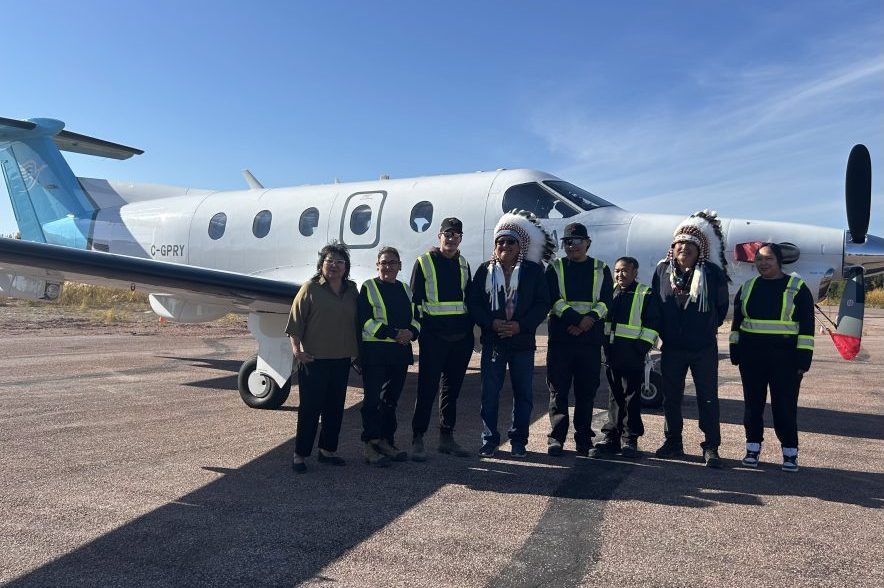
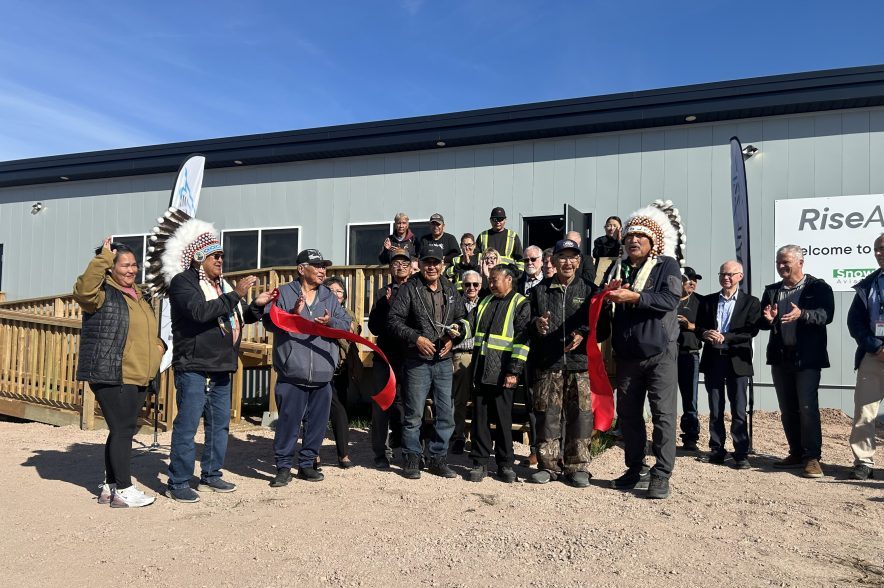
Chief Bart Tsannie and Grand Chief Brian Hardlotte joined Rise Air staff and board members to celebrate the opening of the new airport terminal in Wollaston Lake in September 2026. (Brittany Caffet/650 CKOM)
Hatchet Lake Denesuline First Nation Chief Bart Tsannie remembers the arrival of the barge in the mid-1970s, as well as the construction of a road to serve mining activity.
“It was tough when we didn’t have the roads here, just a fly-in community. Things are very expensive,” Tsannie said.
Air travel was essential, but even that experience looked very different.
Tsannie recalls how people would gather to watch planes arrive, sometimes walking right up to the aircraft as passengers and cargo were unloaded.
“Way back in the days when the plane landed, a lot of people used to just run to see the plane coming in,” he laughed, noting the lack of safety restrictions at the time. “Just come right to the door to the plane when they’re unloading.”
Today, that experience has changed considerably.
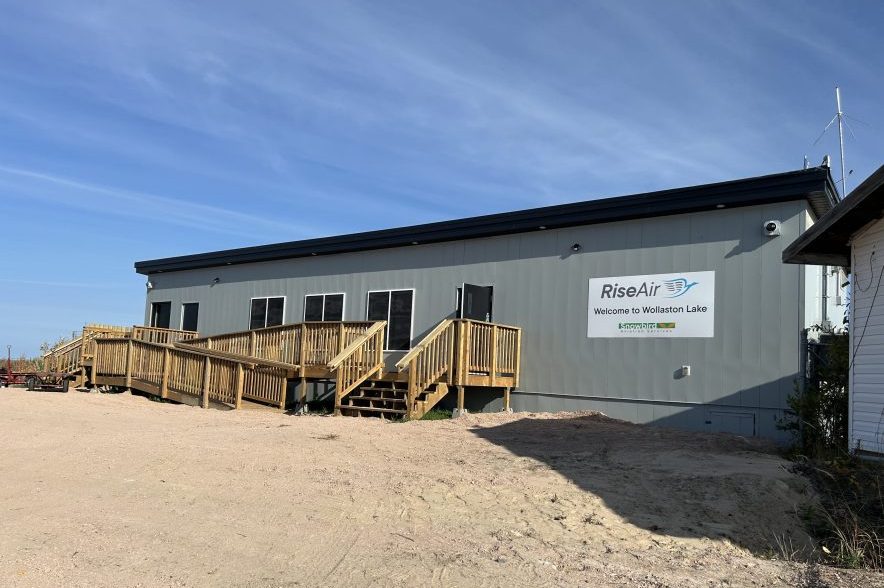
“You today have the newest, most modern terminal building in all of the north in all of Canada,” Rise Air president and CEO Derek Nice said at the grand opening of the new terminal. (Brittany Caffet/650 CKOM)
The recent opening of the new Rise Air airport terminal represents another important investment in the community’s connection to the rest of Saskatchewan.
“It’s a nice terminal, and it’s going to be there for a long time,” Tsannie said. “Before that, the terminal wasn’t the best. But we had no choice to utilize that terminal before. But now we have a good terminal, and I think people like it.”
Derek Nice is the president and CEO of Rise Air, a 100 per cent Indigenous owned airline that operates in northern Saskatchewan.
He explained that the demands of operating an airline in northern Saskatchewan extend well beyond what is typically required in southern markets.
“Being an airline in the north, in northern Saskatchewan, is much more than just flying aircraft,” he noted.
“It’s operating facilities like this, and it’s having all that ground equipment and the constant training that is needed to operate at airports in the north. We’re proud, because this building symbolizes the commitment that we make to Hatchet Lake and other communities in the north.”
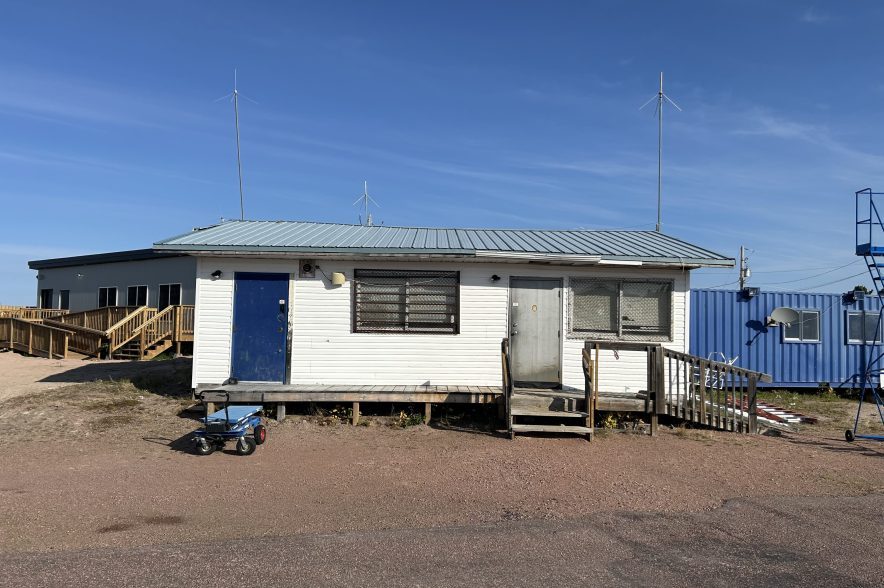
The new terminal has replaced this small building as the waiting place for passengers. (Brittany Caffet/650 CKOM)
The arrival of an all-season road marks another massive turning point for the communities.
The approximately 102-kilometre Wollaston Lake Road connects the community to Highway 905, creating a permanent land connection where travel once depended heavily on seasonal conditions.
For residents, the difference will be felt in everyday life.
Tsannie points to something many people take for granted: the ability to jump in a vehicle and head south when they need groceries, clothing or other necessities.
“A lot of people come in and out because they go down south to buy their stuff, what they need. Especially at the fall time, some of them usually stack up for the winter,” he said.
“But now with the new road, they just go out whenever they need stuff, you know, for groceries or clothing and stuff like that.”
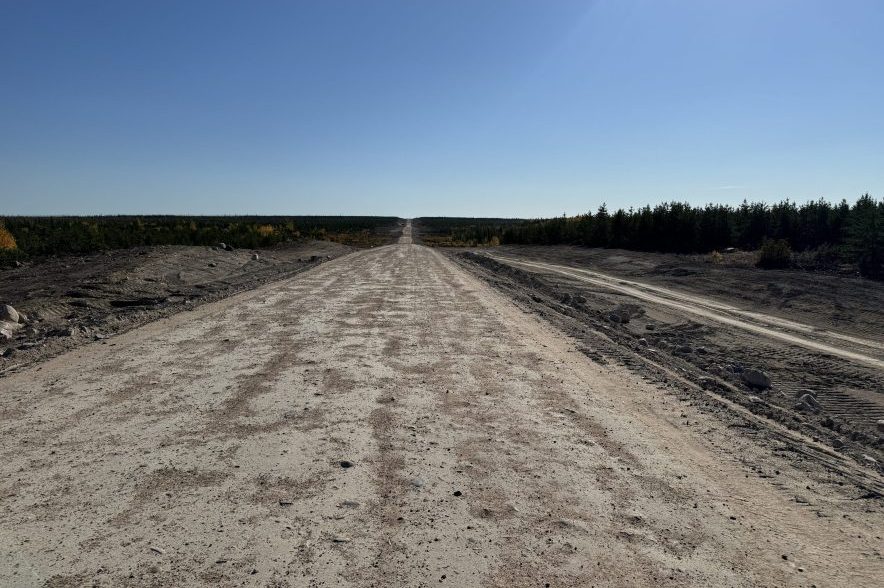
The Wollaston Lake Road project began in 2020. (Chelsea Jukes/Submitted)
For Hardlotte, the significance of this moment is not lost.
“I kind of look at that when we talk about travel, and thank goodness that we have the road now,” he said. “It’s a milestone. It’s a great achievement.”
The history of travel in these communities is a story of adaptation and perseverance. The snowshoes, dog teams, canoes, snowmobiles, ferries and airplanes each represent a generation finding a way forward.
The new terminal and all-season road don’t erase that history. They build on it.
For the people of Wollaston Lake and Hatchet Lake Denesuline First Nation, these developments mean more than new infrastructure.
They mean greater freedom, more opportunity and the ability to make everyday decisions that many other Saskatchewan residents have long taken for granted.
The journey here has been generations in the making.
And now, a new chapter is beginning. One with fewer barriers and a brighter road ahead.
From dog teams and canoes to planes and roads. A new Rise Air terminal and all-season road are marking a new era of connection and opportunity in Wollaston Lake and Hatchet Lake Denesuline First Nation. (Brittany Caffet/650 CKOM)




