


Sarah Mills: Hasn't life become so complicated?
There are apps, reviews, recommendations and endless opinions about how to do everything correctly. Sarah Mills says tha...
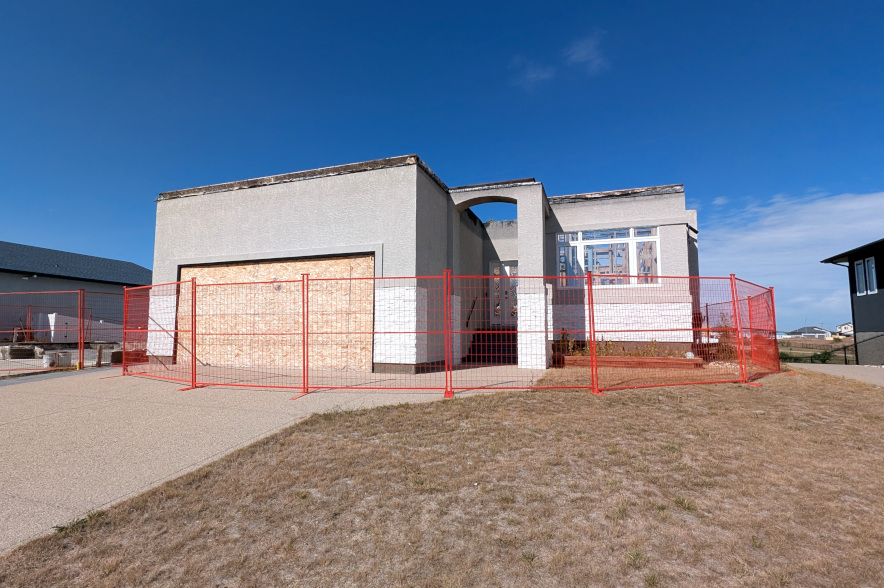
When SGI wanted to move on to a request for proposals for a partial rebuild only, Sabrina Porter spoke with seven different home builders.
She said four declined to look at it, but three did on-site inspections and gave her reports. Porter provided the reports to 980 CJME, and all those builders raised concerns about the unknowns that could be found in a project, environmental exposures, and the viability of the remaining structure.
In February, the building inspector employed by the town got involved because permits hadn’t been obtained for the work already done. Bob Baker is the owner of Professional Building Inspections.
He’s done four site inspections on the property and said if the insurer wants to use what’s left in the structure, it would need professional designers to assess what’s left and whether it meets the national building code.
“When I did my last inspection, I noticed many things happening in the house due to open elements,” said Baker.
Eventually the foundation was reviewed and Baker accepted that, but as of mid-October, his concerns hadn’t been addressed about the rest of the structure. He said, at that point, if a company tried to build using the current materials, he wouldn’t issue a building permit.
“There has been enough swelling and soft spots that it is close to being unsafe to even go into that building at this time,” said Baker.
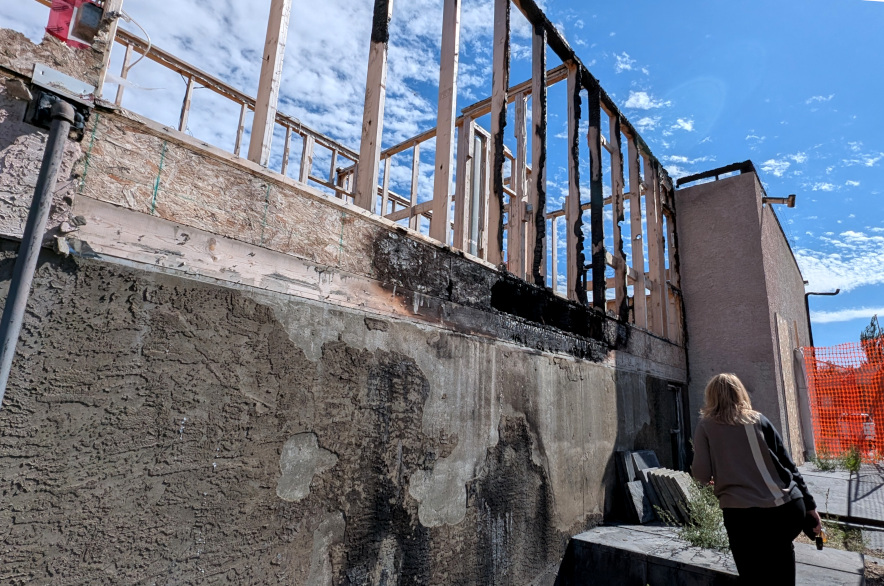
The fire caught on the west die of Sabrina Porter’s home in Pilot Butte. (Lisa Schick/980 CJME)
According to Porter, they started being pressured to sign off on the partial rebuild of the house but she said there still were no answers to their questions.
Eventually, SGI attempted to settle the issue by sending a cheque to Porter and her husband for the depreciated value of the property.
“When we looked at the amount of the cheque, it certainly was nowhere near what it would cost to rebuild our home,” she said, explaining why they sent it back.
The 14 months Porter and her husband have been dealing with this have been filled with uncertainty and stress.
The couple is not only dealing with the aftermath and trauma of a house fire, but at the same time, they’re having the frustration of a prolonged fight with SGI, combined with the financial issues therein.
The mortgage on their home came up for renewal shortly after the fire, but Porter found out a mortgage won’t be renewed on a house that isn’t inhabitable and for which there’s no plan to move forward. So the couple had to dig into their life savings to pay off the full amount.
She said SGI has also paid, or not paid, their current living expenses depending on how the negotiations were moving forward.
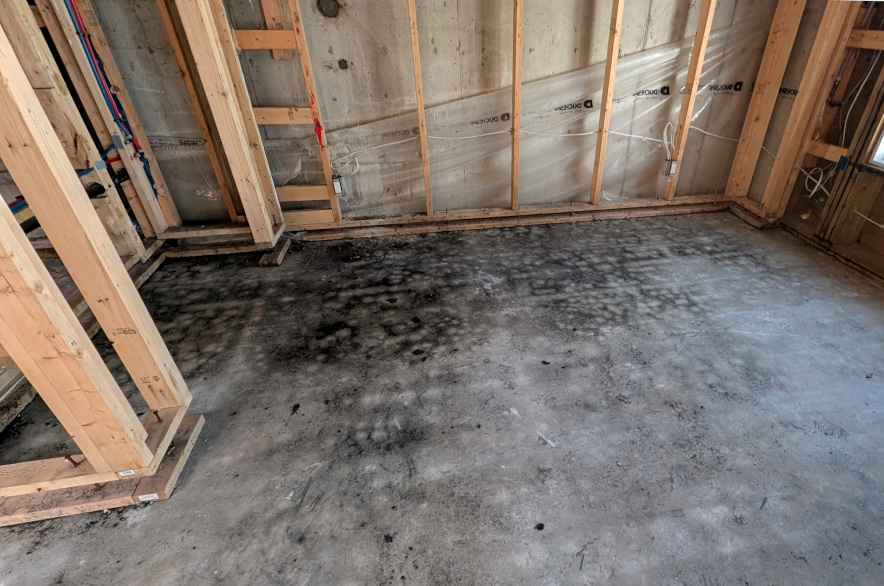
Black mould is growing on the basement floor in Sabrina Porter’s home in Pilot Butte. (Lisa Schick/980 CJME)
And now, a new problem is coming to the forefront.
According to their contract with SGI, any claim has to be resolved within two years of the event. It’s already been 14 months, and even if they could come to a satisfactory agreement immediately, Porter doesn’t know if the house could be torn down and fully rebuilt and finished in the 10 months left.
In the last week, Porter said there has been some movement on SGI’s part, but they still haven’t been able to come to a resolution.
As for her options, Porter said taking SGI to court is a possibility, but it would take more time and money.
Porter said she’s speaking out about her experience because she’s worried about other people who might not have the resources to push back on an insurance company.
She said, when a homeowner raises concerns about safety — concerns backed up by homebuilders and other professionals — they should be respected and responded to, and get the answers they need to feel comfortable.
Despite receiving written permission to talk about it from Porter, SGI declined to discuss the specific claim.
It did send a statement which talked about the loss of a home to a fire being a traumatic event and how stressful and emotional that can be.
“When a home sustains significant damage, SGI CANADA works with independent experts, including engineers and other specialists, to assess the condition of the structure and determine the most appropriate path forward. These assessments help us understand the extent of the damage,” the statement explained.
“While expert opinions can vary, SGI CANADA’s decisions are based on a thorough review of the available evidence and the applicable policy provisions in each individual case.”
SGI did not provide anyone for an interview.
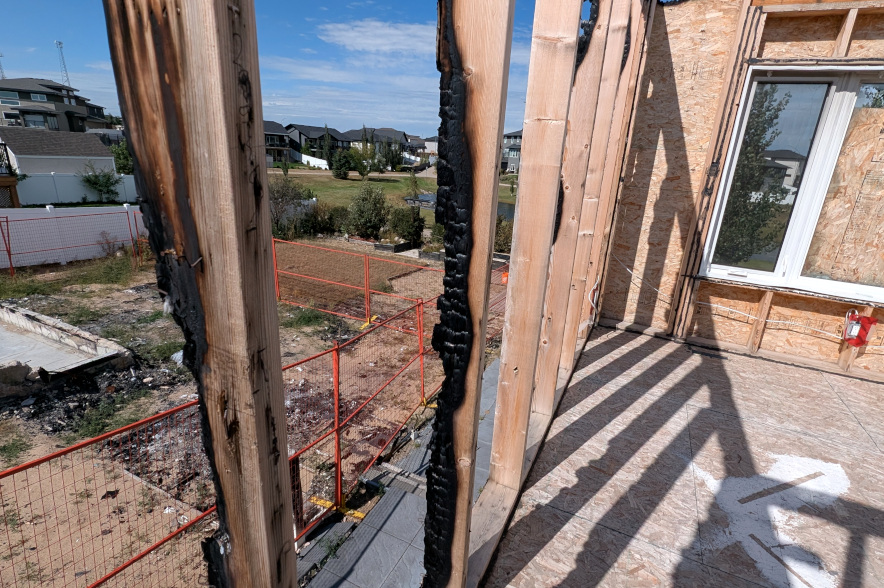
Framing in Sabrina Porter’s home in Pilot Butte still has char marks on it from the fire in August 2025. (Lisa Schick/980 CJME)
While the fight Porter’s been having is unique, Baker said the resistance he’s seeing from SGI isn’t.
“The cost of homes have exceeded what the insured value was on them, and I understand the pushback, because to rebuild these homes that are lost is a lot more expensive than what they were originally insured for,” he explained.
He said five years ago it would be rare for him to even talk to an insurance company, but more often he’s having to have conversations about what can and can’t be re-used.
“We seem to be needing to ensure that these requirements are being met more and more, and having to talk to these parties more and more,” he explained.
Derek Lothian agreed somewhat. He’s the president and CEO of the Insurance Brokers’ Association of Saskatchewan.
He said companies have become much more careful with how coverage is responding to claims, and it probably does have something to do with rising costs.
“I wouldn’t say it’s a matter of insurance companies becoming cheap, or anything like that,” he explained.
“I think what you see happening is, with rising claims costs, with affordability really entering the picture as well, and insurance companies needing to control the increase in premiums — they’re making sure that they’re paying out legitimate claims but that you’re not sort of bending a lot of the rules, as you might have 10 years ago.”
Lothian said if a person does have problems with how things are going on a claim, there are pathways to escalate the situation.
The first step would be adjustment management — speaking to a superior or manager and elevating the claim internally within the company.
If that doesn’t work, Lothian said all insurance companies have some sort of ombuds service or fair practices office.
“(It) will review with a fresh set of eyes what the nature of the dispute looks like and provide some guidance or a response,” he said.
Most disputes are resolved in those two steps, according to Lothian. He said if the situation still hasn’t been resolved, SGI customers can go to the provincial ombuds service, and customers of other companies can go to a general ombuds service.
“Those services, they’re facilitators, they’re non-binding in the sense that they can’t unilaterally issue an edict or a directive, but, generally speaking, they can intercede and determine whether or not a particular ruling or … adjudication is within market practice or if it’s out of market,” Lothian explained.
If none of that resolves the problem, Lothian said the last resort is going to court.