

Sarah Mills: 'Associate member' is wrong wording in any Canada-EU pact
It appears Canada officially tying itself to Europe isn't part of what any future trade relationship looks like. Sarah M...
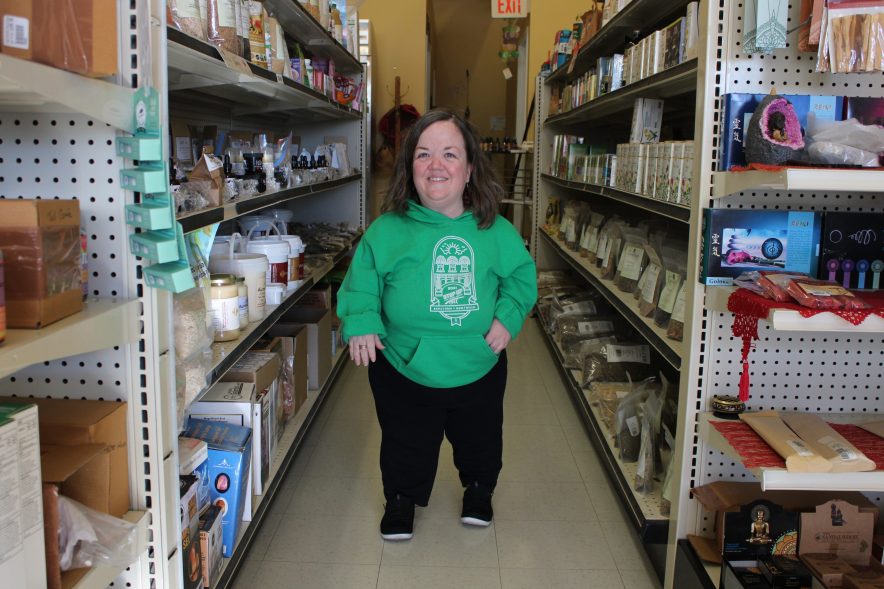
Chantell Butler is a busy woman.
She’s focused on growing her business and building the future she wants for herself. It’s a future that includes marriage and, hopefully, a house full of kids. She’s ambitious, forward-thinking and has no lack of plans for what comes next.
Butler was born with achondroplasia, a genetic condition that causes dwarfism. While it’s one part of her story, she said it doesn’t define the person she is or the life she hopes to lead.
Read more Saskatchewan Stories from Brittany Caffet:
This October, in recognition of Dwarfism Awareness Month, 650 CKOM’s Brittany Caffet spoke with Butler about the misconceptions she encounters, the realities of navigating a world that isn’t always designed with her in mind, and how greater awareness can help change perspectives about dwarfism.
The following questions and answers have been edited for length and clarity.
CHANTELL BUTLER: We’re just like everybody else. We can do practically all the same things. Treat us normally. Don’t tease us, don’t call us names and don’t take pictures of us without permission. Why would you think that’s OK?
BUTLER: People assume I can’t have a baby, either medically or that I wouldn’t be able to take care of a baby or a child through all their different stages. That’s just not true.
People also assume we can’t drive or live on our own.
One misconception that’s huge for me is that no one will fall in love with me and that I’ll be alone. Luckily, life keeps proving to me that that won’t be the case.
BUTLER: Bring it on! Honestly, if you’re curious. And sometimes parents, especially, feel ashamed to ask questions. If I catch wind of people whispering as I’m walking by, I’ll step in. I’ve done that a few times. I’ll say, “Oh yeah, did you guys have a question? Did your daughter have a question?”
BUTLER: As I always say, I love my name. Call me my name. I am Chantell. I am a human being. It’s simple. What would you like to be called? Do you want to be called a tall person? When you reverse it, it sounds ridiculous. You just want to be called Joe or whatever, right?
One word you should never use is the M-word. It’s a very derogatory term. That’s what we call it: the M-word.
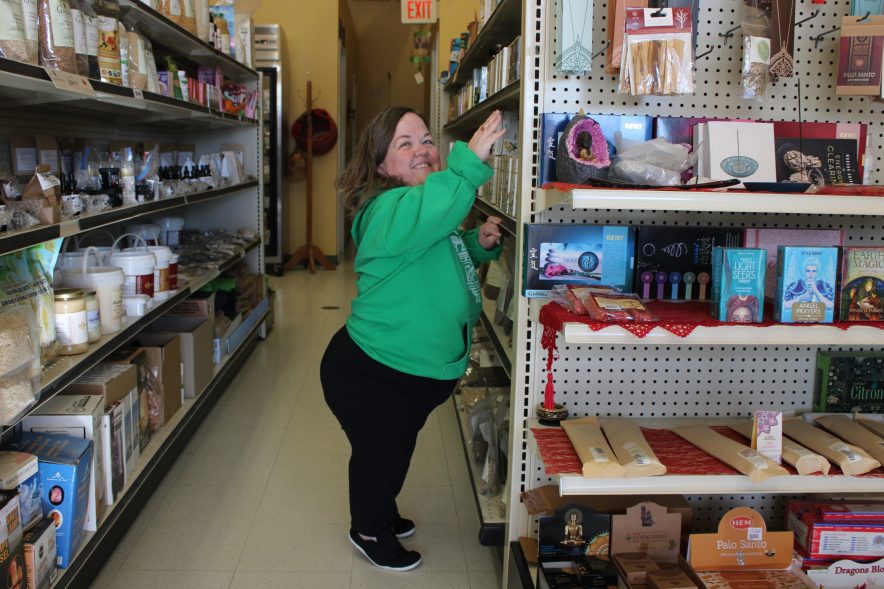
Butler says that while it may be tempting to help her reach items on the top shelf, she always prefers it when people ask her if she needs help. (Brittany Caffet/650 CKOM)
BUTLER: Ask. Always ask. Don’t just do something for me without asking first. Some people just do it and think, “Oh, I helped this person.” No, now I’m really mad at you!
BUTLER: I have a lot of stools! Nowadays, I have at least one on every floor of my home. Sometimes two or three.
For driving, I use pedal extensions. They’re contraptions that attach to the actual gas and brake pedals. In my last car, which had really deep bucket seats, I also used a raised, flat, square cushion on the seat. It depends on your vehicle and the height of the person with dwarfism, because everyone’s different.
BUTLER: At my tallest, I was 3 feet, 11.5 inches. I went to the doctor for a routine checkup last year, and when they checked my height and weight, she said, “Yep, you’re 3 feet, 8 inches.”
BUTLER: Your child is fine. Raise them well. Raise them healthy in all aspects, just like you would a baby of average height.
BUTLER: Oh, I’d love to be a mom with a bunch of kids. Marriage, a great job — which I already have — and continuing to expand my business. I have so many ideas and ways to expand, thrive, flourish, and keep growing.