


Sarah Mills: Saskatchewan's throne speech a blueprint for... what?
The Government of Saskatchewan has laid out its legislative plans for the year ahead, but Sarah Mills says families meas...
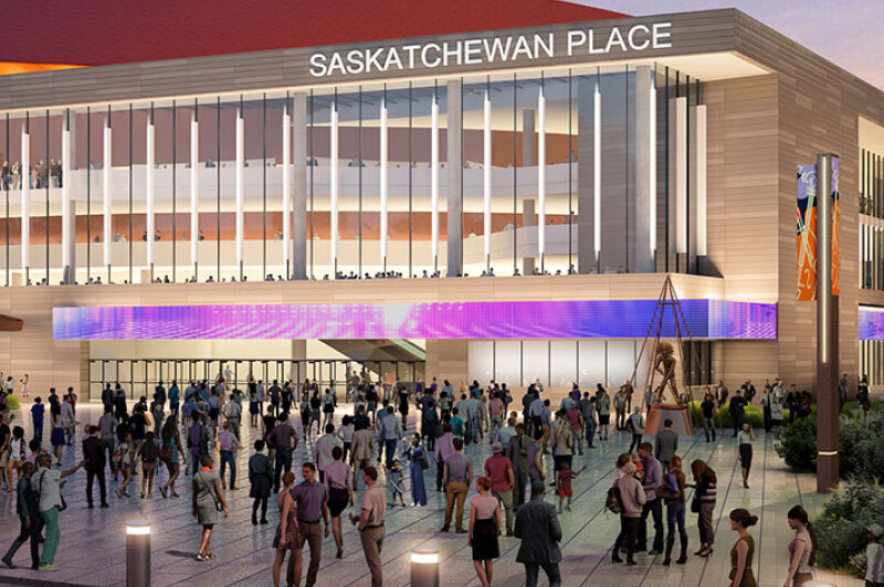
There’s been a lot of debate in Saskatoon on whether a new Downtown Event and Entertainment District arena should be built, or whether the current SaskTel Centre building could be renovated.
On Thursday’s Evan Bray Show, four community leaders, including Ward 4 Coun. Troy Davies, current SaskTel Centre CEO John Howden, former SaskTel Centre CEO Ken Wood, and 2024 city council candidate Courtney Saliken debated the merits and practicality of building a new downtown arena.
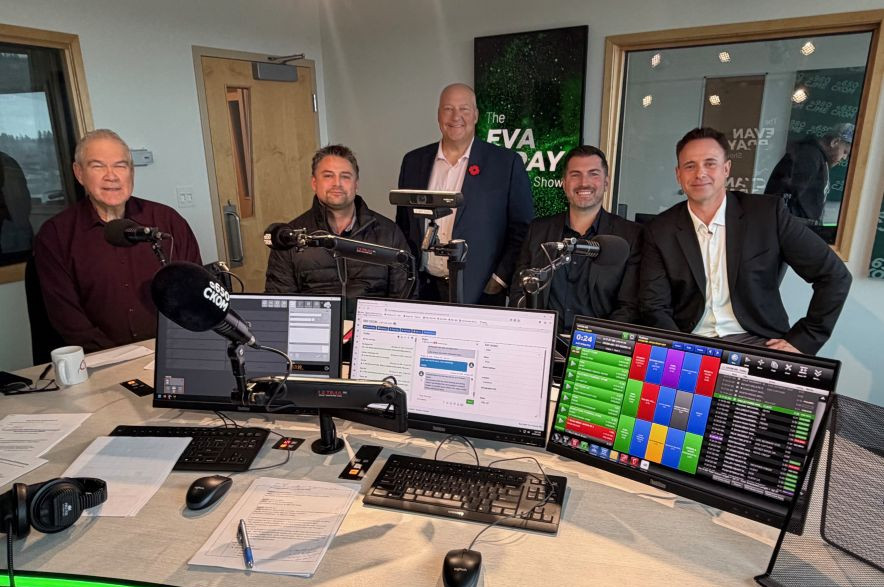
From left to right: Ken Wood, Former SaskTel Centre CEO; Courtney Saliken, Saskatoon Citizens for a Referendum on Deed; Evan Bray, Rawlco Radio; John Howden, SaskTel Centre CEO; Troy Davies, Ward 4 Councilor. (Lara Fominoff/650 CKOM)
Read more:
The following questions and answers have been edited for length and clarity.
EVAN BRAY: How close are we to saying this is a go, and do we have an up-to-date cost estimate?
TROY DAVIES: I would say we can’t even have a debate today because in order to have a debate, you have to have what I call the two Fs: funding and facts.
The updated facts — because right now we’re using 2024 numbers on really all communications that are going out there — we know those numbers are going up 100 per cent. The cost of steel alone, we know those numbers are going up.
January is the projected target date for those facts to come to council on the current facility and the renovation costs associated with SaskTel Centre and the update for the TCU renovation and the current arena downtown, if it were to move forward. Right now, this is an unfunded city priority.
BRAY: Regardless of the referendum, is there a possibility that the funding estimates could put an end to this if it is too expensive?
DAVIES: We’ve made it clear we need provincial, federal and a private partner on this project or it’s not happening. Our priorities right now that are funded are police, fire, homelessness, snow removal, and construction.
I think that we can get the funding, and that downtown is a place to be.
BRAY: Ken Wood, were you one of the main leaders that came forward and said, “I want to start gathering signatures?”
KEN WOOD: I’ve been talking about that for quite a while.
I think that right now we have enough information. We know the scope of what we’re looking at and my position is that there just is not an adequate GDP lift for the city.
I understand the arena business and moving it downtown versus a reasonable renovation at SaskTel Centre. The difference between the two over the next 10-20 years is just not there.
BRAY: Courtney Saliken, why did you get involved with the Saskatoon Citizens for a Referendum?
COURTNEY SALIKEN: When I ran in 2024 for city council in Ward 4, it was one of the top topics that came up. One of the main questions I got right at the door is, “Where do you stand on the DEED?”
It was a hot topic starting to percolate then, and it’s just continued to grow because now more numbers are slowly coming through, and it seems like it’s going forward, but we’re not getting quite the information.
A lot of people have some valid questions that we feel that it just should be put to a public vote.
BRAY: Is this about stopping or letting people have a say on DEED or specifically about the arena?
WOOD: Our resolution is with regards to the arena. We want planning for the arena to stop. We have enough evidence right now to demonstrate that this is just not viable for Saskatoon at this time.
We’ve got an excellent arena. It is in need of renovations, but those renovations have to be reasonable and prioritised.
BRAY: John Howden, what upgrades are needed and which are essential infrastructure must-dos?
JOHN HOWDEN: Ken did a great job of running SaskTel Centre for close to 20 years, but he hasn’t been there in 15, and the industry has changed a lot in that amount of time.
I have a lot of evidence to say that we do need to do something. We were told recently we’re a Triple-A band in a B building, and every band and every tour does a report card on our facility. That is shared among Live Nation and AEG — the two big promoters — as well as all the bands.
That affects what shows we’re getting at SaskTel Centre. We don’t have proper loading docks, which means we need more forklifts and more staff to unload the trucks and reload the trucks. It takes more time, costs more money. We don’t have a proper rigging grid in our facility, so that means, again, we need more riggers and more time to put up a show and take down a show.
BRAY: Was it proper when the centre was built?
HOWDEN: Concerts were definitely a part of the business plan. But a big part of the design was to do around seven or eight major trade shows. Now we’re at the point where we do zero trade shows and we’re doing 25 concerts a year, plus the other things like PBR, monster trucks.
There’s not an adequate number of dressing rooms. We’ve talked about ceiling height. We missed out on a Paul McCartney show, a Bruce Springsteen show, Roger Waters and Cirque du Soleil because our ceiling was too low. Those are sellout shows, and we know that a sellout show at SaskTel Centre is at least $10 million of economic impact to the city.
BRAY: Are there infrastructure needs that need to be done today?
HOWDEN: It’s just no longer built for what today’s world looks like. We have the touring acts that need certain things, and then there’s the fans that come to the arena.
The concourses are jammed up. We don’t have proper retail spots for merchandise. We don’t have enough locations for food and beverage service. We need to double that number to be competitive in today’s environment. We need double the washrooms. We get complaints on surveys after every event about uncomfortable seats.
BRAY: Ken Wood, do you accept that times have changed to the point that maybe some of these substantial renovations have to happen?
WOOD: Absolutely, and I have kept up with those times. I’ve consulted in the arena business over the past few years. I’ve stayed up to date with the business.
I think for an arena like this, you need a big sporting anchor tenant. So, we’re contemplating a near-NHL arena, and we’ve got a WHL team.
BRAY: You’re saying without an NHL team, you don’t feel it makes sense to build a new arena or to renovate the current one?
WOOD: It doesn’t make sense to build a near-NHL facility when you don’t have strong anchor tenants. The facility we have now has some minor issues. For non-NHL cities, we have one of the top three facilities in all of Canada.
BRAY: Ken, If private funding is secured does that change your opinion?
WOOD: Absolutely. There should be a private advocate for this facility and there is none.
DAVIES: We’re in conversations with Muskeg Lake. And it was reported at council two weeks ago – their words, not mine – that they’re looking for a significant capital injection into this program.