


Sarah Mills: Saskatchewan's throne speech a blueprint for... what?
The Government of Saskatchewan has laid out its legislative plans for the year ahead, but Sarah Mills says families meas...
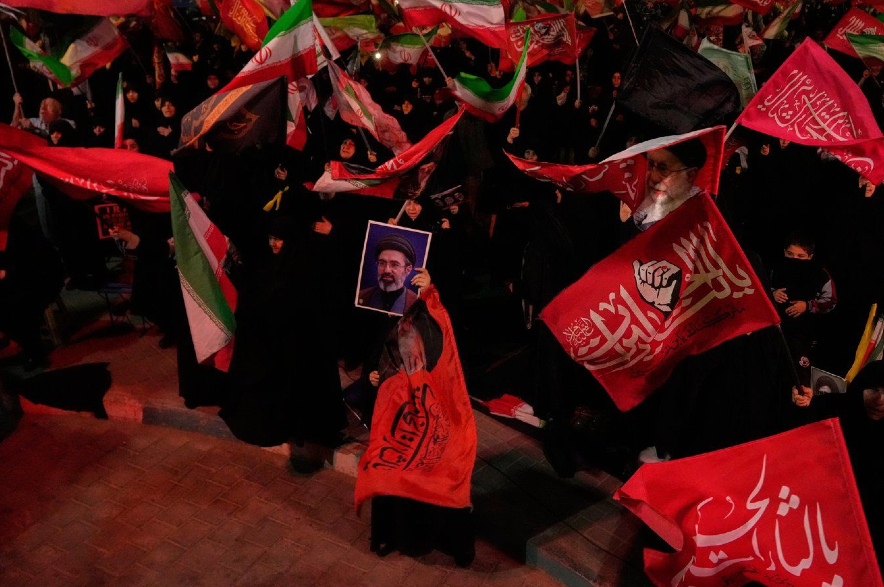
Iranian Supreme Leader Ayatollah Mojtaba Khamenei said on Saturday that “any kind and level of threat” from the U.S. or Israel should face an immediate response — one without geographic limits — the official IRNA news agency reported.
State media said that Khamenei, who hasn’t been seen publicly since the war began with U.S. and Israeli strikes on Feb. 28, made the comments while meeting with military chiefs. He also called for an updated list of potential U.S. and Israeli targets.
Read more:
Khamenei became supreme leader after the first wave of strikes killed his father and other high-ranking officials. He has been meeting with a series of senior officials in recent weeks, according to state media.
Meanwhile, Iran’s top diplomat says that a new proposal has been reached with mediators that would shorten the time to fully reopen the Strait of Hormuz to two days. He said that Iranian diplomats were in Qatar for discussions.
Foreign Minister Abbas Araghchi last month proposed reopening the waterway within a week if the U.S. agreed to lift its blockade of Iranian ports, release frozen Iranian assets and waive sanctions on Iranian oil sales, among other conditions. That was rejected.
In an interview with Qatar-based broadcaster Al Jazeera, Araghchi also said that Iran isn’t planning to meet with U.S. officials, but said that recent U.S. efforts toward “broader dialogue” are considered a positive step.
Araghchi said a decision on whether negotiations will be direct or indirect would be made “once Washington agrees to Iran’s conditions.”
The head of Iran’s Supreme National Security Council says “the tone has completely changed” from the U.S. and calls it a “very good sign.”
Maj. Gen. Mohsen Rezaei said in a new interview with state television that he hasn’t responded to the letter from U.S. Vice President JD Vance, and gave no details about it. The comments came as urgent diplomatic efforts continue in an effort to avoid a return to all-out war.
Rezaei singled out an important change to one of Iran’s conditions: Ships on a reopened Strait of Hormuz would have to travel on a route agreed upon by Iran and Oman. And “everyone passing through this waterway will do so under Iranian management.”
Rezaei, who state media this past week said has met with Iran’s supreme leader, also said that there has been no decision to change Iran’s nuclear doctrine, but noted that some Iranians have questioned whether that should change if Iran is attacked again.
Washington seeks to prevent Iran from having a nuclear weapon. Tehran has insisted its nuclear program is peaceful and has wanted to discuss the issue later.
Separately, Rezaei warned on X that any attack would bring “devastating blows on the aggressor using new weapons.”
Read more: