


Sarah Mills: Saskatchewan's throne speech a blueprint for... what?
The Government of Saskatchewan has laid out its legislative plans for the year ahead, but Sarah Mills says families meas...
Councillors will be asked to approve the “reallocation” of $21.6 million from future infrastructure project savings after money was mistakenly approved by Saskatoon City Council for a big project upgrade that wasn’t actually available.
The error wasn’t caught until nearly nine months later.
Read more:
The upgrade included expanding the size of the the pipelines installed along Wanuskewin Road over the last several months in the biosolids pipeline corridor project.
According to a report going to the city’s Environment, Utilities and Corporate Services committee on Nov. 3, the City of Saskatoon received $23,246,600 from the Investing in Canada Infrastructure Program (ICIP) several years ago, but that money was actually held as a contingency and used to offset COVID -19 financial pressures in 2022 and 2023
So when councillors were asked to approve funding for the higher volume water and sewage pipes on Jan. 28 this year the $23 million wasn’t there but councillors didn’t know that.
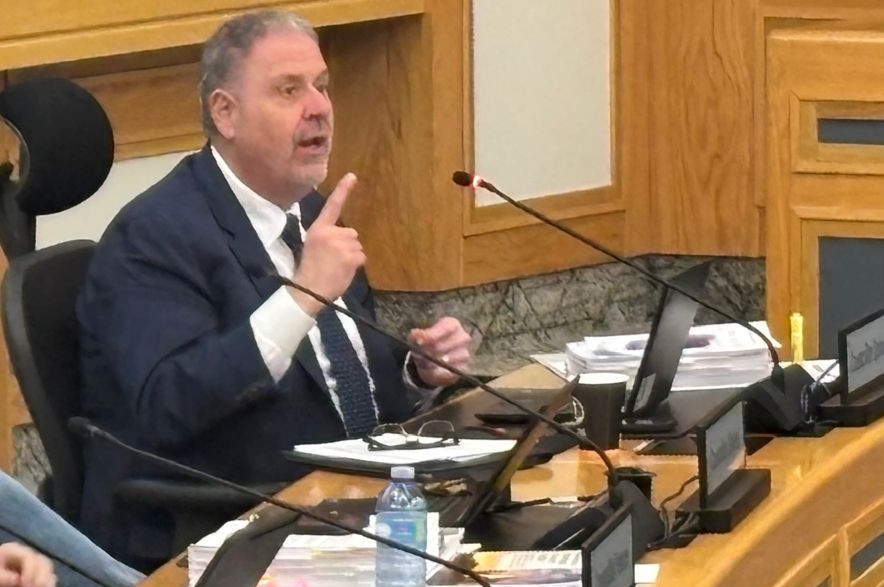
Ward 5 Coun. Randy Donauer says he’s got a lot of questions for both the city’s project management and finance teams.
“How did this happen? What went wrong that this was allowed to happen? And for me — more importantly, or as important — what are we doing to make sure this never happens again?” he asked.
Donauer said while the overall biosolids pipeline project always had funding, the decision to install larger pipelines did not.
“We made a decision with our regional partners to upsize the pipes, and this funding was to go from what we had planned to actually upsizing the pipes so that we can create potentially someday an investment hub north of town where we can actually accommodate more industries,” he explained.
According to the report, since the error was identified, “Administration has identified the need for improved documentation and procedures related to historical funding reallocations to prevent this from occurring in the future.
“To mitigate the risk, of similar issues occurring in the future, enhanced tracking and secondary review processes will be implemented for significant reserve and capital project funding adjustments,” it read.
Still, Donauer said he wants more answers on how this happened and why it took so long to figure it all out.
“They did try and basically allocate the same money twice,” he added.
“That’s a lot of money, and I have some serious questions about how this could be allowed to happen.”
650 CKOM requested an interview with Clae Hack, chief financial officer with the city, however a statement was sent instead.
In the statement, Hack wrote that it was all the result of human error.
“Extenuating circumstances such as staff vacancies, urgent nature of the report and complex nature of the city’s government funding and associated reallocation program contributed to not identifying this as part of the report review process.”
As for why it took so many months to find the mistake, Hack said the issue was caught as a result of control processes the city has in place.
“Specifically the city’s annual capital status review process where all open capital projects are reviewed. As a part of this process the issue with this project was identified and corrective action is being taken through the public report going to EU&CS.”
The recommendation from administration is that the money for the pipeline expansion now comes from savings slated for wastewater infrastructure projects in 2028/2029.
Read more: