


Sarah Mills: American politics has become a wild rollercoaster ride
The blue wave of Democratic wins in the U.S. midterms provides no guarantee for any of the major players. Sarah Mills sa...
If you’ve lived in Saskatchewan for any length of time, you know better than to put too much faith in the weather forecast.
One day you’re enjoying the sunshine; the next, you’re searching for your warmest mitts, scraping frost off the windshield and wondering why you didn’t get the snow tires on sooner.
It’s the kind of weather that makes you wish you could escape somewhere a little more predictable.
As it turns out, you don’t have to travel very far.
Just down.
Way, way down.
Read more Saskatchewan Stories from Brittany Caffet:
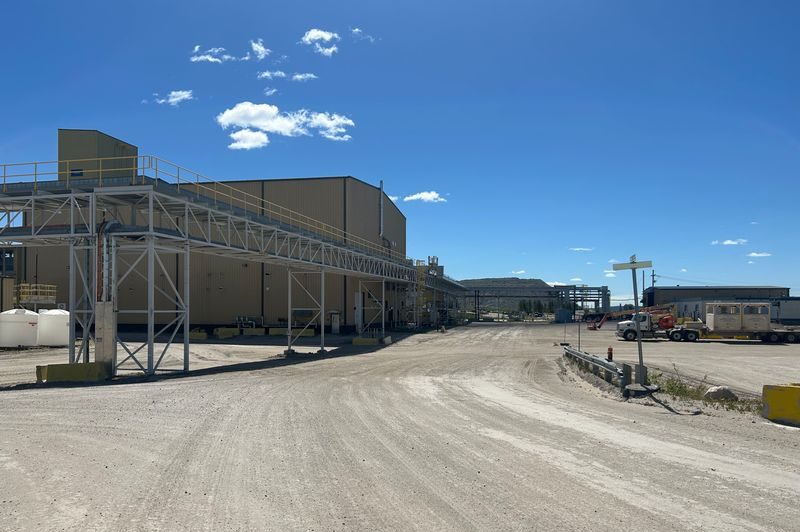
The vast majority of Cameco’s operation at Cigar Lake takes place nearly half a kilometre below the Earth’s surface. (Brittany Caffet/650 CKOM)
“One of the things that’s great about underground is the weather is the same all the time,” said Kirk Lamont, general manager of Cameco’s Cigar Lake operation. “In the winter, you go underground and it’s the same as it is now. In the summer, it’s not so hot. It’s a little bit cooler underground.”
And there’s another bonus.
“There’s no bugs underground,” Lamont said.
Sounds pretty appealing when Saskatchewan’s mosquitoes are out in full force.
There’s just one catch: you have to travel nearly half a kilometre beneath the Earth to enjoy it.
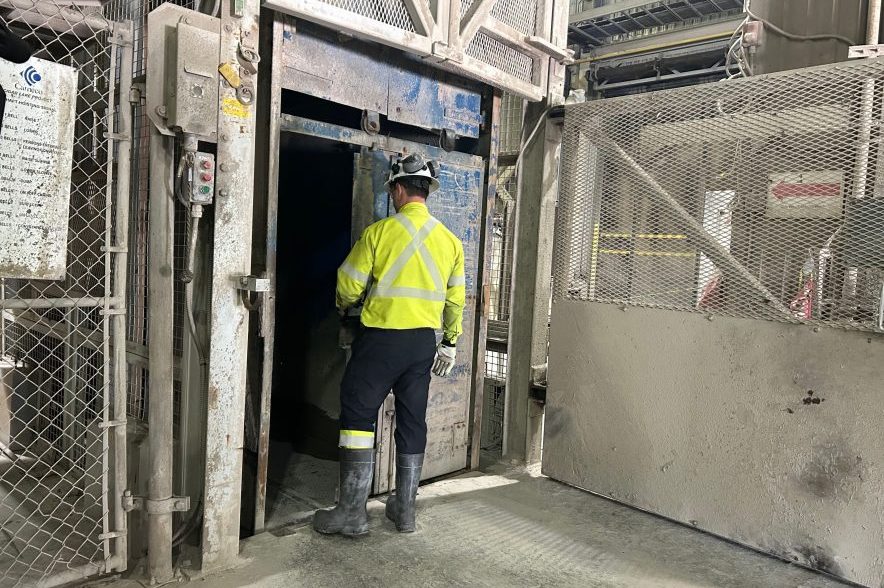
Most elevator rides take seconds. This one takes several minutes to descend to the bottom of the shaft. (Brittany Caffet/650 CKOM)
It’s one thing to imagine being 500 metres beneath the Earth. It’s another to think about how someone actually gets there.
These aren’t holes randomly carved into the rock. Every passageway has been carefully planned, with engineers working to understand exactly what’s happening under the ground before they can decide where to go.
“Before you do any of the building of the tunnels, you have to do a bunch of drilling so that you can get core, so you can do geotechnical analysis on it,” Lamont explained.
The core samples tell engineers how strong the rock is and where fault zones might be hiding. That information helps determine how the tunnels should be constructed.
“The location where the tunnels go is very specific. The size and shape of them is very specific,” Lamont noted.
Once the route has been mapped out, the heavy equipment rumbles in.
Think of it as a carefully choreographed underground construction project. A large drill bores holes into the rock in a specific pattern and to a precise depth. Those holes are loaded with explosives, and workers head to a safe location before remotely detonating them.
The explosion breaks apart the rock, which is then scooped up and hauled away. Next, crews bring in a bolting unit to install bolts that help hold the surrounding rock together. Screening is added to catch any loose material.
Then they do it all again.
As Lamont describes it: “Go and drill holes, blast the rock out, scoop it up over and over and over.”
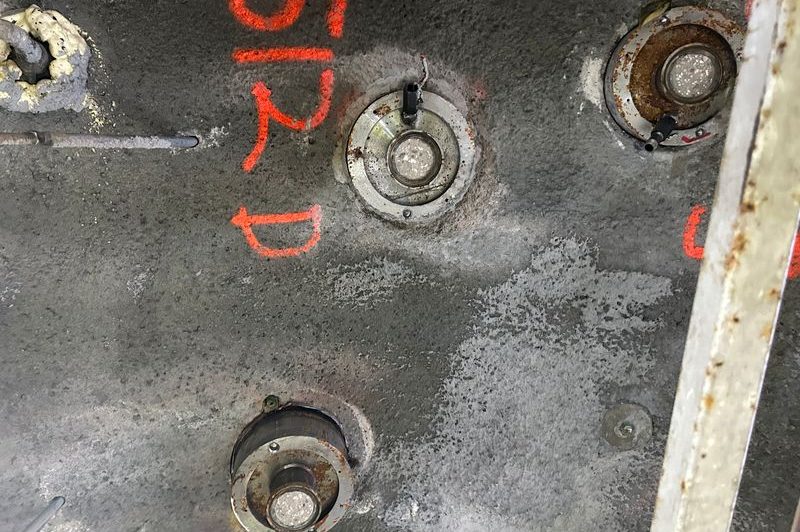
Samples are taken from potential tunnels for geotechnical analysis, helping determine exactly where the tunnel should be placed. (Brittany Caffet/650 CKOM)
It’s a repetitive process, but there’s nothing casual about it. Every blast has to be carefully planned around the geology of the rock.
If you look closely at the tunnels at Cigar Lake, you’ll notice they don’t always go in a straight line.
“Some of the tunnels came down and then moved to the side and kept going,” Lamont said.
It’s not a wrong turn or an underground detour. It’s deliberate.
Those changes in direction help the mine avoid weaker areas and maintain a safe, stable tunnel.
So while it might look like a simple passageway when you’re walking through it, there’s an enormous amount of science, engineering and planning behind every inch.
And all of it happens hundreds of metres beneath the Saskatchewan landscape.
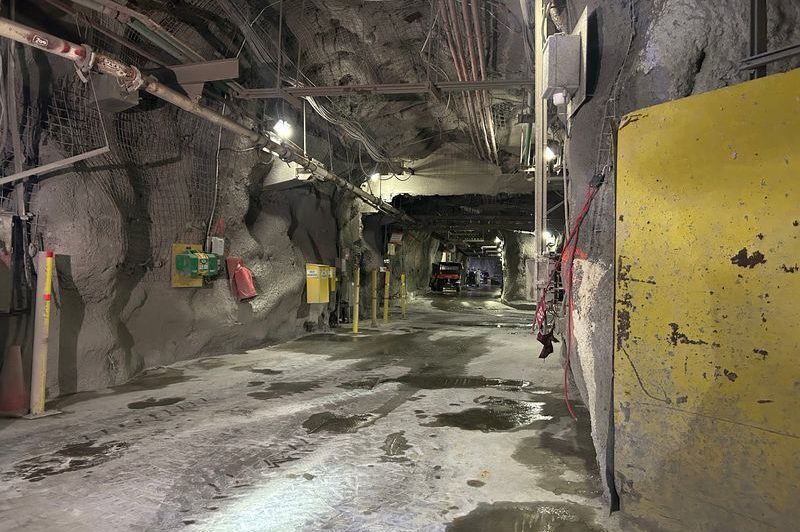
The footprint of Cameco’s Cigar Lake operation is relatively small. Kirk Lamont explained that most transportation within the mine is done by foot. (Brittany Caffet/650 CKOM)
After hearing about all the work that goes into building these underground passageways, you might imagine a massive network of tunnels stretching endlessly in every direction, with workers relying on vehicles to get from one place to another.
But Cigar Lake has a bit of a surprise.
“The mine is really small,” Lamont explained. “The history of Cigar Lake so far has been a lot of walking because, frankly, it’s quicker and easier to walk to your workplace than it is to drive.”
That’s because the high-grade uranium deposit there is tightly concentrated.
That could change somewhat as the mine continues its extension work. Workers will eventually have to travel farther from the existing shaft, and because there won’t be another shaft built, subterranean driving will become part of the daily routine.
But even then, Lamont said plenty of people will continue to walk because the distances aren’t necessarily that great.
It just goes to show that when it comes to life underground, things aren’t always quite what you’d expect.
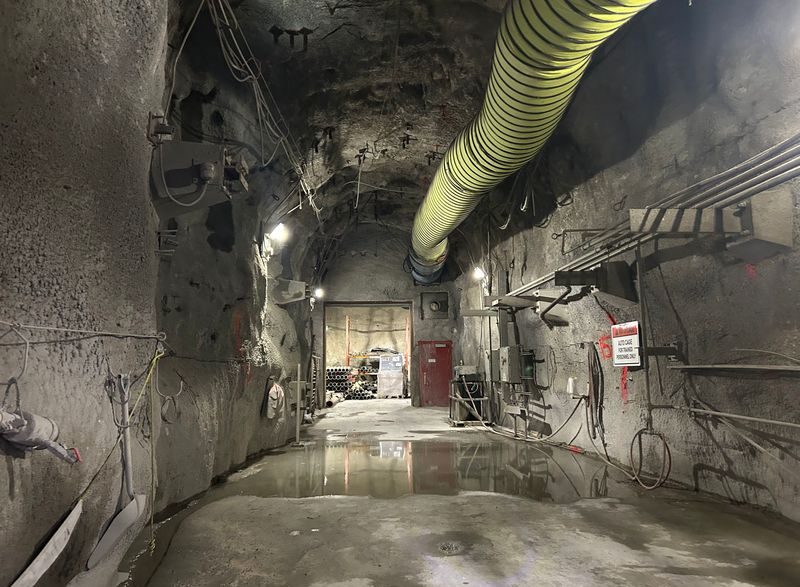
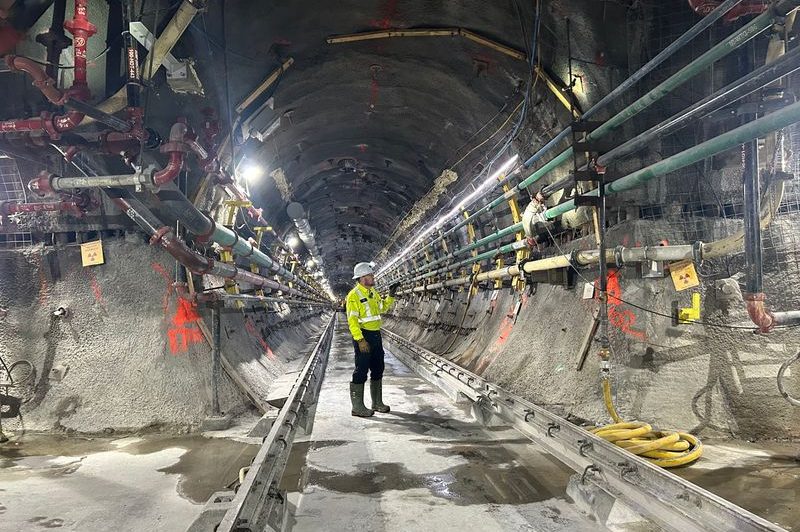
Nearly half a kilometre down, Cameco’s employees are navigating carefully engineered tunnels, moving through enormous underground spaces and carrying out their daily routines in a place most of us will never get to see. (Brittany Caffet/650 CKOM)
Of course, working nearly half a kilometre beneath the Earth isn’t all about perfectly predictable temperatures and freedom from mosquitoes.
There’s one thing you can’t escape, particularly in northern Saskatchewan: winter darkness.
For workers who spend their entire shifts underground, the lack of natural light can be a reality of everyday life.
“In the winter, it’s dark when you go underground and it’s dark when you come back up to the surface,” Lamont explained.
Cameco has recognized that challenge, and installed blue lights in many of the offices and work areas to help workers cope with the lack of daylight.
Lamont said most workers don’t necessarily consider it a major issue, although he’s realistic about the fact that underground life isn’t everyone’s cup of tea.
“I’m not gonna lie. Like working underground all day is probably not for everybody,” he said, “but working in an office is also not for everybody.”
Fair enough.
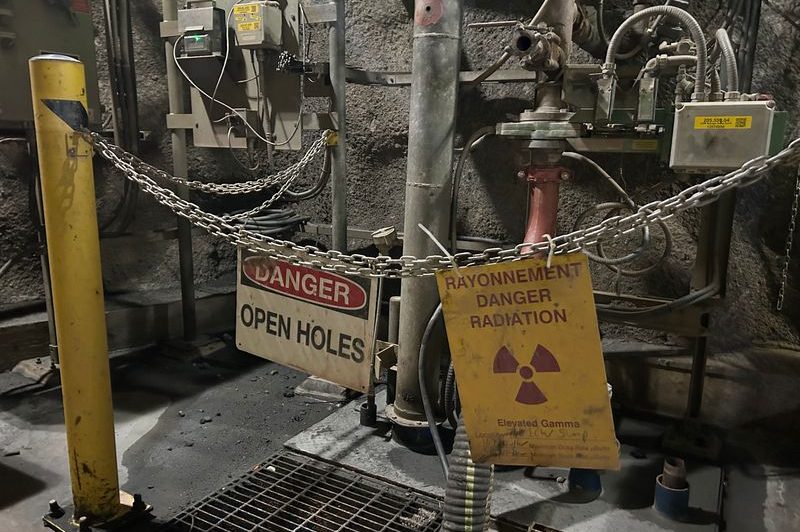
Kirk Lamont explained that when you’re working this far below the surface, you need to take safety seriously. (Brittany Caffet/650 CKOM)
After all the planning, drilling, blasting and engineering that goes into creating underground passageways, you might assume one tunnel is pretty much like another.
Not according to Lamont.
Throughout his career, he’s seen plenty of tunnels, but he considers the Cigar Lake mine particularly special. Its design and the way it’s equipped to accommodate the work being done inside make it unlike most others.
“You’d have a hard time finding a tunnel like that anywhere else,” he said.
It’s not just another passageway through the rock. It’s a highly specialized space, built for a very specific purpose.
“I’d call that an iconic tunnel,” Lamont said with a smile.
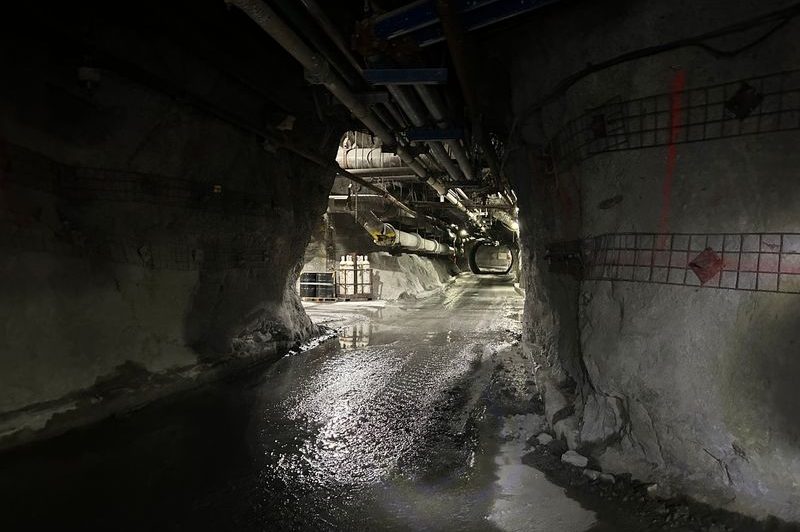
‘Working underground all day is probably not for everybody, but working in an office is also not for everybody,’ Kirk Lamont said. (Brittany Caffet/650 CKOM)
It’s easy to go about everyday life in Saskatchewan without giving much thought to what’s happening beneath the ground.
We’re busy watching the weather, changing tires, shovelling snow and trying to keep up with whatever the seasons decide to throw at us.
But deep beneath the northern Saskatchewan landscape, there’s an entirely different world.
Nearly half a kilometre down, workers are navigating carefully engineered tunnels, moving through enormous underground spaces and carrying out their daily routines in a place most of us will never get to see.
And while the weather above might change from beautiful autumn sunshine to freezing temperatures almost overnight, one thing remains remarkably consistent down here.
“The weather is the same all the time,” Lamont said.
For anyone who’s ever wished Saskatchewan’s weather would just make up its mind, that’s a pretty appealing forecast.
You just have to go 500 metres underground to enjoy it.
While most of Saskatchewan battles notoriously unpredictable weather, Cameco’s Cigar Lake mine offers a remarkably consistent climate. But to enjoy it, you’ll have to go nearly 500 metres underground. General manager Kirk Lamont guided 650 CKOM’s Brittany Caffet through the network of underground tunnels. (Brittany Caffet/650 CKOM)




